China Metal Stamping Clusters: Which Region Fits Your Part?
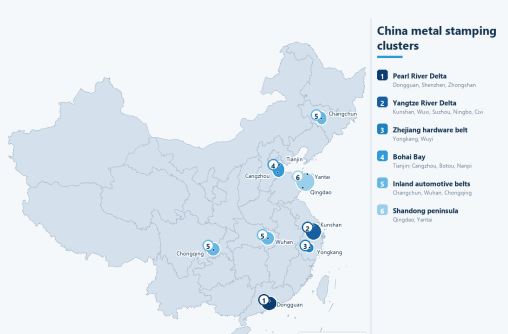 Short answer: China metal stamping is not one market. It splits into regional clusters, and each cluster grew up around a different customer base. Precision electronics stamping concentrates in the Pearl River Delta and the Yangtze River Delta. Automotive stamping and die-making sit in the Bohai Bay area and the inland automotive belts. Hardware, appliance and furniture metal parts cluster around Zhejiang’s hardware belt and Hebei. Match the region to your part family, tolerance band and tooling needs before you compare a single price.
Buyers who treat “China” as one sourcing market usually end up comparing quotes that were never comparable. A stub axle bracket and a 0.2 mm connector shell both count as stamped metal parts, but they come from different supply chains, different die shops and often different provinces. In contrast, buyers who know which cluster serves their part family shortlist faster and get quotes you can actually compare. So the question worth answering first is not “which factory is cheapest” but “which cluster does this kind of work all day long”.
Why the region matters more than the factory name
A stamping supplier rarely stands alone. Behind a good one sits a local ecosystem that decides three things: how fast a local die shop can build or repair a die, how easily special steel and strip arrive, and how many secondary processes are within a short truck ride. Because those three factors drive tooling lead time, unit cost and recovery speed when something goes wrong, the cluster usually sets the ceiling on what a supplier can do.
Three practical consequences follow.
- Die-making depth varies enormously. In some regions dozens of local die shops compete, so a new progressive die moves from design through machining and tryout to correction within a couple of weeks. In others, the same die waits in a queue behind a supplier with no local alternative.
- Material and secondary processes travel with the cluster. Anodising, zinc plating, powder coating, heat treatment and welding capacity exist where the customers are. A region that stamps appliance panels will have coil coating and powder lines next door. A region that serves electronics will have reel-to-reel plating.
- Skill stays specialised. The local trade trains progressive-die operators and die maintenance technicians, not a central training programme. So a cluster that has run thin-gauge precision work for twenty years will hold tolerance more reliably than a region whose experience sits in heavy-gauge fabrication.
The main China metal stamping clusters
The table below is a practical buyer’s map, not an administrative one. Cluster boundaries follow customer industries, which is why several provinces appear more than once.
| Region | What it is known for | Typical part families | Watch-outs |
| Pearl River Delta (Dongguan, Shenzhen, Zhongshan) |
Precision and progressive-die stamping tied to electronics and consumer hardware | Connector shells, shields, contacts, small brackets, thin-gauge enclosures | Very thin material and tight tolerances; heavier gauge and structural work sits elsewhere |
| Yangtze River Delta (Kunshan, Wuxi, Suzhou, Ningbo, Cixi) |
Precision dies plus appliance and automotive parts supply | Appliance panels and frames, motor housings, automotive brackets, die sets | Wide capability range inside one region, so supplier-level checks still matter |
| Zhejiang hardware belt (Yongkang, Wuyi) |
Hardware and consumer metal goods at scale | Door and lock components, tool housings, cookware parts, leisure goods | Cost-driven volume work; document-heavy automotive programmes are less typical |
| Bohai Bay (Tianjin, Hebei: Cangzhou, Botou, Nanpi) |
Automotive stamping, die-making and hardware and electromechanical parts | Automotive structural brackets, deep drawn parts, hardware fittings, enclosures | Spans both automotive-grade and general hardware work, so specify your standard clearly |
| Inland automotive belts (Changchun, Wuhan, Chongqing) |
Stamping built around vehicle assembly plants | Body panels, chassis brackets, larger structural stampings | Strong domestic automotive linkage; export documentation experience varies |
| Shandong peninsula (Qingdao, Yantai) |
Appliance and white-goods stamping | Appliance housings, panels, frames | Appliance-driven; precision electronics work is less common |
What each China metal stamping cluster is actually good at
Pearl River Delta: thin-gauge precision at volume
Guangdong’s stamping base grew up serving electronics, so its habits revolve around thin material, high stroke rates and progressive dies with many stations. If your part needs a tolerance band in the low hundredths of a millimetre, runs on strip under a millimetre thick and ships in millions, this is the deepest talent pool in the country for that work.
For buyers outside electronics, the limitation is the reverse of its strength: a cluster built around thin-gauge precision work is not automatically the right home for a 6 mm structural bracket, because press capacity, handling and welding depth sit with a different customer base.
Yangtze River Delta: die-making depth plus appliance and auto parts
Jiangsu and Zhejiang combine two advantages that rarely sit together: precision die manufacturing and a dense appliance and automotive parts supply chain. Kunshan and Wuxi are long-standing precision die centres, while Ningbo and Cixi carry appliance and automotive component work at very large scale.
That combination makes the delta the safest default for China metal stamping programmes that need both a competent die and a supplier used to documentation. In fact, appliance and automotive customers have trained this region to work with control plans, inspection records and agreed change procedures.
Zhejiang’s hardware belt: consumer metal goods at cost
Zhejiang’s hardware belt sits at the cost-driven end of China metal stamping. Yongkang and its neighbours make hardware: doors and locks, power tools, cookware and leisure goods. Volume is enormous, and the cluster competes hard on price. If your part is a consumer-facing metal component where a cosmetic scratch matters less than the unit price, this belt competes hard.
Where it fits less well is programmes that require a full automotive-style qualification package. The cluster’s strength is repetition and price, not heavy documentation.
Bohai Bay: automotive tooling and hardware clusters
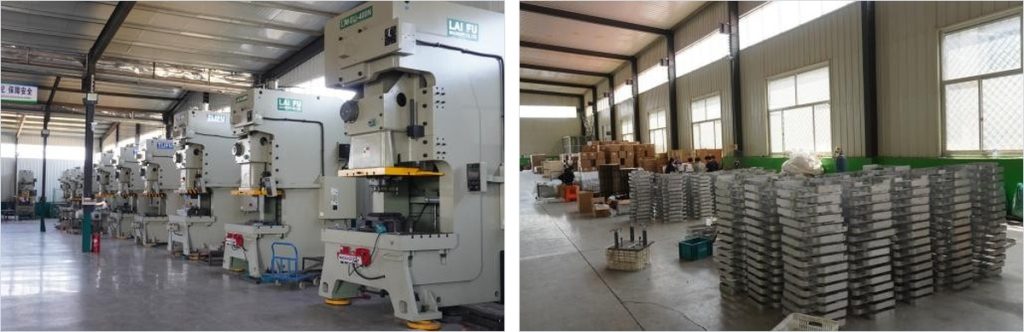
The Bohai Bay area is the cluster most relevant to buyers who need automotive-grade stamping alongside general hardware work. Cangzhou in Hebei anchors both sides: Botou carries automotive die-making, while Nanpi County has run a hardware and electromechanical industry since the 1950s.
Nanpi’s scale is unusual for a county. According to Xinhua and People’s Daily Hebei reporting, the cluster now holds more than 4,000 related enterprises with an annual output value above RMB 34 billion, which is over 60 percent of the county’s economy, and it now appears on the national list of characteristic industrial clusters for small and medium enterprises. Tianjin, an hour away, adds port access and a large automotive assembly base. For a buyer, that combination means deep-drawn parts, brackets, hardware fittings and enclosures can sit within one supply radius, and buyers solve a die problem locally rather than by shipping work overseas.
Inland automotive belts: built around the assembly line
Changchun, Wuhan and Chongqing grew their stamping capacity next to vehicle plants, so their habits follow automotive volume and automotive documentation. Body panels and chassis brackets are natural work here. If you export your product, though, confirm the supplier’s export and packing experience, because these clusters developed largely against domestic demand.
How to match a region to your part
Matching a region for China metal stamping is a filtering exercise, not a beauty contest. Work through these four questions in order.
| Question | Why it decides the region |
| What is the part family and material thickness? | Thin-gauge precision work, heavy-gauge structural work and deep drawing live in different supply chains |
| What tolerance band does the drawing actually require? | A cluster that runs precision dies daily holds tight tolerances more reliably than one that does not |
| Who owns and maintains the die? | Regions with dense die shops recover from tooling problems faster |
| Which secondary processes are needed? | Surface treatment, welding and assembly capacity follows the customer base, not the press capacity |
Once those four answers are clear, two or three regions usually remain, and the comparison becomes meaningful. If the answers point to the Bohai Bay area or another automotive-linked cluster, it also becomes worth asking how the supplier handles first article inspection and process capability evidence, because those are the gates that decide whether a high-volume programme stays stable.
Three mistakes buyers make with cluster sourcing
Assuming the region with the lowest quote wins on total cost. A lower unit price in a cluster that is far from a port, or that has to subcontract finishing, freight, extra handling and longer replenishment can erase it. Cluster choice sets the logistics baseline before any negotiation begins.
Confusing a cluster’s headline industry with every supplier inside it. A region known for electronics stamping still contains suppliers running heavy presses, and a hardware region still contains precision shops. Cluster fit narrows the shortlist; supplier-level evidence decides the award.
Skipping the die question. Because die-making depth is the single biggest regional difference, buyers who never ask which local die shop will cut the tool and who maintains it lose most of the advantage that cluster selection was meant to give them.
FAQ
About the manufacturer
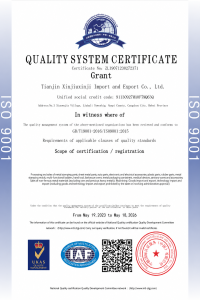 Xinjiuxinji is a custom metal fabrication manufacturer founded in 1999, with its ISO 9001:2015-certified factory located in Nanpi County, Hebei Province, China — inside one of the country’s established hardware and stamping clusters. We position ourselves as an engineering-first partner rather than a drawing-to-quote vendor: before production begins, our engineers review your design for manufacturability, flag tolerance, tooling and finishing risks, and give you DFM feedback you can act on.
From prototypes to mass production of metal stamping, deep drawing, laser cutting, CNC machining and welded assemblies, we keep one standard: transparent engineering communication, documented quality checks and consistent batch quality. Our press range runs from 60 to 400 tons, supported by laser cutting, CNC machining, welding and in-house surface treatment, so most parts complete their full process route without leaving the factory.
Which Cluster Fits Your Part? Get a Free Evaluation.
✅ Located in the Bohai Bay cluster · Free process evaluation · 3h response
📩 tylor@xinjiuxinji.com — Send your drawing and annual volume