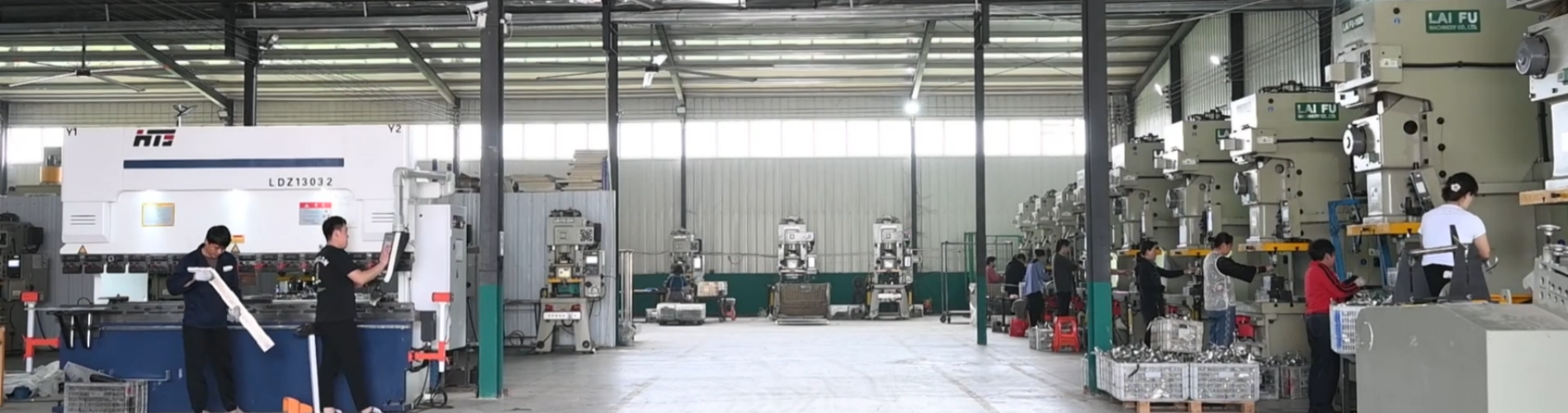
How Do Metal Manufacturers Keep Quality Consistent Across Mass-Production Batches?
Direct answer: Cross-batch consistency is supported by a repeatable system: approve the first article, record and review process conditions during production, control changes, and verify the agreed requirements before shipment. The exact controls depend on the drawing, material, process, quantity, critical features, and customer records.
Cross-batch consistency mechanisms
Where the part risk or program requires it, first-article approval establishes the reference; SPC-style process records can track critical dimensions or conditions over the run; and change management can document revisions to material, tooling, setup, process, inspection, or packaging before the next batch.
How this differs from batch quality control
The linked batch-quality page focuses on incoming, in-process, and outgoing checks for a production batch. This page focuses on how the reference, process records, and approved changes help carry consistency from one batch to the next.
FAQ
Why keep a first-article reference? It gives later checks a defined drawing and approved-part basis where the project requires one.
What should process records cover? Cover the critical features and conditions identified by the drawing, process review, control plan, or customer requirements.
How should a change be handled? Record the change, review its effect, update the applicable documents, and obtain the required approval before the affected batch proceeds.
For the batch-level view, see the batch quality control guide. For a project review, use the contact page.
Batch quality consistency in metal manufacturing comes from documented controls, not promises. Generally, on a long run, the difference between a stable batch and a drifting one comes down to a system. That system checks the part at set points and corrects before the deviation ships. Overall, this page walks through that system, split into the four control points it runs on.
First-article inspection before production
Before the first production piece leaves the press, this step checks the die and the setup. It also checks the critical dimensions against the drawing. If the first article is wrong, every later piece is wrong too. So catching it at piece one is what keeps the batch consistent from the start. A plant that skips this step is statistically inspecting itself out of trouble instead of preventing it. Furthermore, repeated programs benefit from recorded process parameters. As a result, a familiar part’s second run starts closer to the first article than a cold start would.
In-process checks that hold batch quality consistency
Operators check critical dimensions at fixed points during the run. Those checks do not sit only at the beginning and the end. Any deviation triggers a correction before parts leave the line, and we log that correction against the shift and the press.
Because the same dies, machines and settings repeat for every batch, the setting from the first run carries straight into the fifth. We write the interval schedule down and tie it to the part’s critical dimensions. That is what separates a routine from a ritual. It is also the step that keeps batch quality consistency when the operator changes but the standard does not.
A final report that travels with every shipment
The report travels with the goods, so your incoming QC reads the same values our team signed. Records make any drift traceable to its source — the operator, the shift, the press, the material lot. If a dimension moves between batches, the records show when and where, so the fix goes to the cause instead of the symptom. Without that report, consistency is a claim rather than a document.
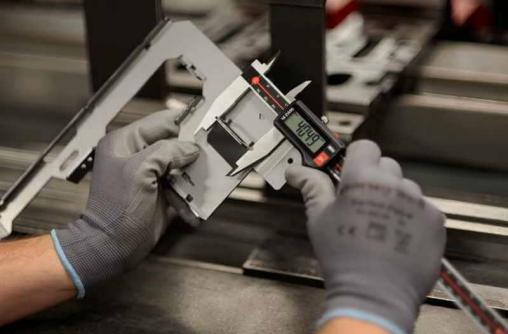
The documented loop behind batch quality consistency
Across stamping, laser cutting and CNC machining, Xinjiuxinji applies this documented quality loop. That loop means inspect the first article, check at intervals, correct before shipping, and keep the records per job. The loop repeats for every part family. So the real question is not whether the plant checks — it is what the checks amount to. We hold to a firm delivery date on every order, because a consistent part that arrives late is not a consistent part. Likewise, documented controls make onboarding a new part predictable: the same loop applies, only the check points move.
The management system behind this loop is ISO 9001 — our ISO 9001 metal fabrication guide explains what the certificate does, and does not, guarantee for your batches.
What Happens If I Change the Design After Stamping Tooling Is Already Made?