2026 US Steel and Aluminum Tariffs: The Landed-Cost Math
First, send one stamped bracket to a China-origin supplier, and the same drawing can carry three different duty numbers. So the reality of the US steel and aluminum tariffs in 2026 is this: the spread comes from classification, not from the supplier. In 2026 the US reworked the Section 232 framework twice — on April 6 and again on June 8. And the most consequential change is the duty base. The duties now hit the full value of the finished part, not just the metal content. As a result, your landed cost math changed. This guide walks that math from the top down: the two actions, the rate table by origin, a worked $10,000 example, and the movements to track before the 2028 sunset.
The Number Changed, Not the Metal
First, on April 6, 2026, Proclamation 11021 moved the entire framework to a full-customs-value basis. It also restructured the rate ladder. Then, on June 8, 2026, Proclamation 11032 reorganized the covered product lists and added partner-specific rates. In other words, the same part can sit in a different bucket depending on which annex lists it. So the bucket sets the rate. The table below summarizes both actions.
| Effective date | Action | Key changes |
|---|---|---|
| April 6, 2026 | Proclamation 11021 | Duties apply to the full customs value of the imported article. 50% on steel, aluminum, and copper articles. 25% on “derivative articles” that are predominantly composed of those metals; a temporarily reduced 15% rate for fixed industrial machinery and power equipment (through Dec 31, 2027); 10% for derivatives containing 95% US-sourced metal; end of the derivative “inclusions” process |
| June 8, 2026 | Proclamation 11032 | Covered articles regrouped into Annexes I-A through I-C; Annex I-C articles carry a 25% base rate with partner-specific reductions (see rate table below); the “made entirely of US metal” threshold dropped from 95% to 85% by metal weight; agricultural equipment and certain residential HVAC added to the 15% reduced-rate category; aluminum lithographic plates and steel racks added to scope; rates revert to the April structure on January 1, 2028 |
Also, one tie-breaker saves money. When a product falls under multiple rates, the lowest applicable rate governs. So the classification work below is not academic. It directly picks the rate that applies.
Metal Articles vs. Derivative Articles
Before April 2026, Section 232 mostly taxed the metal _content_ value of a part. After April 6, 2026, it taxes the full value of the article as imported. In practice, your machining hours, assembly, and processing all sit inside the duty base now. So a precision-machined bracket pays more duty than the same steel at sheet stage — even from the same country.
The classification language does the sorting. Raw and semi-finished products — plate, sheet, bar — are “metal articles.” A finished bracket, enclosure, chassis, or structural subassembly is a “derivative article” — a manufactured product predominantly composed of covered metals. Both categories fall inside the framework, but they sit in different rate buckets. For lookup, steel products cluster in HTS chapters 72 and 73, while aluminum sits in chapter 76. The April 2026 action covers chapter 72 and most goods in chapters 73, 74, and 76. In addition, two exclusion rules keep the scope honest. Goods already subject to the Section 232 _automotive_ tariffs are exempt from the steel and aluminum tariffs. Also, the temporary global 10% duty under Section 122 does not apply to Section 232-covered products.

Current Rates by Origin Under the US Steel and Aluminum Tariffs
Also, for Annex I-C articles, the June 2026 proclamation sets a 25% base additional duty. Specific partners get lower or capped treatment. The table below shows the additional Section 232 rate to plan around, on top of normal MFN (Column 1) duties.
| Origin of the part | Section 232 additional duty (Annex I-C articles) |
|---|---|
| EU, UK, Japan, South Korea, Switzerland, Liechtenstein, Taiwan, Argentina, Ecuador, El Salvador, Guatemala | Capped at 15% total: if the product’s Column 1 duty is below 15%, the combined Column 1 + Section 232 rate equals 15%. If Column 1 is already 15% or higher, the additional Section 232 duty is zero |
| China and other origins without a special rate | 25% (stacks with MFN and, for China, Section 301 duties) |
| Canada / Mexico, USMCA-qualifying | 25% on the non-US content of the product only, with a 15% floor on total effective duty |
| Derivative articles made of 100% US smelted-and-cast aluminum or US melted-and-poured steel (85%+ by metal weight now qualifies as “entirely” US) | 10%, calculated with the same Column 1 methodology as the partner row above |
In addition, the temporarily reduced 15% category runs through December 31, 2027. It covers fixed industrial machinery and power equipment, plus agricultural equipment and certain residential HVAC systems. Also, mobile industrial equipment received its own temporary modification. Finally, from January 1, 2028 the Annex I-C rates revert to the April framework: 50% on articles and 25% on derivatives. So every advantage in the current mix carries a sunset date.
A Worked Example: $10,000 of Stamped Brackets
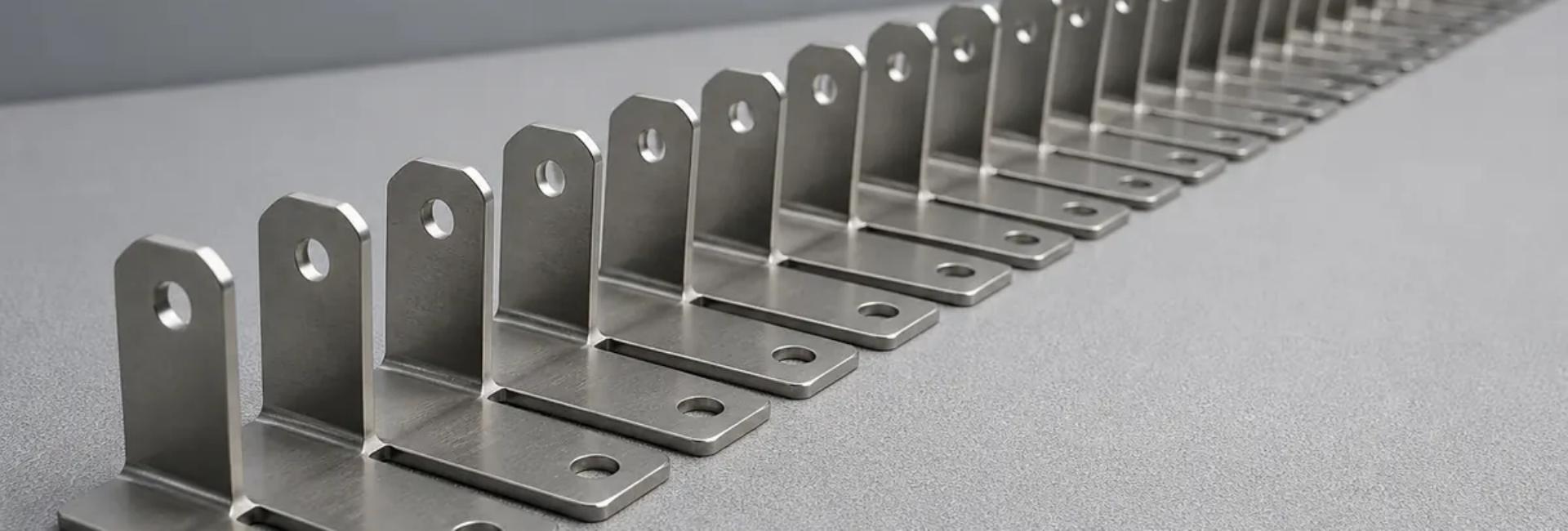
Put the table to work on a concrete number. Take a $10,000 order of stamped steel brackets — think HTS 7320/7326-class items, and verify your exact 10-digit code — origin China. Assume a 0% Column 1 base duty, which applies to many sheet-metal fabrications. If the item sits in Annex I-C, the Section 232 additional duty adds $2,500. If it sits in Annex I-A or I-B instead, the April 50% full-value rate adds $5,000. On top of that, Section 301 duties on China-origin goods still apply and stack with Section 232. And USTR’s July 24, 2026 action added more. It imposed forced-labor-related Section 301 duties of 10% or 12.5%. They cover goods from 60 economies that have adopted forced-labor import prohibitions. As a result, the all-in exposure on that one $10,000 order can swing from roughly $2,500 to well above $7,500 on classification alone.
Now run the same part from an EU supplier. The combined Column 1 + Section 232 treatment caps at 15%, or $1,500 on the same order. That gap — not the ex-works price difference — is what the 2026 changes most directly reward or punish. So these figures are illustrative, and your actual rates require 10-digit HTS verification.
Four Things to Put in the RFQ
Because the duty base is the finished part, the RFQ is where the tariff line gets decided. First, ask for the 10-digit HTS code check. Confirm which annex — I-A, I-B, or I-C — of Proclamation 11021, as modified by Proclamation 11032, lists your part. CBP guidance and the USITC HTS lookup are the authoritative tools. Next, your broker should run this before any price negotiation. Second, collect material-origin documentation: the country of smelting or casting, the share of US-sourced metal if any, and a certificate of origin. The June 2026 rules key several preferential treatments to metal origin rather than assembly location. So this paperwork directly changes the duty. Third, recalculate landed cost on the full-value base. Keep the tariff line separate from the unit price in your comparison sheets. Finally, re-evaluate the supplier mix. EU, UK, Japanese, Korean, Swiss, Liechtenstein, Taiwanese, and several Central American origins face a 15% cap through 2027. And the USMCA corridor applies 25% to non-US content only, with a 15% floor. In other words, it favors parts that genuinely incorporate US material.
Frequently Asked Questions
Which annex does my part fall into — I-A, I-B, or I-C?
First, the 10-digit HTS code decides it. Check the part against the annexes of Proclamation 11021, as modified by Proclamation 11032, using the USITC HTS lookup. Next, have your broker run the check before price negotiation.
Do the partner caps apply to every product from those countries?
Only for Annex I-C articles. So EU, UK, Japanese, Korean, Swiss, Liechtenstein, Taiwanese, Argentine, Ecuadorian, El Salvadoran, and Guatemalan origins get the combined Column 1 + Section 232 cap at 15% through December 31, 2027. Other origins without a special rate stay at 25%.
How do the tariffs stack with Section 301 duties on China?
They stack. First, Section 232 applies in addition to MFN (Column 1) duties, trade remedies, and Section 301 rates. In addition, USTR’s July 24, 2026 action imposed forced-labor-related Section 301 duties of 10% or 12.5%. They cover goods from 60 economies that have adopted forced-labor import prohibitions.
What changes on January 1, 2028?
The Annex I-C rates revert to the April framework — 50% on articles and 25% on derivatives. Also, the reduced-rate categories end on December 31, 2027. Beyond that, Commerce’s August 2026 scope-comment process and the USMCA review can add further movement.
What documents should the supplier provide now?
Ask for the country of smelting or casting, the share of US-sourced metal, and a certificate of origin. Also, the June 2026 rules key several preferential treatments to metal origin, not just assembly location. So the documents change the duty itself. The full request list sits in our RFQ checklist.
Does DDP remove the tariff from my cost?
No. DDP moves tariff handling to the supplier, but the duty still applies on the full value of the finished part. So keep the tariff line visible in the quote. Then, compare suppliers on landed cost, not unit price.
Sources
- Further Adjusting the Tariff Regimes for Imports of Aluminum, Steel, and Copper into the United States (Proclamation, June 1, 2026)
- CRS In Focus IN12519: Section 232 Tariffs on Steel and Aluminum (Library of Congress, updated 2026)
- Notice of Actions in Section 301 Investigations (Federal Register, July 28, 2026)
- Harmonized Tariff Schedule of the United States (HTSUS) (USITC, 10-digit lookup)
Send the Drawing, Get the Exposure Number
Send us the drawing, and we flag the likely HTS classification and the current tariff exposure for your origin mix. As a result, the landed-cost math under the US steel and aluminum tariffs starts from real numbers. Request a quote, or align spec language first in the metal fabrication glossary. The inspection side of the paperwork lives in our RFQ checklist. Finally, the project cases show the part families we quote most often. Shipping and lead-time detail is in the shipping and delivery guide.