How Should You Evaluate a China Metal Parts Manufacturer for an Automotive Program of 100,000+ Pieces per Year?
Short answer: At 100,000 pieces a year, a China metal parts manufacturer is no longer quoting parts — you are qualifying a production system. Evaluate the supplier on four things in this order: a documented qualification sequence, first article and capability evidence on your actual part, a working change control procedure, and a tooling maintenance plan that covers the whole program life — with price checked last.
Volume changes the nature of the decision. At 500 pieces a year, for example, a good quote and a good sample are enough to start. At 100,000 pieces a year, an undetected process drift costs more than a rework batch. Instead, it costs you a recall, a line stop at your customer and a corrective action audit. The question you put to a China metal parts manufacturer therefore changes as well. It stops being “can you make this part” and becomes “can you keep making it the same way for years, and prove it”.
What changes when annual volume reaches six figures
Four things that stay optional at low volume become critical here:
- Firstly, process capability replaces sample quality. A perfect first article made by an engineer on a slow press tells you nothing about part 40,000 made on a running line.
- Tooling becomes an asset with a maintenance schedule. A die has a finite life between services. At 100,000 pieces a year, you are running one die hard, not cycling through spares.
- Thirdly, change control becomes the main risk. Tooling shifts, steel lots change and operators change, and each of those is a potential silent deviation.
- Finally, total cost replaces unit price. Freight, duty, inbound inspection, safety stock and corrective action cost all move with the volume, not against it.
How to qualify a China metal parts manufacturer: a gate-by-gate sequence
Most sourcing failures do not come from a bad factory; rather, they come from skipping a gate. Run these gates in order, and do not release production until the previous gate has evidence attached.
| Gate | What you are verifying | Evidence to require |
| 1. Capability screen | Can this factory make this part family at all? | Process route, equipment tonnage and bed size, comparable part references, DFM comments on your drawing |
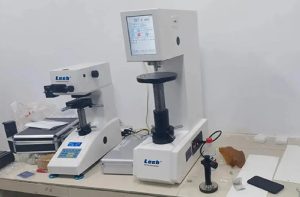
| 2. Quality system | Is there a documented system, or only good intentions? | ISO 9001:2015 certificate with number and scope; inspection plan; instrument calibration records; in-process inspection intervals |
| 3. DFM and drawing freeze | Are tolerances, datum scheme and finish agreed before tooling? | Written DFM report, marked-up drawing, controlled revision number |
| 4. Tooling approval | Is the die built to a checked design? | Tool design review record, die drawing, strip layout approval |
| 5. First article inspection | Does the die produce a conforming part across the full tolerance stack? | First article report with measured values against every drawing dimension, plus material certificate |
| 6. Capability study | Is the process centred, or just inside limits by luck? | Capability data on agreed critical features, with sample size, material, thickness and tolerance stated |
| 7. Pre-production run | Does the process hold across a real batch, not one part? | In-process records for the pilot lot, scrap and rework rate, packaging validation |
| 8. Production release | Is there a controlled baseline to compare future batches against? | Signed golden sample, frozen process parameters, change control procedure |
| 9. Recurring monitoring | Does the system keep working after everyone stops paying attention? | Per-batch inspection reports, periodic layout inspection, tooling service log |
Does your program require IATF 16949?
Answer this question before quotation, not after. IATF 16949 is a separate automotive quality standard, and it is not interchangeable with ISO 9001:2015. Many automotive OEMs and tier-1 customers treat it as a mandatory prerequisite for production part approval.
Two practical points:
- Ask for the certificate, the number and the scope. However, a logo on a website is not evidence. Certification scope matters too. If the certificate leaves out the process you buy, it does not cover your part. In fact, the usual gap is heat treatment or surface treatment that takes place at another plant.
- Check whether your own tier requires it. Generally, qualification burden varies by tier. A tier-2 program, an off-highway application and an aftermarket part face lighter requirements than a passenger-vehicle safety-critical part. Confirm the requirement with your customer before you exclude or accept a supplier on this basis.
Xinjiuxinji runs an ISO 9001:2015-certified facility in Nanpi County, Hebei, and works as a China metal parts manufacturer for automotive-related programs. If your program mandates IATF 16949, treat that as a gating requirement: verify the certificate number and scope with the issuing certification body before you commit tooling.
How to read capability claims from a China metal parts manufacturer
In fact, buyers misuse process capability more than any other number in sourcing conversations. A capability index means nothing on its own. It counts only when the supplier names the feature, the sample size, the material, the measurement method and the tolerance behind it.
When a supplier sends you a capability number, ask three questions:
- Which feature? Capability on a flat blank length is not the same as capability on a bend angle or a hole position after three forming stations.
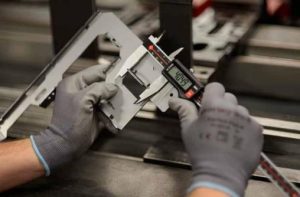
- How did the supplier measure it? A digital caliper and a coordinate measuring machine produce different uncertainty, and the measurement system itself needs to be adequate for the tolerance.
- Did the process run centred at the time? However, a study taken on a freshly set-up press describes the press on a good day, not the process.
For stamped and deep drawn features that we designed and tooled for precision work, our processes hold tolerances down to ±0.01 mm. That figure states capability, not a promise about every feature. So the tolerance you can achieve depends on material, thickness, feature geometry, tooling design and the datum scheme on your drawing.
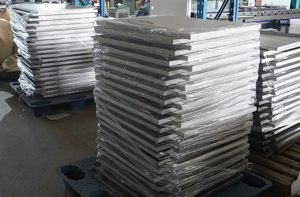
Change control and traceability: the items that decide whether you sleep well
At 100,000 pieces a year, the supplier’s change control procedure protects you more than any inspection report. Therefore, ask the China metal parts manufacturer to put it in writing, and check that it covers:
- What triggers a notification. Any change to material, machine, method or manpower on the part — the classic 4M list — should require your written approval before the supplier implements it.
- Revision control. Every drawing, inspection report and shipping document should carry the revision number it came from, so every batch traces back to a record.
- Batch traceability. For each shipment, you should be able to retrieve the steel certificate, the production date, the press and die used, and the inspection results.
- Non-conformance handling. What happens when a dimension drifts out of tolerance — containment, root cause, corrective action, and how the supplier communicates it to you.
Tooling maintenance planning: what to ask a China metal parts manufacturer
Even so, a die that passed qualification in month one can drift by month twelve.
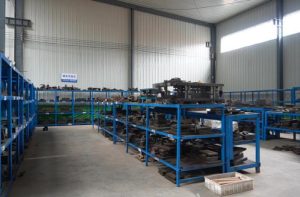
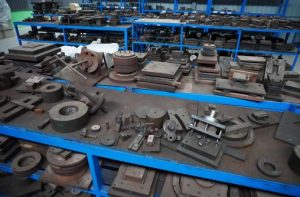
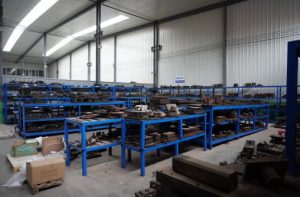
For a multi-year program, ask the China metal parts manufacturer to state the expected hits between services and the die inspection interval. Ask what triggers a repair rather than an adjustment. Also confirm who owns the tooling, where the supplier stores it, and what condition it must come back in if the program moves.
What to send for a qualification-stage quotation
o get a quote you can compare, send the drawing or 3D file with the datum scheme, plus the material and thickness. Then add the annual volume, the release frequency, the critical features, the finish requirement, your customer’s quality standard and the destination.
Suppliers who receive the volume and the standard together quote a production system, whereas suppliers who receive only a drawing quote a part.
FAQ
How many suppliers should I evaluate for a 100,000-piece-per-year program?
Generally, three is the practical number: one incumbent, one alternative and one disruptive option. More than three multiplies qualification effort without improving the decision. The gates that matter — first article, capability study and pilot run — cost the most.
Do I need PPAP for a China metal parts program?
That depends on your customer’s requirement, rather than the supplier’s preference. Many automotive customers mandate Production Part Approval Process documentation. If your customer requires PPAP, confirm the submission level before quotation. If they do not, agree a practical substitute: a first article inspection report, a capability study and a golden sample.
What is the biggest cause of failures in high-volume metal part programs?
So the biggest cause is undetected process drift after tooling adjustment, followed by drawing revision mismatches between the buyer and the supplier. Both are change control problems rather than manufacturing problems. Documented approval for process and tooling changes prevents both.
Is ISO 9001:2015 enough for an automotive metal parts program?
Only if your customer says it is. ISO 9001:2015 is a general quality management standard, whereas IATF 16949 adds automotive-specific requirements. Automotive OEMs commonly require IATF 16949 in addition or instead, and the requirement propagates down the supply chain. Establish the exact requirement with your customer before you shortlist.
How do I verify batch consistency once production has started?
Then ask the China metal parts manufacturer for per-batch inspection records with measured values, not a pass or fail stamp, and review them against the first article data. Also request a full layout inspection at an agreed frequency. Keep a signed golden sample at both ends so you settle a disputed dimension by measurement, not discussion.
About the manufacturer
Xinjiuxinji is a custom metal fabrication manufacturer founded in 1999, with its ISO 9001:2015-certified factory located in Nanpi County, Hebei Province, China. We position ourselves as an engineering-first partner rather than a drawing-to-quote vendor: before production begins, our engineers review your design for manufacturability, flag tolerance, tooling and finishing risks, and give you DFM feedback you can act on.
From prototypes to mass production of metal stamping, deep drawing, laser cutting, CNC machining and welded assemblies, we keep one standard, namely transparent engineering communication, documented quality checks and consistent batch quality. We answer inquiries within 3 working hours and maintain a 90.4% on-time delivery rate, because we believe a supplier should be as easy to audit as we claim to be.
Qualify a Production System, Not Just a Part
✅ Free DFM review · First article & capability evidence · Tooling maintenance planning
📩 tylor@xinjiuxinji.com — Reply in 3 working hours — free design optimization & quotation
China Metal Stamping Clusters: Which Region Fits Your Part?