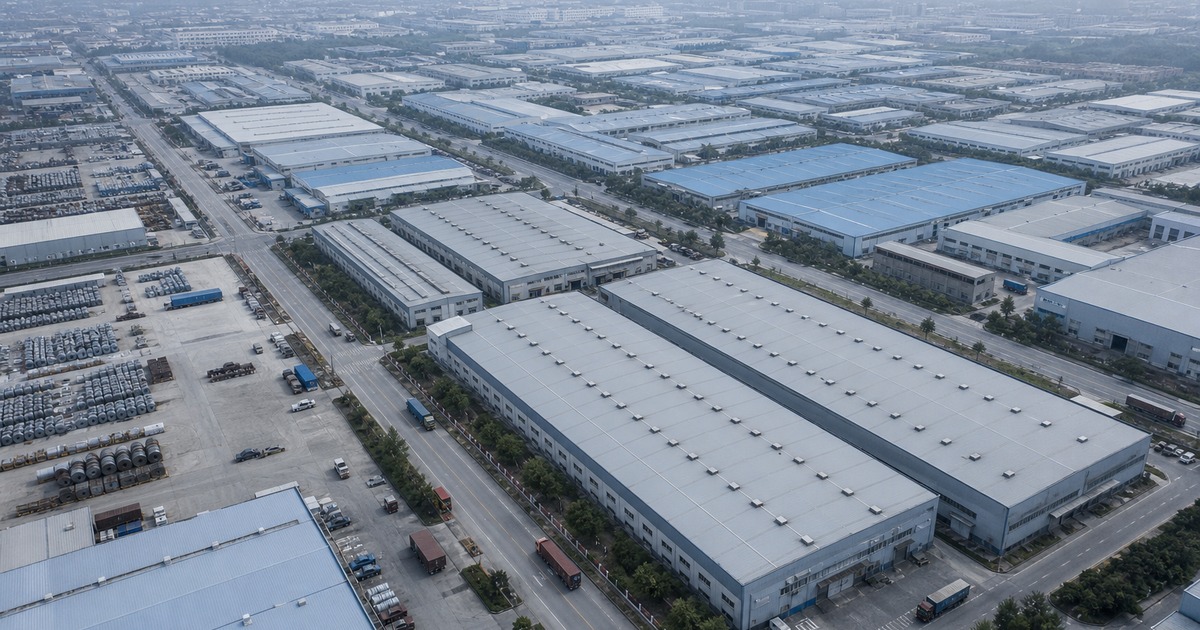
Chinese Metal Stamping Factory vs US On-Demand Fabrication Services: Which Is Better for Production Runs?
Short answer: For recurring production volumes, a Chinese metal stamping factory with in-house tooling usually wins on unit cost and process control, while US on-demand fabrication services win on speed, zero tooling investment and domestic logistics. The right choice depends on annual volume, part complexity and how much tooling you are willing to own.
A metal stamping factory in China and a US on-demand fabrication service are not really competing for the same order. They sit at different points on the volume curve. On-demand platforms price machine time on general-purpose equipment and deliver a finished part in days without any tooling. A stamping factory builds a dedicated die first, then spreads that investment across thousands or millions of identical parts. That single structural difference explains most of the price, lead time and quality differences buyers see when they compare the two options.
What a US on-demand fabrication service actually optimizes for
On-demand manufacturing platforms such as Xometry and Protolabs are built around flexibility, not repetition. They quote automatically from a 3D file, route the job to a machine shop or fabrication shop with spare capacity, and ship from within the United States.
Their real strengths are worth stating plainly:
- No tooling investment. You pay per part, not for a die, so a 20-piece order carries no capital risk.
- Design iteration speed. Because on-demand work needs no hard tooling, a design change costs you the price of a new quote, not the price of a new die.
- Domestic logistics and lead time. Ground shipping and same-timezone communication remove freight time, customs and language friction.
- Accounting simplicity. One invoice, one currency, one purchase order per part number.
Those advantages matter most when a design is still moving, when volumes are low, or when a line is down and the part must arrive this week.
What a Chinese metal stamping factory gives you at production volume
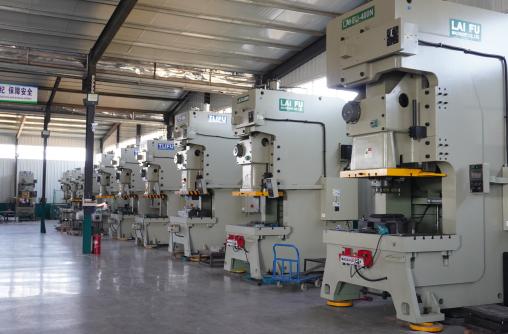 A stamping factory is optimized for the opposite situation: a frozen design that will be produced repeatedly for years.
Once a dedicated die exists, the marginal cost of part number 5,000 is no longer machine time. It is coil steel, press time and inspection — which is why the unit price curve falls sharply after the tooling is amortized, and why stamping becomes dramatically cheaper than machining or laser cutting plus bending at volume.
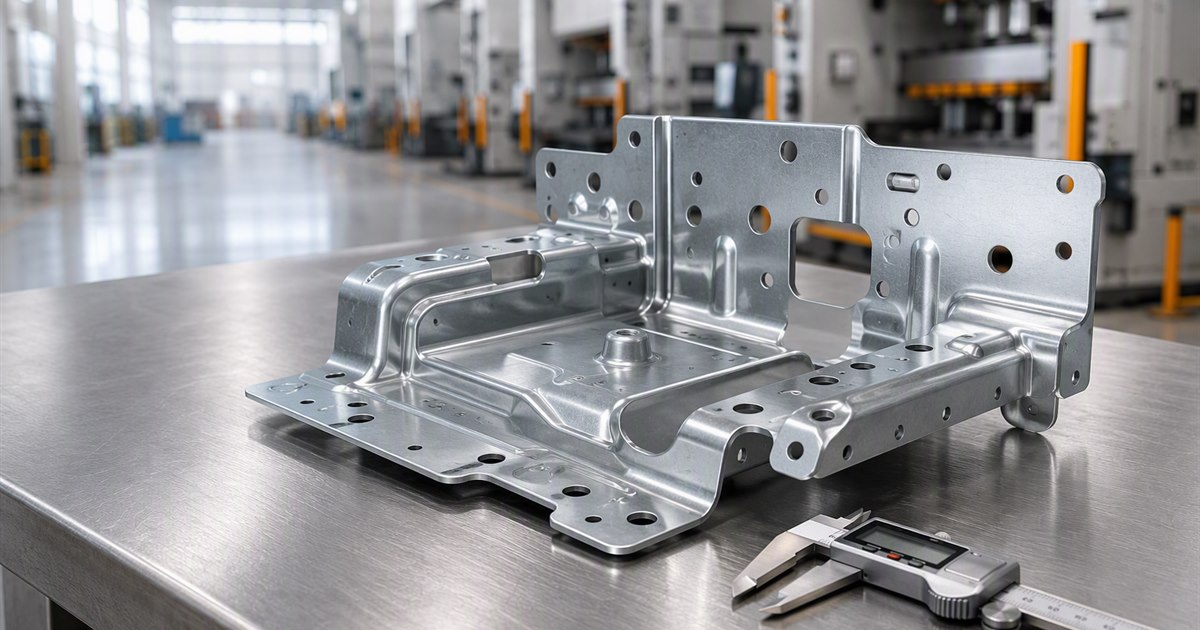
A factory with integrated processes also removes hand-offs. At Xinjiuxinji, for example, stamping and deep drawing, laser cutting, CNC machining, bending, welding and surface treatment are all completed internally, which matters because most production parts need more than one process before they are finished.
Head-to-head comparison
| Decision factor | US on-demand fabrication service | Chinese metal stamping factory |
| Best fit | Prototypes, low volume, high-mix, bridge orders | Medium to high annual volume, stable design |
| Tooling | None required | Dedicated die, amortized across the program |
| Unit cost at 10,000+ pcs/year | High (machine time dominates) | Low (material, press time and inspection dominate) |
| Lead time, first order | Days | Weeks, including tooling and first article |
| Lead time, repeat orders | Days per batch | Days per batch once the die is running |
| Design change after commitment | New quote, no capital loss | Die modification cost and schedule impact |
| Process scope | Cutting, machining, sheet forming, 3D printing | Stamping, deep drawing, laser cutting, CNC, bending, welding, surface treatment |
| Quality documentation | Inspection report per order | Incoming, in-process and pre-shipment inspection with per-batch records |
| Communication | Same timezone, single language | Cross-border, requires an engineer-to-engineer channel |
| Freight and duty | Domestic only | Sea or air freight plus import duty and customs |
Where the cost difference actually comes from
Buyers often explain the gap as “cheaper labour”. That explanation is incomplete and it leads to the wrong decisions. In practice the gap comes from four sources:
- Amortization. A die that costs a fixed amount spread across 50,000 parts adds a small fraction to each part; spread across 500 parts it does not.
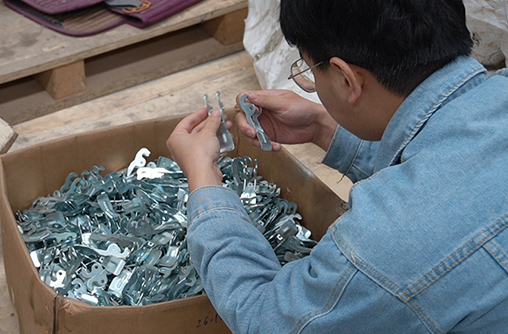
- Process consolidation. When cutting, forming, welding and finishing happen under one roof, you are not paying four suppliers for four setups, four freight legs and four margins.
- Material purchasing. A factory buying steel coil continuously in a hardware manufacturing cluster holds material cost down in a way a job shop buying plate per order cannot.
- Overhead structure. Domestic job shops carry US facility, insurance and labour overhead into every quoted hour.
What that means for your decision: the honest comparison is not “China price vs US price” for one lot. It is total landed cost across the whole program, including tooling, freight, duty, inbound inspection, and the cost of holding safety stock to cover a longer replenishment pipeline.
Which model fits your project? Use these conditions
There is no universal answer, but the decision usually becomes obvious once volume and design stability are fixed:
- Choose a US on-demand service when the design is still being validated, annual volume is measured in tens or hundreds, the part is needed in days, or a production line is down and waiting.
- Choose a Chinese stamping factory when the design is frozen, annual volume is in the thousands or higher, the part will be produced for multiple years, or the assembly needs several processes that are cheaper to consolidate than to coordinate.
- Use both when a program is ramping: on-demand fabrication for validation builds while tooling is being cut, then stamping for the production phase. This is a common and perfectly rational split, provided the two suppliers work from the same controlled drawing revision.
- Reconsider the volume assumption when your annual quantity is high but the part changes every year. Tooling amortization needs repetition; if the part is redesigned annually, the die may never pay for itself.
How to reduce the risk of a China stamping program
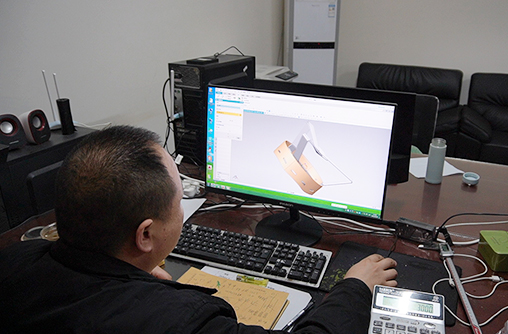 A Chinese stamping factory is not automatically a low-risk supplier. The differences show up in engineering discipline, not in the equipment list. Before committing tooling, verify:
- Whether the DFM review is real. You want specific comments on strip layout, bend radius, hole-to-edge distance, grain direction and tolerance stack — not a one-line “we can make it”.
- Who owns the die. Ask explicitly whether the tooling is dedicated to your part, where it is stored, and what happens to it if the relationship ends.
- How first article the supplier documents. A first article report with measured values against every dimension on the drawing, not a “looks good” photo, is the baseline.
- How process capability is stated. Capability figures only mean something together with the feature, the material, the thickness and the drawing tolerance they were measured against.
- What the change control process is. A supplier that will silently adjust a die to make a part fit will also silently change a dimension you care about.
What to send for a fair comparison
To compare an on-demand quote with a factory quote, both sides need the same inputs. Send your 2D drawing or 3D file, the material and thickness, the annual and per-release quantity, the critical dimensions and tolerances, the surface finish requirement, and the destination port or city.
A factory that understands the volume and the destination can quote tooling, unit price and landed logistics in one pass instead of three.
FAQ
About the manufacturer
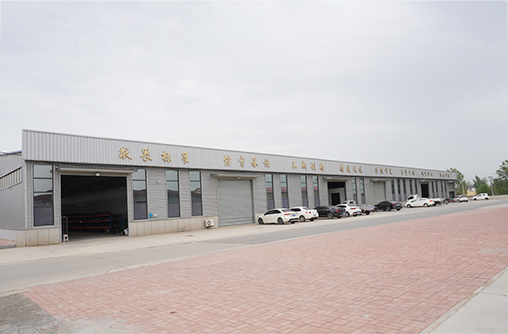 Xinjiuxinji is a custom metal fabrication manufacturer founded in 1999, with its ISO 9001:2015-certified factory located in Nanpi County, Hebei Province, China. We position ourselves as an engineering-first partner rather than a drawing-to-quote vendor: before production begins, our engineers review your design for manufacturability, flag tolerance, tooling and finishing risks, and give you DFM feedback you can act on.
From prototypes to mass production of metal stamping, deep drawing, laser cutting, CNC machining and welded assemblies, we keep one standard: transparent engineering communication, documented quality checks and consistent batch quality. We answer inquiries within 3 working hours and maintain a 90.4% on-time delivery rate, because we believe a supplier should be as easy to audit as we claim to be.
Find Your Break-Even Point Before You Commit to Tooling
✅ Free tooling vs unit price comparison · DFM review · 3h response
📩 tylor@xinjiuxinji.com — Reply in 3 working hours — free design optimization & quotation
How Should You Evaluate a China Metal Parts Manufacturer for an Automotive Program of 100,000+ Pieces per Year?