Sheet Metal Fabrication Quote Guide: RFQ Inputs and Engineering Review
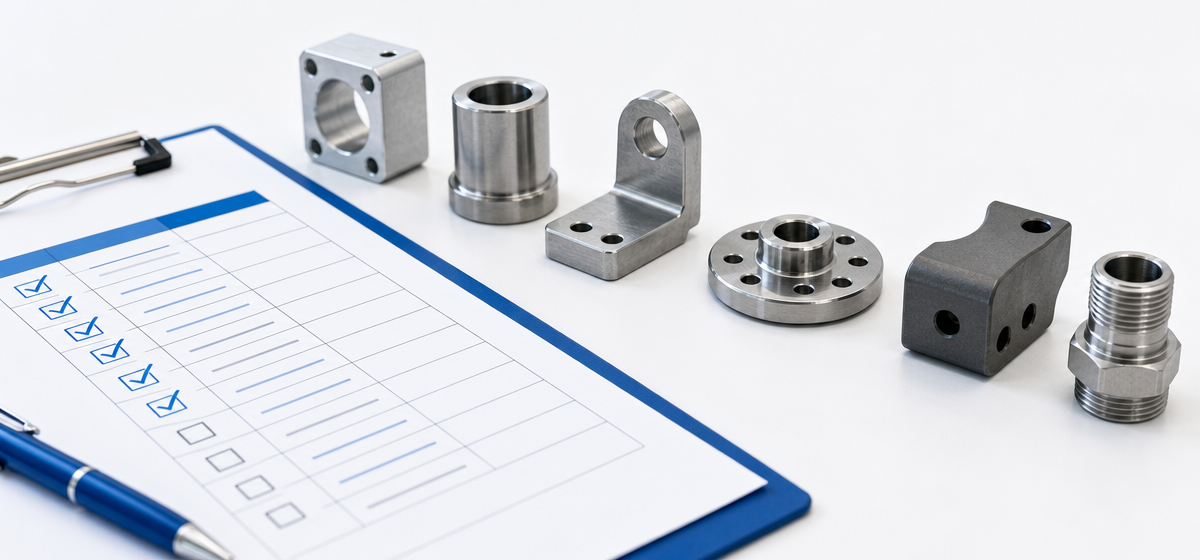
RFQ checklist: Send the drawings, material and thickness, quantity, critical tolerances, surface treatment, packaging, and delivery requirements. A usable quote is based on an engineering assessment of these inputs, not a number guessed from a title or a single image.
| Missing information | What it affects |
|---|---|
| Drawing or revision | Geometry, dimensions, datums and process planning |
| Material and thickness | Material cost, forming route and tooling assumptions |
| Quantity and delivery | Process choice, setup, capacity planning and schedule |
| Tolerances and finish | Inspection method, rework risk and surface-treatment cost |
| Packaging and shipping | Protection, handling and delivered-cost assumptions |
For buyers who need a field-by-field submission list, use the metal fabrication RFQ checklist as a companion: this guide explains quote inputs and engineering evaluation, while the checklist helps you submit them consistently. Inquiries are answered within 2 hours.
One customer received a quotation significantly higher than the previous supplier’s. So when we sought a new quotation from another supplier, the price dropped considerably. Generally, this kind of situation is quite common in sheet metal processing procurement. So the problem usually doesn’t lie in the price itself, but in whether the quotation information is complete. An accurate Sheet Metal Fabrication Quote is essentially an engineering assessment, so it depends on complete input information – not just a price number. Specifically, from three dimensions – information preparation, submission method, and evaluation criteria – we break down how to obtain a truly usable quote.
Why Do Similar Parts Receive Different Sheet Metal Fabrication Quote?
The same part can receive widely varying prices from different factories. So this does not necessarily mean one supplier is unreliable – it often reflects how complete the information is.
So the vaguer the information, the more assumptions the factory makes – and the larger the safety margin. Generally, for every unclear specification – tolerance, material, or surface finish – the factory estimates costs in the most conservative direction, driving the quote higher. Conversely, a significantly lower quote usually means the factory has made optimistic assumptions – loose tolerances, no full inspection, minimum standard finishes. If these assumptions do not match your actual requirements, additional charges will appear later.
What Information Should a Complete Quote Request Include – and Why Is It Essential?
So a complete RFQ package should include at least the following five categories of information. Also, each item corresponds directly to specific cost components in the quote. Indeed, missing any of them turns the quote into a “guess.”
For the commercial terms behind the quotation, review payment terms for importing metal parts from China, including deposits, tooling, and milestone triggers.
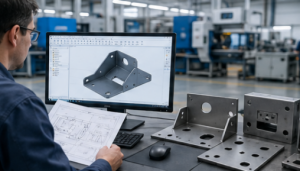
1. Complete Drawings. First, 2D engineering drawings must include all dimensions, tolerance requirements, surface roughness, and material specifications. Additionally, 3D models help the engineering team understand part geometry and assembly relationships more accurately. When drawing information is incomplete, the factory can only estimate, and estimation adds safety margins that inflate the price.
2. Material Specifications. Specifically, the material grade (such as SPCC, SUS304, AL5052, etc.), actual thickness, and surface condition. So the procurement cost of SUS304 stainless steel runs several times above ordinary galvanized steel, and tool wear is faster during processing. So without a specified grade, the factory prices based on the
most expensive material.
3. Quantity and Delivery Requirements. First, provide the sample quantity and the production quantity separately. So 100 pieces use laser cutting + bending, with no tooling cost but a higher per-unit price. In comparison, 10,000 pieces go with stamping (tooling cost amortized but lower per-unit price). Without quantity, the factory cannot determine the optimal process route. Delivery timeline also affects pricing – standard lead times and expedited lead times have different cost structures.
Quality and Packaging: the Details That Shape the Sheet Metal Fabrication Quote
4. Quality Requirements. So this covers critical dimensions and tolerances, appearance standards, and inspection requirements. Specifically, a ±0.1mm precision requirement versus ±0.03mm leads to different equipment and inspection methods, because the tighter one requires CMM full inspection, which costs more.
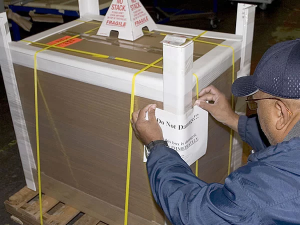
5. Packaging and Shipping Requirements. Standard industrial packaging, export wooden crates, or rust-preventive treatment? FOB factory or CIF port? These all factor into the total cost.
What Does a Professional Quoting Process Look Like After Drawings Are Submitted?
So a professional sheet metal fabrication quote is not a number a system outputs – our engineering team analyzes and validates it. Here is the standard process:
Engineering Review
Then, once the drawings arrive, our process engineers conduct a DFM (Design for Manufacturability) review – checking for difficult-to-machine features. These design flaws could lead to scrap and optimization opportunities.
Process Route Planning
Here we pick the optimal sequence: laser cutting or stamping, CNC bending if needed, machining where required, and the right surface treatment.
Labor and Material Cost Calculation
Then we estimate processing time for each step, plus material utilization and expected yield, to arrive at the base cost.
Comprehensive quotation
So we prepare the final quotation with a price for each specification, so the numbers stay verifiable.
We respond to inquiries within 2 hours, and then confirm the quotation turnaround after reviewing the submitted files. If you need expedited service, mention it when you submit the drawings.
Why Can Our Quotes Be Trusted for Accuracy?
So quote accuracy depends on how much control the supplier has over the manufacturing process. Below, we explain from a supplier’s perspective why our quotes consistently align with final settlement costs.
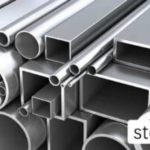 ♦ Material costs are verifiable. Also, we maintain long-term procurement of standard-grade materials (SPCC, SECC, SUS304, AL5052, etc.) with direct supply relationships with multiple steel mills.
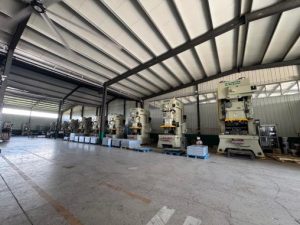
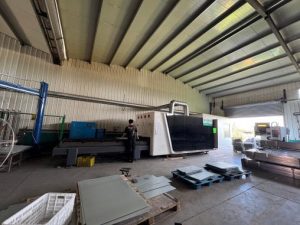
♦ Processing costs are calculable. So our 40 stamping presses (80-400 tons), 2 sets of 6kW laser cutters, and 5 five-axis/vertical machining centers cover every process in-house. Also, processing time, consumables, and yield rates for each step come from long-term production records, not estimates.
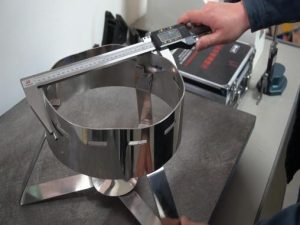
♦ So quality costs are already part of the quote. Indeed, our quotes already cover four inspection checkpoints: raw material inspection, first article inspection, in-process inspection, and final inspection. For high-precision parts, we specify at the quoting stage whether the job needs CMM full inspection. There is no such thing as “quote low first, add inspection fees later.”
♦ Historical data supports error control. Indeed, we have served over 3,000 customers across automotive, medical, electronics, telecommunications, and automation industries, delivering more than 70,000 different sheet metal parts. Our engineering team has also built a mature cost database covering tolerances, materials, and finishes, so we never guess by experience.
Request an Accurate Sheet Metal Fabrication Quote
✅ Complete information · Transparent pricing · No hidden costs
📩 tylor@xinjiuxinji.com — We respond to inquiries within 2 hours.
Complete your RFQ with drawings, material, quantity, and quality requirements for the most accurate quote
Why 3,000+ Companies Trust Us as Their Sheet Metal Fabrication Supplier