Beyond the Quote: Understanding the True Metal Stamping Cost
There is a rule in metal stamping that almost every buyer has heard. Still, few truly understand: The first order is always the most expensive.When you place the first order, the stamping cost is right there on the quote. It makes buyers flinch.Then comes the repeat order. The tooling has been paid off. The new quote shows only material and processing costs. Suddenly, that’s the real unit price.But here is the question: Where exactly does that first-order money go? What is necessary, and what can be saved? This article is not about complex formulas. It is about one thing: what actually drives Metal Stamping Cost and whether your project calls for stamping or another process.
Tooling Is Not an “Expense” — It Is an Investment
Why is the first order so expensive? One reason stands above all: tooling.
Tooling costs can range from several thousand dollars to tens of thousands of dollars depending on part complexity, material, and precision requirements. But the real question is not “how much does the die cost?” — it is how many parts do you plan to run through it?
For example, if a stamping die costs $100,000:
- Run 1,000 parts → $100 per part in tooling cost
- Run 100,000 parts → $1 per part
- Run 1,000,000 parts → $0.10 per part
Same die. Same cost. But because the volume changes, the tooling cost per part can differ by a factor of 100.T
That is why stamping shops care so much about your annual volume. They are not prying. They need to know which tooling solution to recommend: Low volume → simple die, lower cost, good enough.
High volume → high-speed progressive die, more expensive upfront but lowest per-part cost.Uncertain volume → conservative quote on both sides, leaving no one happy
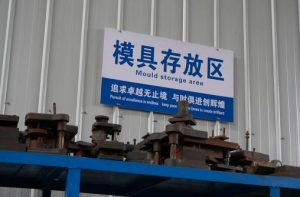
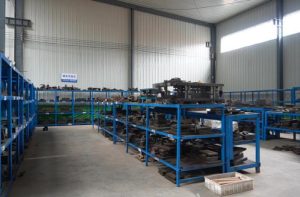
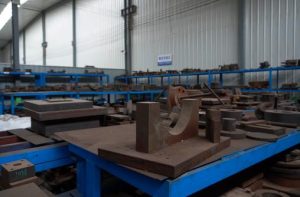
Die maintenance is another hidden cost.
Dies dull and wear over time. Without proper maintenance, part dimensions drift, scrap rates rise, and stamping stops. A well-maintained die runs consistently for years. A neglected die may need major repair within a year. A “cheap die with no maintenance” almost always costs more in total than an “expensive die with proper care.”
Low Volume? Stamping May Not Be Your Best Choice
Many buyers fall into the same trap: the moment they hear “metal parts,” they think “stamping dies.”
But if your annual volume is only a few hundred or a few thousand pieces, stamping is often not the most cost-effective option.The tooling cost per part is too high. Changeover time eats up too much of the production window. The efficiency advantages of stamping do not show up at low volumes.
In these cases, we recommend tool-free processing alternatives:
Laser cutting: ideal for flat parts — no tooling cost, extremely low cost for small batches
CNC bending: Combined with laser cutting, suitable for parts that require bending and shaping.
CNC machining: 5-axis and vertical machining centers, ideal for high-precision or complex geometries
Annual production volume exceeds 5,000-10,000 pieces, and the shape is well-suited for high-speed stamping.
Annual production volume is less than 5,000 pieces; it is still in the prototype stage, and the delivery time is extremely short.
Our approach is straightforward: we review your drawing and recommend stamping if it fits — and recommend a cheaper alternative if it does not. Our goal is to get your part made at the lowest total cost, regardless of which process we use.
Material Cost: The Hidden Variables Behind Metal Stamping Cost
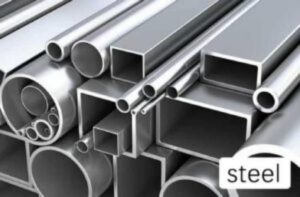
Material cost is the most transparent line item in any stamping quote — how many kilograms, which grade, at what unit price. Clear enough.
But the true cost of material goes beyond the unit price.
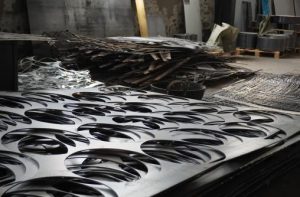
Utilization is the biggest variable. The same part, laid out differently on the strip, can show utilization differing by 20% or more. A good layout nests parts tightly, wasting only the edges. A poor layout leaves wide gaps between parts — gaps you paid for and will sell as scrap. For expensive materials like aluminum, stainless steel, and copper, a 10% difference in utilization can swing the entire project cost by a significant margin.
Material type matters too. Stainless steel and aluminum stamp at completely different speeds. High-strength steel wears dies several times faster than mild steel. Copper alloys require special clearances and lubricants. These differences do not show up on the material price tag, but they show up in your total cost — through press efficiency, die life, and scrap rates.
Grade selection is another lever. Some specialty grades are only available from one or two suppliers. When prices spike, you have no alternative. Choosing common, widely available grades builds flexibility into your supply chain. And flexibility saves money.

Production Volume: The Biggest Driver of Metal Stamping Cost
Volume is the strongest lever in Metal Stamping Cost:
— The molds have fixed costs → The higher the production volume, the thinner the fixed costs are spread out.
— Changing molds involves setup costs → The larger the batch size, the smaller the impact of a single mold change.
— Skilled workers have a learning curve → The more they run, the higher the efficiency and the fewer defective products.
This is why large-scale stamping can cost pennies per part. Not because corners are cut — but because volume is high enough to dilute fixed costs to near-zero.
The number of mold changes also affects the cost. Running one part one million times at a time is completely different from running it ten times, with each run being a thousand times. Each time the mold is changed, the press stops for half an hour to an hour, and the inspection takes another half hour. If warehousing allows, consolidate orders and reduce batch frequency — it is a way to save money without even negotiating.
Tolerance and Part Complexity: Why Precision Increases Metal Stamping Cost
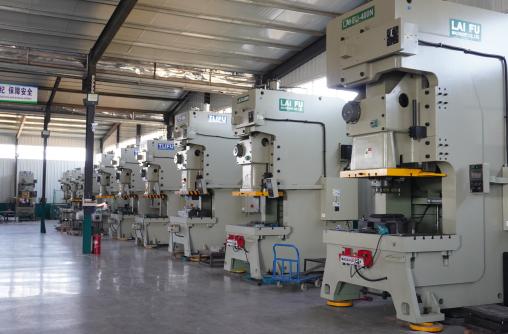
Some parts may seem small, but the quoted price is outrageously high. The reason is simple: for every additional bend, hole, or forming feature, the mold will have one more station. The more stations there are, the longer the mold will be, the more expensive it will be, the more difficult it will be to maintain, and the slower the press will run.
Accuracy also comes at a stamping cost. The tolerance requirements of ±0.05mm and ±0.15mm can translate into a difference of tens of thousands of units on the mold – more precise mold design, slower processing speed, and stricter inspection methods.
We have served thousands of customers over the years, and here is what we have learned: not every tight tolerance feature actually needs to be that precise in final assembly.
After receiving the drawings, our engineering team will review the dimensions and mark out which features are particularly sensitive to accuracy, which ones can be relaxed, and provide specific modification suggestions – such as how much precision can save how much money. We don’t mean to modify your drawings; instead, we want you to have a clear understanding of the costs before starting the mold production.
Secondary Operations: We Will Tell You What Can Be Eliminated
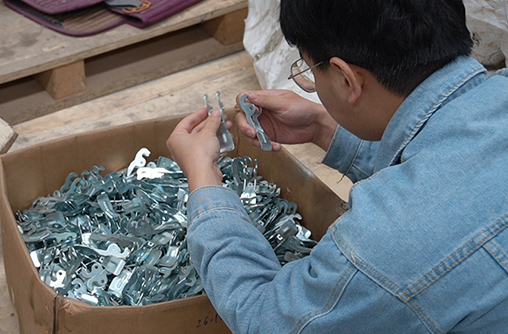
Deburring, plating, painting, anodizing, heat treatment — these secondary operations can sometimes cost more than the stamping itself.
With 27 years of processing experience, we know the cost of different materials and surface treatment options inside out. If there is a more affordable alternative that meets the same functional requirements, we will let you know.
For example, a drawing calls for “stamp then plate.” If we determine that pre-plated material would work just as well, we will recommend the material change — eliminating an entire process step and saving real money.
Another example: sharp edges that are not exposed or touched in final assembly — we can adjust die clearances to minimize burrs, eliminating a separate deburring step.
We will never recommend unnecessary secondary operations to increase the order value. Long-term trust matters more than a single order’s margin.
How We Quote: Every Line Item, Broken Down
Our quotations are never a total sum. Each quotation sheet contains details: how much for the mold, how it is shared based on production volume; what brand of materials, how thick, what is the utilization rate; which processes are included in the processing fee, what equipment is used, what is the cycle time; and what are the separate charges for post-processing. When customers receive the quotation, they know exactly where every penny is spent.
If a customer wants to carry out stamping but, after our assessment, we determine that laser cutting or CNC processing would be more cost-effective, we will recommend the mold-free solution. Sometimes when customers come to us for stamping, we actually suggest a cheaper method – it might sound like “giving away business”, but the customers actually trust us more. The next time there is a suitable order, they will think of us first.
The core message is just one sentence
Fixed metal stamping costs are allocated based on production volume, while variable costs can be reduced through design.
Who We Are
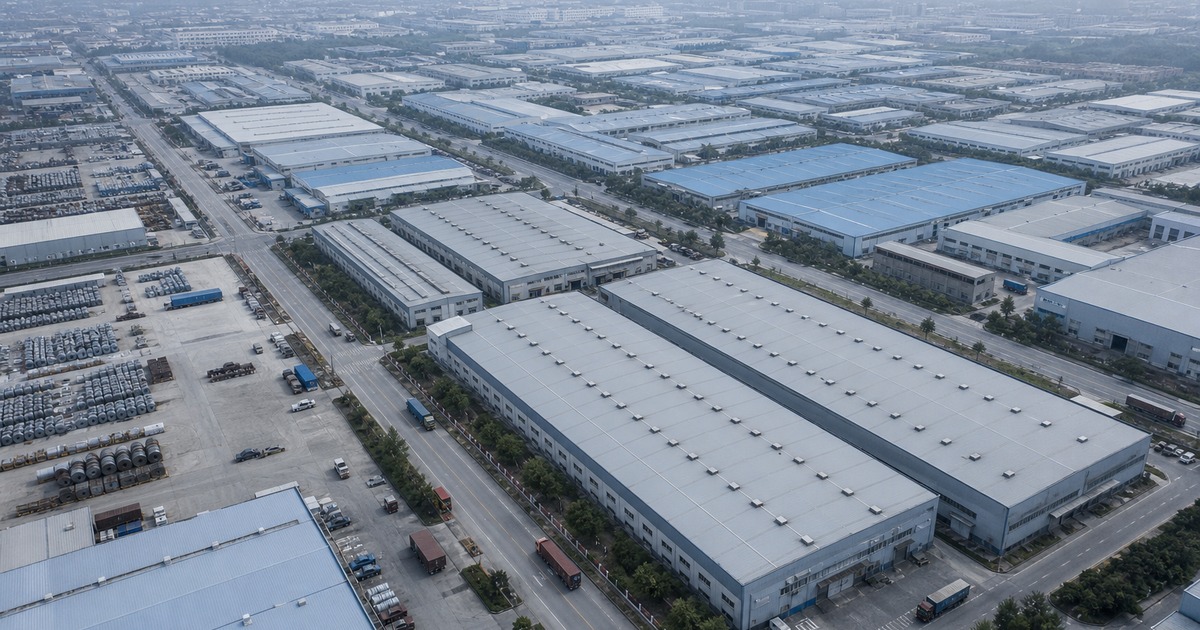
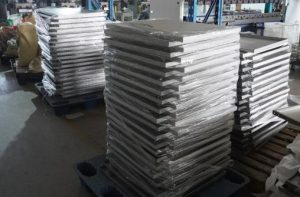
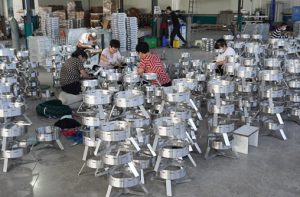
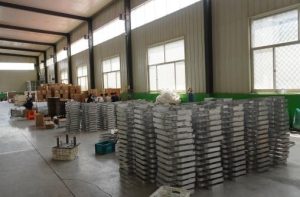
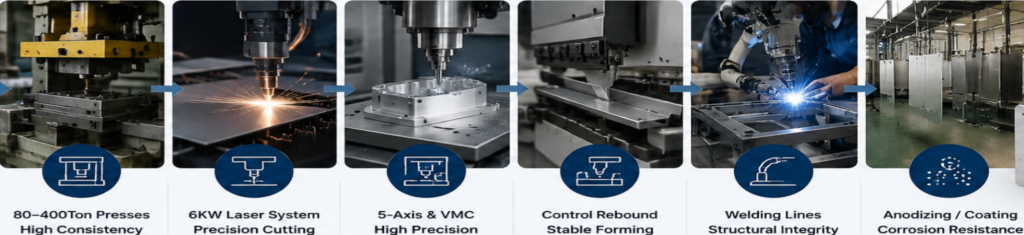
We are a Chinese factory with 27 years of experience in metal processing. We are ISO 9001:2015-certified and have a modern workshop covering over 9,000 square meters.
Process capabilities cover:
Tool-free Processing (6KW laser cutting, CNC bending)
CNC Machining (5-axis and vertical machining centers)
Forging
Welding
Surface Finishing
Tool Design and Manufacturing
From raw material to finished part, we handle everything in-house — no subcontracting, no cross-facility communication loss, with delivery and quality fully under our control.
Customers served:
Over 100 countries worldwide, 3,000+ enterprises, and over 70,000 different types of customized parts. The materials include aluminum, stainless steel, brass, cold-rolled steel, galvanized steel, Inconel, etc. The main business is export through foreign trade. We are familiar with international standards such as ASTM, SAE, AISI, and BS and possess bilingual communication skills.
Our pricing method:When we receive your drawing, we first evaluate the most suitable process — stamping, laser cutting, bending, or CNC machining. We quote the most cost-effective way, not just the process we are best at.
Frequently Asked Questions
Q1. Why is the first order the most expensive in metal stamping?
Because tooling dominates the first order. The mold or die is a fixed cost that is paid once and then spread across the parts it produces, and the first order also carries the setup and trial work that proves the process. As production volume grows, that fixed cost is divided by more parts, so the unit price falls. Looking only at the quoted unit price hides this structure. The real cost question is how the tooling is shared across your production volume.
Q2. Which factors drive metal stamping cost the most?
Volume, tolerance and part complexity, and secondary operations. Volume is the strongest lever: tooling and setup costs are fixed, so larger batches spread them over more parts. Complexity adds cost because every extra bend, hole, or forming feature adds a station to the die, and more stations mean a longer, more expensive tool. Secondary operations such as deburring, plating, painting, anodizing, and heat treatment can cost more than the stamping itself, so it is worth confirming which of them are genuinely required.
Q3. How can I tell whether a stamping quotation is reasonable?
Ask for the breakdown instead of a single total. A transparent quotation shows what the mold costs and how it is shared based on production volume, which material brand and thickness are used and at what utilization rate, and which processes are involved. When every line is traceable, you can compare suppliers on the same basis and see which cost drivers you can actually influence, for example by relaxing a tolerance that does not affect function or removing a secondary operation the part does not need.
Frequently Asked Questions
Q1. Why is the first order the most expensive in metal stamping?
Because tooling dominates the first order. The mold or die is a fixed cost that is paid once and then spread across the parts it produces, and the first order also carries the setup and trial work that proves the process. As production volume grows, that fixed cost is divided by more parts, so the unit price falls. Looking only at the quoted unit price hides this structure. The real cost question is how the tooling is shared across your production volume.
Q2. Which factors drive metal stamping cost the most?
Volume, tolerance and part complexity, and secondary operations. Volume is the strongest lever: tooling and setup costs are fixed, so larger batches spread them over more parts. Complexity adds cost because every extra bend, hole, or forming feature adds a station to the die, and more stations mean a longer, more expensive tool. Secondary operations such as deburring, plating, painting, anodizing, and heat treatment can cost more than the stamping itself, so it is worth confirming which of them are genuinely required.
Q3. How can I tell whether a stamping quotation is reasonable?
Ask for the breakdown instead of a single total. A transparent quotation shows what the mold costs and how it is shared based on production volume, which material brand and thickness are used and at what utilization rate, and which processes are involved. When every line is traceable, you can compare suppliers on the same basis and see which cost drivers you can actually influence, for example by relaxing a tolerance that does not affect function or removing a secondary operation the part does not need.
Want to reduce stamping costs? Get a free cost-saving plan
✅ Tooling cost analysis · Volume amortization · Process comparison
📩 tylor@xinjiuxinji.com — Reply in 3 working hours with free design optimization.
📌 Submit your drawings for professional stamping cost analysis and process recommendations — Know the real cost before you decide
👇 Click the button above to start your free assessment now
Metal Material Information That Every Buyer Should Know Before Placing an Order