DFM for Sheet Metal: Why It Is More Than a Design Review
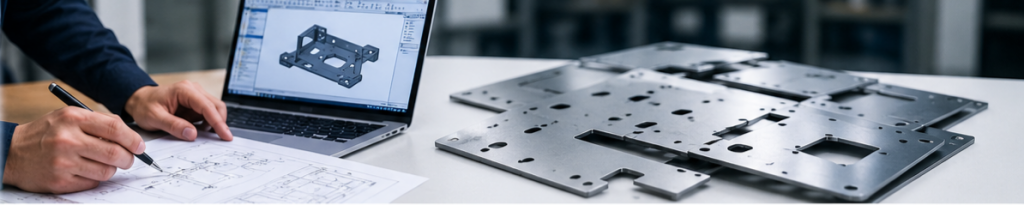
The essence of the problem is an unverified system gap between design and manufacturing, and DFM is the engineering approach used to eliminate it.
What Is DFM for Sheet Metal?
Many people understand DFM as just reviewing drawings, such as checking whether hole spacing, bending radius, or tolerances are reasonable. But this is only a small part of DFM.
In sheet metal fabrication, the products usually need to go through:
Laser cutting → Stamping → Bending → Welding → Machining → Surface treatment → Assembly
Any deviation at any stage will be magnified in the subsequent processes.
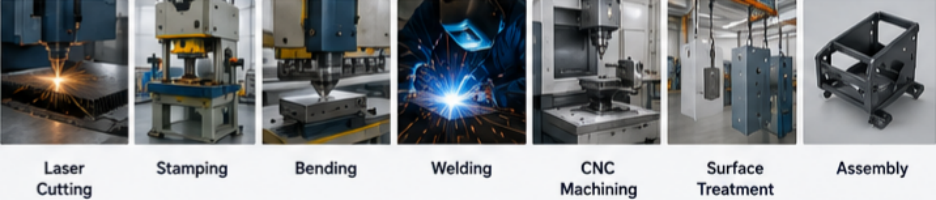
Therefore, what DFM for Sheet Metal truly focuses on is:
— Is the product structure suitable for the current manufacturing process?
— Can the production route be consistently used for mass production?
— Can the key dimensions be replicated for manufacturing?
— Is the product easy to position, weld, and final assemble?
— Are there any systematic manufacturing risks?
In other words, the focus of the DFM review is not on “can it be made”, but on “can it be made consistently and stably in the long term”.
For a complete understanding of the engineering logic of DFM, please refer to:
👉 Design for Manufacturability: The Complete Guide for OEM Sheet Metal Projects
Why Do Some Sheet Metal Designs Fail in Mass Production?
This is the most typical but often overlooked issue in the OEM project. The drawings can be verified on a single-piece basis, but this does not mean that stable mass production can be achieved.
👉 The drawings describe the design. 👉 Manufacturing deals with systematic errors.
For example:
• Laser cutting determines the initial size and the accuracy of the hole positions.
• Bending causes spatial deformation and rebound.
• Welding introduces thermal deformation and stress release.
• Surface treatment may affect local fit.
• Assembly amplifies cumulative errors.
Each process is within tolerance, but when the systems are combined, deviations will occur. Therefore, the core of DFM is not to inspect processes but to identify and control cumulative error paths.
What Does a Professional Sheet Metal DFM Review Include?
A professional DFM review is more than checking whether a drawing can be manufactured. It evaluates whether the design can be produced consistently, efficiently, and economically throughout the entire manufacturing process.
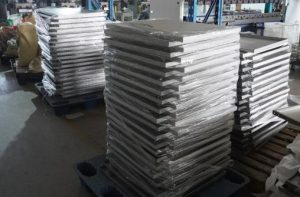
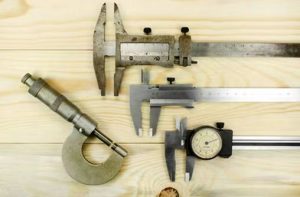
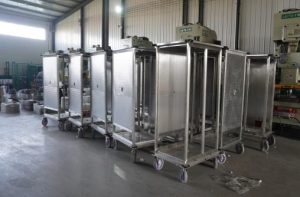
Material Selection
Material selection affects far more than product performance. It also influences bending behavior, weldability, machining efficiency, surface finishing, and manufacturing cost.
A DFM review evaluates whether the selected material matches both the product’s functional requirements and the planned manufacturing process, helping reduce production risks before fabrication begins.
Manufacturing Process Planning
The same part can often be manufactured using different processes.
For example, laser cutting is usually suitable for prototypes and small batches, while stamping becomes more efficient for high-volume production. Some complex features may require CNC machining, whereas others can be simplified through design optimization.
Rather than simply following the drawing, DFM determines the manufacturing route that delivers the best balance between quality, efficiency, and production stability.
Tolerance Strategy
Not every dimension requires the tightest tolerance.
A professional DFM review identifies the dimensions that directly affect product function and assembly, while allowing reasonable tolerances for non-critical features.
This approach maintains product performance without introducing unnecessary machining cost or longer production cycles.
Assembly Readiness
Many assembly issues originate long before assembly begins.
Hole locations, bending sequences, welding methods, locating features, and dimensional chains can all affect assembly consistency during mass production.
A DFM review evaluates these factors early, helping prevent problems that may not appear during prototype production but become significant in volume manufacturing.
For a detailed discussion of bending springback and assembly consistency, see our article “Why Your Metal Bending Parts Don’t Fit in Assembly.”
DFM Review vs Design Review: What’s the Difference?
This is a point that many OEM customers tend to get confused about:
The value of DFM is not simply correcting design issues—it is reducing manufacturing uncertainty before production begins.
OEM Case: How DFM Prevented Assembly Problems in Mass Production
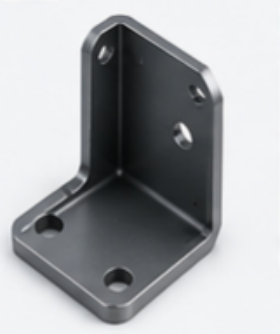
In an industrial equipment support project, the client provided complete drawings and requested that we proceed directly to sample production.
According to the drawings:
- ✔ The structure can be manufactured.
- ✔ The dimensions meet the requirements.
- ✔ There are no obvious design errors.
Following the standard procedure, we still conducted the DFM for the Sheet Metal review. The engineering team focused on analyzing the material specifications, bending sequence, hole layout, and welding method and discovered that some installation holes were located too close to the bending line.
Although the sample dimensions may still meet tolerance after manufacturing, the bending rebound will cause slight fluctuations between the hole position and the assembly reference. This deviation is not noticeable in single-piece manufacturing, but it will be amplified in mass production, ultimately affecting consistency.
Optimization measures include:
These adjustments:
- ✔ Does not alter product functionality
- ✔ Does not increase manufacturing costs
- ✔ Significantly reduces batch risks
Ultimately, the samples passed assembly verification, and batch production remained consistent without any additional rework. The essence of DFM is not to change the design, but to eliminate manufacturing uncertainties before production.
Why Do DFM Results Vary Between Manufacturers?
DFM is not a checklist, but rather a manufacturing judgment based on engineering experience. The differences among various manufacturers do not lie in “whether to implement DFM” but in whether the engineering foundation behind DFM is complete.
This difference mainly manifests itself in three aspects:
Real Manufacturing Data
If the judgment of DFM is solely based on drawings or software simulations, it can only identify “theoretical issues”. However, in actual production, factors such as material batches, equipment conditions, and process stability all affect the outcome. Therefore, whether there is real production data is the primary source of the quality difference in DFM.
Closed-Loop Manufacturing Experience
The true value of DFM lies not in the design stage, but in whether a complete manufacturing loop has been experienced:
👉 Design → Pilot production → Mass production → Feedback on issues → Process optimization
Only the engineering teams that have participated in this cycle can determine which problems will be masked during the prototype stage and which errors will be magnified during mass production.
System Engineering Capability
Sheet metal fabrication is not a single process, but rather a coupled system:
- Material → Forming behavior
- Process → Dimension change
- Equipment → Stability
- Batch → Error accumulation
If one fails to understand the interrelationships among these factors, DFM can only remain at the stage of “rule checking” and cannot make engineering judgments.
The truly valuable DFM stems from a closed-loop understanding of the manufacturing system, rather than merely design analysis or software checks.
Why Our DFM Engineering Is Built on Real Manufacturing Experience
This ability to make judgments comes from the actual manufacturing environment, rather than from theoretical deduction.
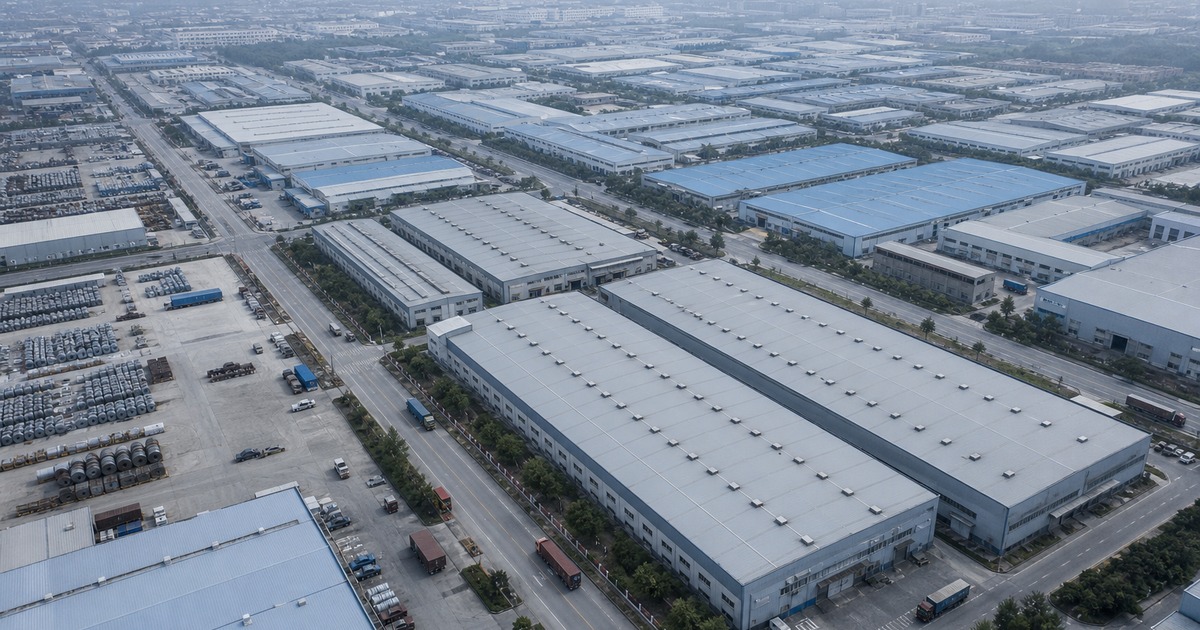
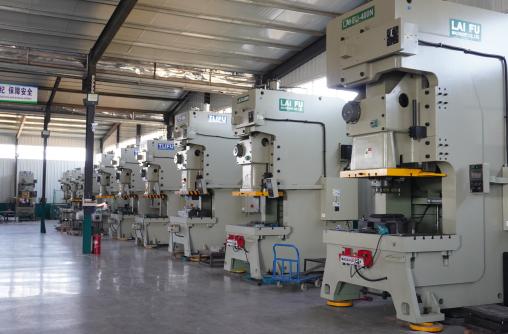
We have a 9000㎡ modern manufacturing base that covers the entire production process, from stamping, laser cutting, bending, welding, and machining to inspection, including 38 stamping machines, 2 laser cutting machines, multiple CNC processing centers, and CMM inspection systems.
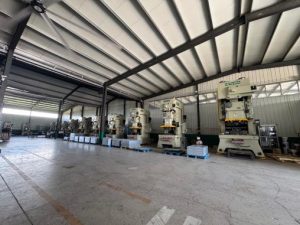
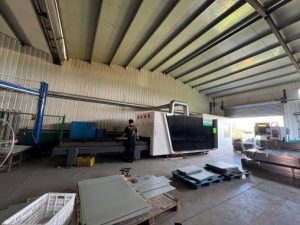
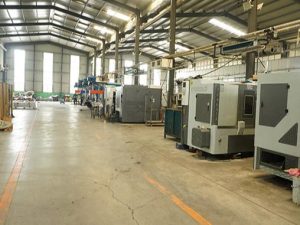
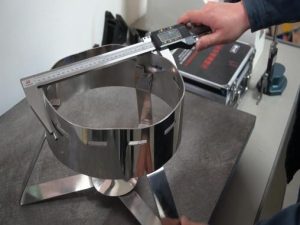
Meanwhile, all 19 engineers have over 10 years of experience in OEM manufacturing. They have been involved in the entire process from drawing review to mass production, and have collectively completed:
• Delivery of over 100 national projects
• Cooperation with 3000 enterprise customers
• Development of 70,000 metal parts
Relying on the ISO 9001:2015 quality management system, we integrate engineering review, production control, and quality feedback into a single manufacturing system for operations.
Therefore, our DFM assessment is not based on assumptions but on the continuous optimization of engineering judgments informed by real production feedback.
Get a Professional DFM Review for Your Sheet Metal Project
✅ DFM for Sheet Metal · Manufacturing risk assessment · Process planning
📩 tylor@xinjiuxinji.com — Reply in 3 working hours — free design optimization & quotation.
Upload your drawings for a professional DFM review — Our engineering team will evaluate manufacturability and identify risks before production starts.
Choosing Sheet Metal Finishes: What OEM Buyers Often Get Wrong