Custom Metal Parts – One Factory, One Team, No Handoffs
When sourcing Custom Metal Parts, OEM buyers care about more than just price. They need parts that meet drawing requirements, maintain consistent quality in mass production, and arrive on schedule.
When a part goes through multiple drawing revisions, repeated sampling, and constant delays, the issue is rarely the equipment. Machines can be purchased, and precision can be upgraded. What really makes the difference is whether the engineering team can assess a new drawing correctly the first time and propose a viable manufacturing plan—based on experience and sound judgment.
We are a professional metal parts fabrication factory. Over the years, we have helped clients across various industries solve a wide range of challenges. Here are our actual approaches.
What Does an Engineering Review Catch Before Production?
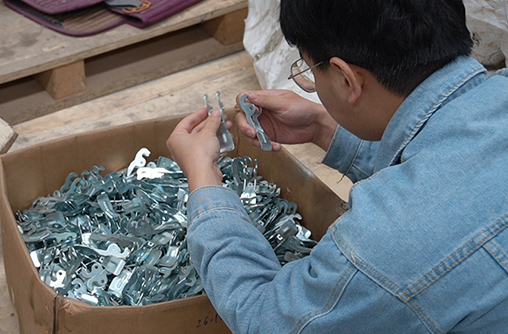
A customer who produces security equipment sent us a set of drawings for a metal bracket for quotation. The components were not very complex. It was a steel plate that was bent into shape with several installation holes. The material was cold-rolled steel, and they required 2,000 pieces per month.
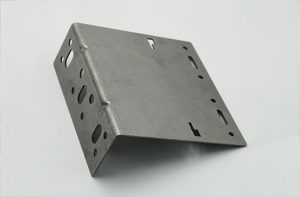
During our drawing review, we noticed a detail: the inside radius at the bend was specified slightly too tight. A single sample could be formed to that spec, but in production runs of several thousand pieces, two issues would likely emerge. The material on the outside of the bend would be prone to hairline cracking, and spring-back would vary from piece to piece, causing inconsistent angles that could affect assembly.
Our engineering team flagged this to the client and offered a specific suggestion: increase the inside bend radius slightly. It wouldn’t affect fit or strength, but it would make the bending process far more consistent and improve yield significantly in production. We also recommended adjusting the bending direction relative to the material’s grain orientation to reduce the risk of outer-edge cracking further.
The customer found the suggestion reasonable and adopted it. During the first-piece confirmation, the bending angle was stable, and the appearance was normal.We have been supplying this part steadily for over two years now, with excellent batch-to-batch angle consistency and zero scrap issues.
What This Means for Production Reliability:Mass production is not just “making it according to the drawings”. How the material flows, how forces are released, and how consistency is maintained from batch to batch – when these details are thought through before processing starts, a lot of trouble is avoided down the road. We help clients identify and address issues early, which proves far more efficient than making adjustments after problems surface in mid-production.
Our Custom Metal Parts Manufacturing Capabilities
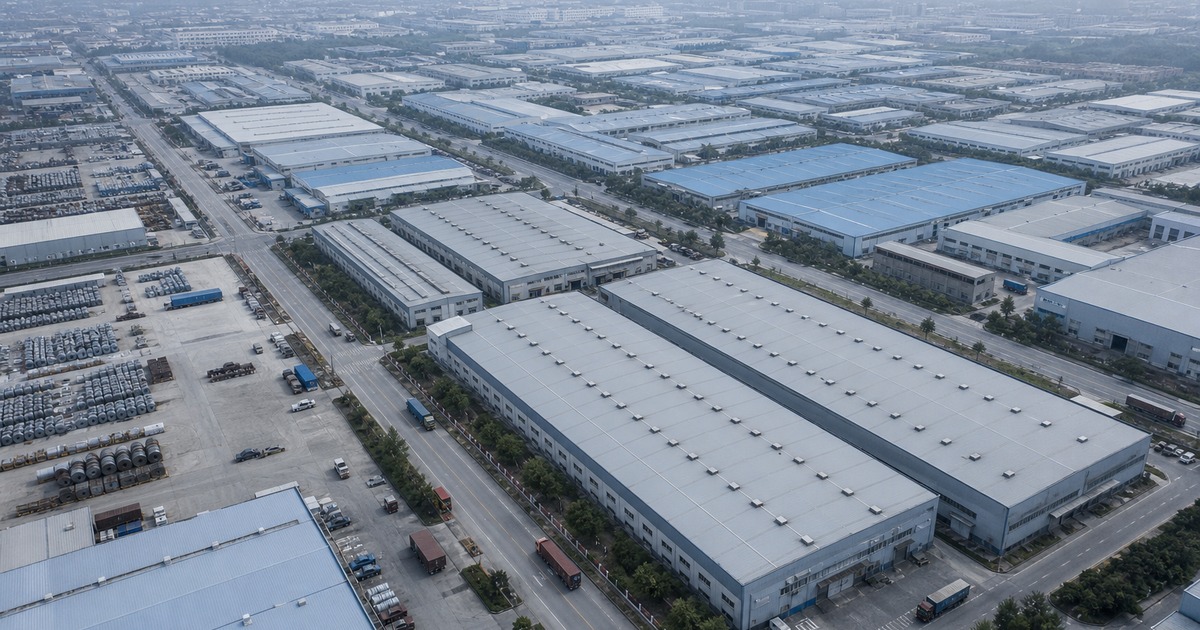
All processes are completed within the same factory. From the arrival of raw materials to the delivery of finished products, there are no external collaboration steps in between. You don’t need to manage multiple suppliers or coordinate lead times between different production stages.
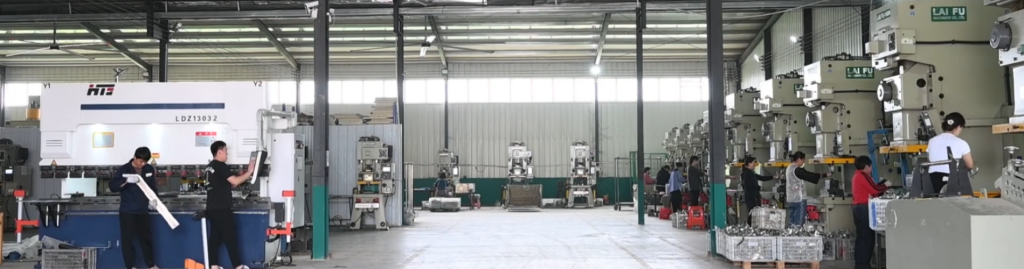
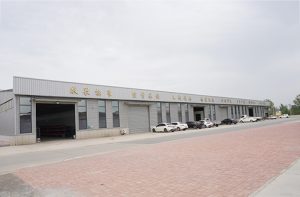
Inside our 9,000㎡ facility, cutting, stamping, machining, welding, surface treatment, and inspection – all operations run in a continuous workflow.
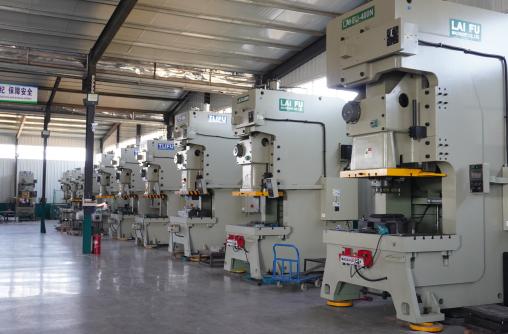
⚙️ Stamping & Forming
38 stamping presses, ranging from 80 to 400 tons, covering everything from precision thin-gauge stamping to thick-plate forming.
✂️ Cutting & Bending
Equipped with 2 laser cutting machines and 3 bending machines, we provide integrated sheet metal processing from precision cutting to forming.
🔧 CNC Machining
2 five-axis machining centers, 3 three-axis vertical machining centers, and 3 CNC milling machines – covering all milling requirements for your parts.
🔥 Welding & Assembly
Equipped with automatic spot welding equipment and electric welding production lines, we support efficient structural part assembly with stable welding quality and reliable production consistency.
📐 Quality Inspection
2 coordinate measuring machines (CMM) are used for high-precision inspection of critical dimensions, with inspection reports provided for every shipment.
🎨 Surface Treatment
2 surface treatment production lines can meet various surface treatment requirements, such as powder spraying, phosphating, electroplating, and anodizing. We uniformly control the quality standards of all processes.
70000+ Custom Metal Parts Experience
Numbers alone don’t tell the whole story. What matters is the manufacturing experience behind them.
We have customized over 70,000 different parts for more than 3,000 companies across over 100 countries. What this really means is that when our engineering team looks at a new drawing, chances are we have already worked on something similar. How to control distortion when clamping thin-walled parts, how to manage chip evacuation in deep-hole machining, how to ensure straightness on slender shafts – these aren’t solved through theoretical calculations alone. They come from experience.
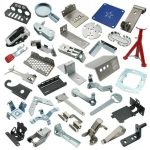
When a new project is handed over to us, we can anticipate potential manufacturing issues during the evaluation stage and address them in the process plan upfront
– rather than discovering halfway through production that we can’t make it work.
How Is Quality Controlled for Custom Metal Parts?
Quality is not created at the final inspection stage. It is built into every step of the manufacturing process.
Incoming Material Inspection
All raw materials are checked against material certificates, specifications, and visual quality upon arrival. Every batch of parts is traceable to its corresponding material lot.
In-Process Control
Dimensional stability during production is maintained through first-piece, patrol, and last-piece inspections. Operators perform self-checks at set intervals, and inspectors conduct routine sampling.
Final Inspection
After machining is completed, parts undergo full dimensional inspection. CMM coordinate measuring machines are used for high-precision inspection on complex-shaped parts.
Why Choose Us
Choosing to cooperate with us is usually due to the following three points:
Single Factory, Full-Process Manufacturing
From raw material receiving and processing to surface finishing and inspection, all critical operations are completed within the same facility. You don’t need to manage multiple suppliers or coordinate production schedules and quality responsibilities across different factories. One project, one team to work with – production progress and quality are fully under control from start to finish.
Engineering Expertise That Prevents Production Risks
When we receive your drawing, we don’t just provide a quote and wait for production to start. We review it thoroughly – from material selection and manufacturing processes to dimensional tolerances and batch-to-batch stability. At the very beginning of the project, we identify factors that could affect cost, lead time, or quality, and propose more reliable manufacturing solutions – so you avoid revisions and rework mid-production.
Final Inspection & Complete Quality Documentation
Each batch of goods undergoes a full inspection before leaving the factory, and the inspection data is sent with the goods. You can directly use the parts for assembly after receiving them.
What Does the Cooperation Process Look Like from Drawing to Delivery?
01
Drawing & Technical Review
You provide the drawings or 3D models, along with the specifications of materials, tolerances, surface treatments, and any special requirements. The engineering team will complete the assessment within 24 hours.
02
Quotation & Lead Time Confirmation
Provide the unit price, sample cycle, and batch delivery time, and clearly list the cost composition.
03
Sampling & Verification
If you have any sample requirements, we will send you free samples for your verification. After sample approval, the project moves into stable mass production.
04
Production & Delivery
Production is scheduled according to the confirmed delivery date. Quality inspections are performed according to the approved control plan throughout production. After the batch is completed, the test report will be provided along with the goods.
Frequently Asked Questions
Why does manufacturing everything under one roof matter?
Because every handoff adds an interpretation of the drawing. When cutting, stamping, machining, welding, surface treatment, and inspection run inside one 9,000㎡ facility in a continuous workflow, the manufacturing intent stays the same from the first operation to the last, and nobody has to manage several suppliers whose tolerances and schedules must line up. Quality traceability also stays intact, because the same system follows the part instead of restarting at every vendor.
What does an engineering review catch before production?
Problems that samples can hide. A customer producing security equipment sent drawings for a steel bracket with several installation holes. The inside radius at the bend was specified slightly too tight: a single sample could be formed to that specification, but in production runs of several thousand pieces it would have caused quality issues. Reviewing the geometry against the production route caught it before tooling, which is the difference between an engineering partner and an order taker.
How is quality controlled for custom metal parts?
Quality is built into each step rather than inspected in at the end. Incoming material is checked against material certificates, specifications, and visual quality, and every batch of parts remains traceable to its material lot. In-process checks follow the operations that create the dimensions, and finished parts are verified against requirements before dispatch. That structure makes a nonconformance traceable to its cause, instead of producing a debate about whose material it was.
What does experience with 70,000+ custom parts give a buyer?
Pattern recognition. Having customised over 70,000 different parts for more than 3,000 companies across over 100 countries means the engineering team has already worked through many of the structures, materials, and tolerance combinations your drawing contains. In practice that shows up at the review stage: likely failure points are identified before tooling, the process route is chosen for your volume, and the risks that usually surface in the third production run are addressed in the drawing.
What does the cooperation process look like from drawing to delivery?
Two defined steps before production, then execution. First, drawing and technical review: you provide drawings or 3D models with material, tolerance, surface treatment, and special requirements, and the engineering team assesses manufacturability. Then quotation and lead time confirmation: unit price, sample cycle, and batch delivery time, with the cost composition listed. Only after both are agreed does manufacturing start, which is why the quote arrives with technical comments instead of a bare price.
Custom Metal Parts · One Factory, One Team
✅ Single factory · Full-process control · No handoffs
📩 tylor@xinjiuxinji.com — Reply in 3 working hours with free design optimization.
📌 Submit your drawings — Our engineering team will respond within 24 hours. One Factory, One Team, No Handoffs
Metal Stamping Parts Supplier: How We Cut Lead Time Without Cutting Quality