How to Compare Metal Fabrication Quotes: A Nine-Line Scope Checklist
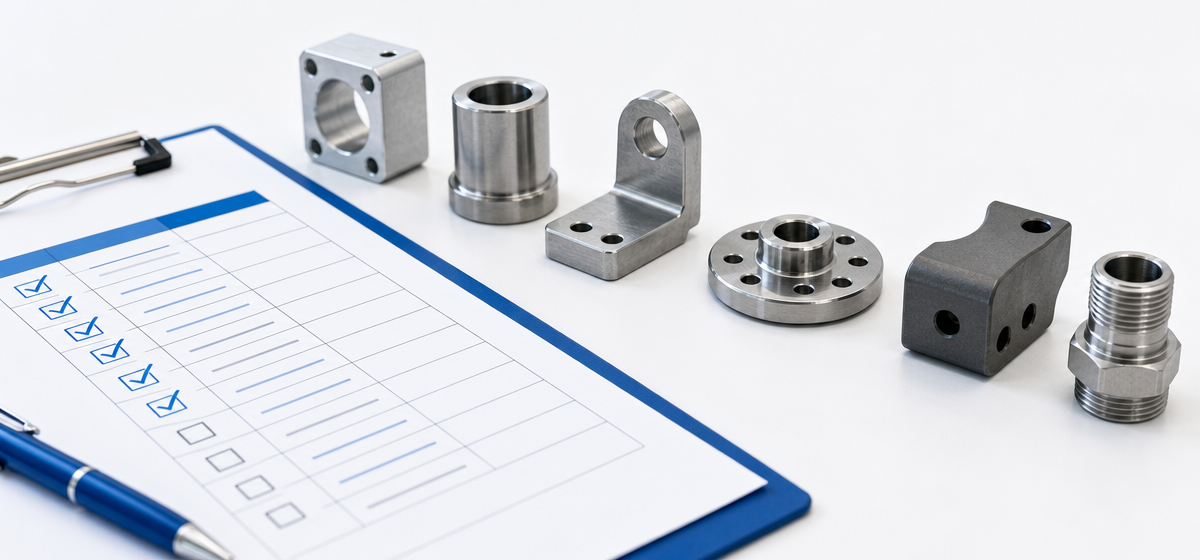
Direct answer: Compare quotes only after fixing the same inputs: drawing revision, material and grade, quantity, tolerances, surface treatment, packaging, and delivery requirements. A like-for-like quote makes scope differences easier to see.
What a like-for-like quote means
Each supplier should price the same part definition, process assumptions, tooling treatment, inspection scope, packaging, and delivery basis. If an input is missing, record the assumption rather than treating the numbers as directly comparable.
Where a low price can differ
A lower price may reflect different material grade, omitted operations, a narrower inspection scope, different packaging, or different delivery assumptions. Confirm those items before choosing a supplier.
FAQ
What should every comparison include? The same drawing, material, quantity, tolerances, finish, packaging, inspection, and delivery basis.
How does this differ from an RFQ checklist? The RFQ checklist helps you provide complete inputs; this page helps you compare the resulting scopes on the same basis.
What if a quote omits an item? Ask the supplier to state the assumption or include the missing operation before comparing totals.
Use the RFQ checklist and quote guide, then contact the team with the same scope.
You cannot compare metal fabrication quotes as printed — two quotes for the “same” part can differ in material grade, tolerance stack, finish scope, tooling ownership, and Incoterm, and each of those quietly moves the landed price. The method that works: normalize every quote to the same nine scope lines, then compare the normalized numbers. The lowest price on paper is frequently not the lowest cost once scope is made equal.
This is the exact worksheet Xinjiuxinji’s trading team uses when clients ask us to benchmark our quote against a competitor’s. Here is how to run it yourself.
Once the scope is normalized, you can review the available custom metal manufacturing services and match the required process to your part geometry, material, and production volume.
Why the cheapest quote usually costs more
 Four scope lines are where quotes drift apart:
- Material — “stainless” without a grade can mean 304, 430, or 316. That is a 2–4x cost range in one line.
- Tolerances — un-called-out dimensions default differently in every factory’s book of practice.
- Finish — “powder coated” without color code and thickness is an open-ended scope item.
- Tooling and samples — one quote includes the die, another adds it back into the unit price.
For example, a $0.80 quote versus a $1.10 quote for the same bracket: the $0.80 quote was carbon steel with a plain zinc finish, FOB; the $1.10 quote was stainless 304, e-coat plus powder, DDP. Equalize the scope and the gap closes — or reverses.
Build the worksheet to compare metal fabrication quotes
Copy this table and fill it in from each proforma invoice:
Two rules make the worksheet honest:
- Convert every price to the same landed basis (your dock, duties included). Our Incoterms guide has the mapping, and our 2026 tariff guide covers the duty side.
- Record “not stated” as a finding, not a zero. A quote that omits lead time or tooling ownership is telling you something about its change-order discipline.
Read the fine print before the price
- Die ownership clause — one sentence, huge leverage difference. How tooling cost is structured is explained line by line in our cost guide.
- Sample policy — are T1s included, and what releases mass production?
- Rejection and replacement policy — what happens at 500 ppm vs. 2%; who pays the air freight to cover a production stop.
- Price validity — 30 days is typical; a 365-day “validity” on steel prices is a soft pre-dispute.
- Capacity evidence — press count and tonnage range are verifiable facts; our line, for instance, runs 40 presses from 80 to 400 tons.
Score beyond price for repeat orders
For programs you will reorder, weight the supplier, not just the quote:
- Response time to a complete RFQ (we answer within 2 hours; treat slower as a risk flag)
- Willingness to put the nine lines in writing
- Traceability: heat numbers on material certs, first-article reports with T1
- References in your industry, and a factory video or audit trail you can check
The price difference between good suppliers on normalized scope is usually 5–15%. The lifetime difference in rework, delays, and change-order disputes is far larger.
FAQ
Two suppliers quote the same part at 2x. Where do I look first?
Material grade, tolerance scope, finish detail, and Incoterm — in that order. The stamping price itself rarely doubles.
Should I always take the lowest quote?
Take the lowest normalized quote. If you compare metal fabrication quotes without normalizing the scope first, you are rewarding the thinnest scope, not the best price.
What is a healthy unit-price gap between suppliers?
5–15% on equal scope. Beyond 20%, one of the quotes is under-scoped or priced for a different volume.
How do I verify a supplier’s claimed capacity?
Ask for press list photos, the factory video, or a live walkthrough — and check whether the claimed numbers match the equipment on camera.
Does the payment term matter?
Yes. 30/70 (deposit/balance on BL copy) is the market norm. 100% prepayment should cost you a visible discount to justify the risk.
What should happen after I pick a supplier?
Lock the nine-line scope in the PO, gate mass production on T1 approval, and book the vessel 2–3 weeks ahead.
Ask for the Nine Lines in Writing — Get a Normalized Quote
✅ Material grade · Tolerances · Process · Finish · Tooling · Unit price · Lead time · Incoterm · Payment terms
📩 tylor@xinjiuxinji.com
We respond to inquiries within 2 hours.
Send your drawing with quantity and destination — the reply arrives with all nine scope lines filled in, so you can compare like for like
Xinjiuxinji vs RapidDirect: Which One Fits Your Metal Parts Program