Sheet Metal Fabrication vs CNC Machining: How to Evaluate Supplier Capabilities
Choosing between sheet metal fabrication vs CNC machining is usually treated as a process decision — but for a buyer, it is a supplier decision. In reality,any shop can claim both capabilities; what separates a good partner is the engineering judgment behind the process recommendation. This guide gives you a capability review checklist: what to look for in drawing review, quotes, and samples, and the red flags that should stop you from sending your drawing at all.
Sheet Metal Fabrication vs CNC Machining: What a Capability Review Should Cover
 Equipment Lists Are Not Capability
A photo gallery of laser cutters and machining centers proves ownership, not judgment. What matters is how the shop coordinates the routes: who decides whether your part should be cut and bent, stamped, or CNC-machined, and how they document that decision. So ask for their review process, not their brochure.
Drawing Review: What a Supplier Should Ask First
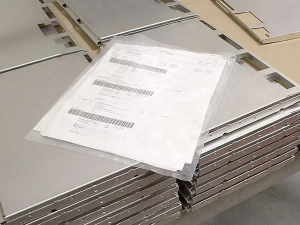 A capable supplier starts with questions, not a quote:
- Material and thickness
- Flat pattern and bend allowance
- Which tolerances truly affect function and assembly, and which can use general tolerances
- Whether the part needs machining features at all
For parts with complex structures, critical tolerances, or several feasible routes, a price with no engineering questions means the process recom
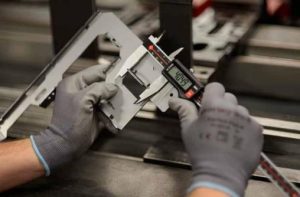
mendation deserves closer scrutiny. In other words, DFM feedback — thread depths, or datum conflicts — is the first evidence of real capability.
Tolerance and Datum Communication
Tolerance capability differs by process: cutting and stamping control hole positions and contours to good precision, while formed features are affected by springback and heat. A serious supplier confirms critical dimensions at drawing review and flags the ones that drive the process choice, rather than quoting blanket capability. Also, ask how they would verify your critical dimensions — the inspection method is part of the answer. For typical sheet metal tolerance values, see our sheet metal tolerance guide.
How to Evaluate a Supplier’s Process Recommendation
An Itemized Quote Reflects Process Understanding
Sheet metal fabrication vs CNC machining have different cost focuses: fabrication is driven by material utilization, preparation, changeover, and tooling where applicable; machining is driven by programming, fixturing, machine hours, and material removal. An itemized quote breaks the cost into clear lines:
- Material
- Engineering preparation
- Setup
- Processing
- Tooling (where applicable)
- Finishing
- Special inspection
For projects that compare process routes or look for cost-reduction opportunities, such a breakdown is easier to read than a single total.
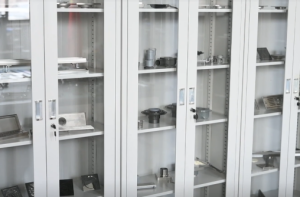 Samples Validate the Process Route
In addition, a prototype should prove more than geometry — it should explain the route to production. Two questions are worth confirming:
- Does the sample process represent the final part’s function and critical dimensions?
- If the prototype route differs from the production route (laser cutting and press braking for sampling, progressive stamping for volume), does the supplier flag the difference in advance and explain the dimensional and quality impact of changing tooling, fixtures, or method?
In short, a supplier who can clearly explain is showing engineering capability, not just machine time.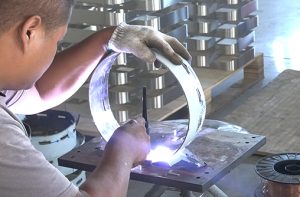
Evaluating Hybrid Process Projects
When a part involves both sheet metal and CNC machining, coordination is the capability. The body may go through cutting, bending, and welding first, then CNC finishing on critical locating or mounting faces. Flat pattern, bend sequence, weld sequence, and machined datums must be planned together — otherwise bend deviation, weld distortion, clamping error, and datum shifts accumulate. Finally, ask who owns that coordination: one engineer or a unified engineering team across the whole process route, or repeated hand-offs between departments? Overall, the answer usually reflects a supplier’s maturity in hybrid manufacturing.
Red Flags and Green Lights in Supplier Evaluation
As you evaluate sheet metal fabrication vs CNC machining capability, sort what you see into signals—use this as a working checklist.
| Review item | Red flag | Green light |
|---|---|---|
| Drawing review | Quotes without confirming technical requirements | Structured drawing review with written feedback |
| DFM | No manufacturing suggestions at all | Proactively flags risks and alternatives |
| Process route | “We can do both” with no reasoning | Explains why a specific route was chosen |
| Tolerances | A blanket capability range | Identifies critical dimensions and verification method |
| Quoting | A single total price only | Provides cost breakdown when needed |
| Prototype to production | No explanation of process changes | Explains the production route and potential changes |
| Hybrid manufacturing | Unclear responsibility between departments | A unified engineering owner |
Where Capability Shows: Drawing Review in Practice
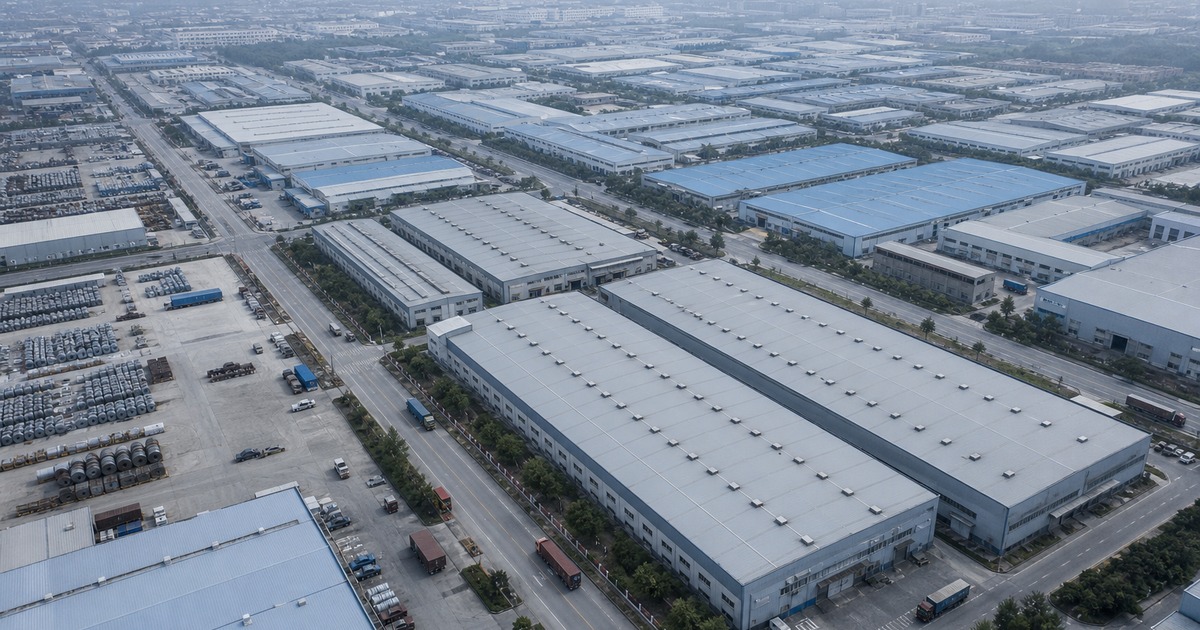
At our 9,000 m² plant in Nanpi, Hebei, capability starts with drawing review. When a drawing arrives, our engineers first assess the material, geometry, critical dimensions, and possible manufacturing routes — including whether CNC-machined features are necessary at all.
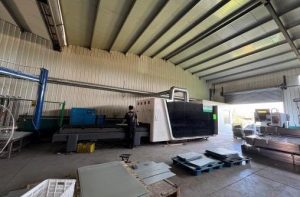
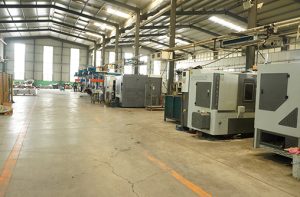
This is how we handle the choice between sheet metal fabrication and CNC machining in practice: engineering review defines the route, the quotation explains the manufacturing approach, and samples validate the transition to production. Laser cutting, stamping, bending, welding, and CNC machining are coordinated within one manufacturing system, keeping hybrid parts under one engineering process rather than moving between multiple suppliers.
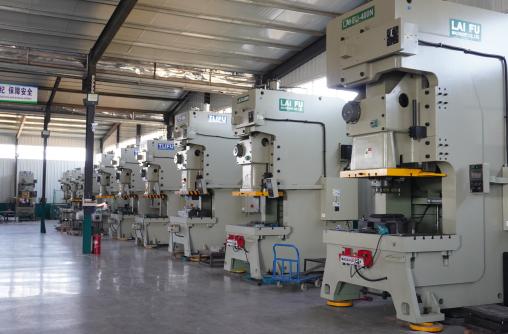
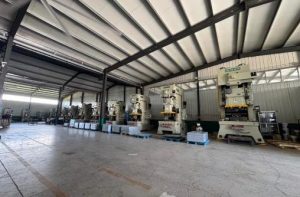
We have manufactured metal parts since 1999, supported by a team of 19 engineers and 38 presses from 80 to 400 tons. Our production system currently operates under ISO 9001:2015. Send your drawing to tylor@xinjiuxinji.com for a free cost and manufacturability review. Our engineering team responds to inquiries within 3 working hours and can provide process feedback and an itemized quote.
Not Sure Which Process Fits? Let Our Engineers Decide
✅ Free DFM review · Process recommendation · Itemized quote
📩 tylor@xinjiuxinji.com — Engineering response within 3 working hours
FAQ
ISO 9001 Certified Sheet Metal Manufacturer: What It Means and How to Verify It