Low Volume Sheet Metal Fabrication vs High Volume: Which Fits Your Part?
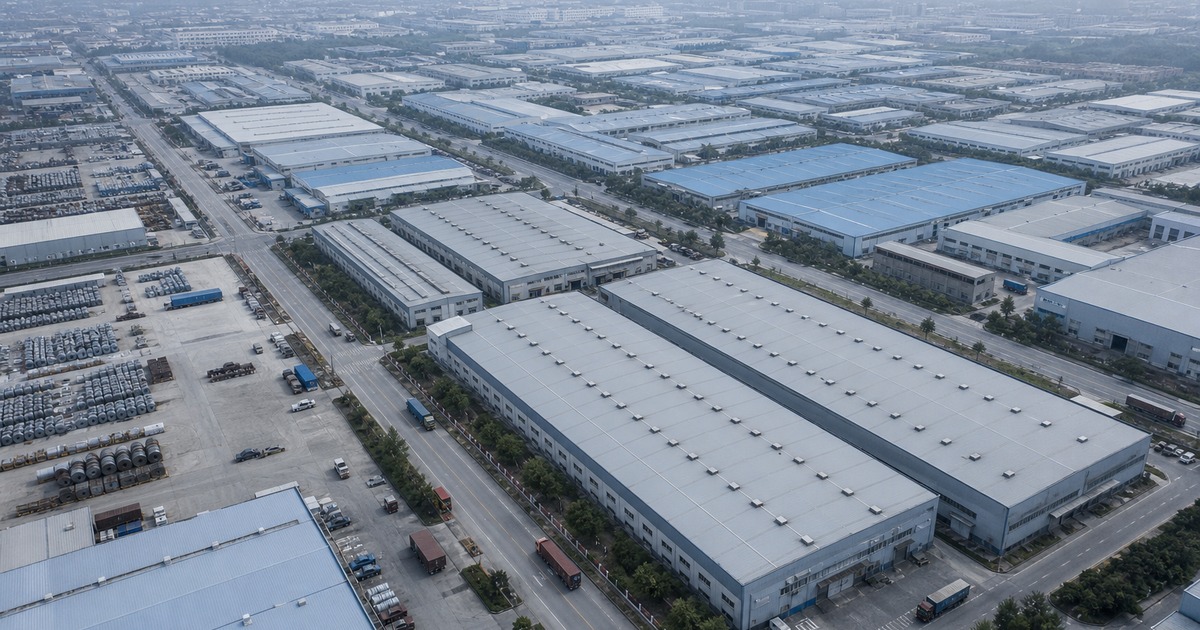
Low volume sheet metal fabrication is the fastest way to get real parts — laser-cut, bent, and shipped without a stamping die in sight. High-volume stamping is the cheapest way once the volumes justify the tooling. Both routes belong in the same conversation because the right choice changes your unit price, lead time, and engineering workload. This guide compares the two routes head-to-head.
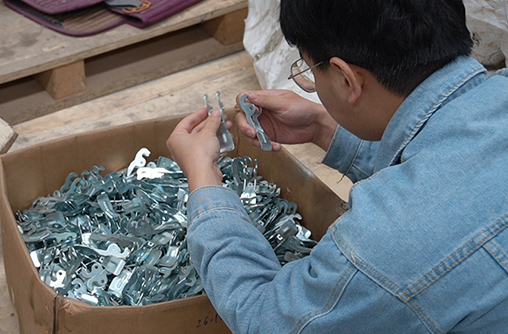
The line between them is not a fixed number, but a practical starting point helps. For most conventional parts, demand below 500 pieces usually favors the low volume sheet metal fabrication route on total cost. Above that range, stamping tooling deserves serious evaluation. This is only a starting point — the crossover shifts with part size, material thickness, and tolerance requirements. What matters is understanding the trade-off — no-tooling speed versus amortized unit price — and picking the route that fits your order, not the fabricator’s convenience.
Low Volume Sheet Metal Fabrication: When It Wins
 The No-Tooling Route
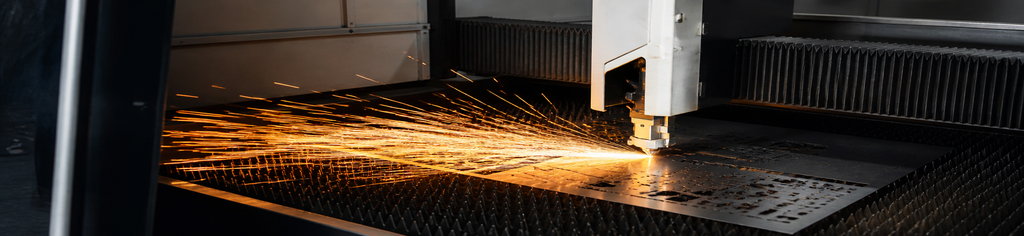
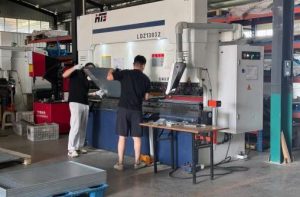
Laser cutting and CNC bending turn your drawing into parts with zero tooling investment. That is the whole point of low-volume work: start this week, iterate freely, change the design without writing off a die. For quantities from a handful to a few hundred, this route wins on speed and flexibility. Our process guide covers the route options in full.
Engineering Time Is the Real Cost
At low volumes, engineering is the largest cost line, not steel. It includes precise bend-deduction calculations that compensate for material stretching and compression in bending — a small decimal error shows up as a gap at assembly — plus DFM questions, material choice, and fast turnaround. For a low-volume order, good DFM feedback is specific: will this feature cause bend interference? Can a substitute material cut cost without sacrificing performance? Is t
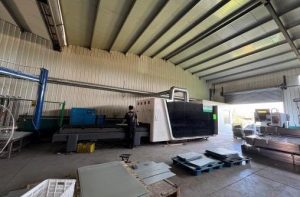
here a more economical cutting path to shorten lead time? That quality separates a useful quote from a template — and it is where you should expect real attention: engineering depth is what makes a low-volume supplier worth keeping.
Prototype-to-Production Flow in Low Volume Sheet Metal Fabrication
Low volume and prototyping share the same no-tooling route, which is why many programs start here: validate the part, validate the process, then decide whether volumes ever justify tooling. If they do, the prototype-to-production transition is a straight line. If they don’t, you still shipped real parts at a fair price.
Low Volume Sheet Metal Fabrication vs High Volume Stamping
Tooling Amortization and the Unit Price Curve
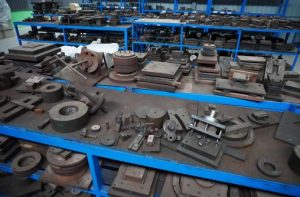
Stamping dies are a one-time investment, and their cost spreads across every part you make. At 100 pieces, a die can outweigh the material; at 100,000, it is a rounding error. That is why the unit price curve falls so steeply between low and high volumes — and why asking for a quote that separates tooling from piece price matters from the first sourcing conversation.
What High Volume Demands From the Part
High-volume stamping rewards parts designed for stamping: consistent geometry, generous tolerances where possible, volumes that keep the press busy. If your part is still changing, or the volumes are uncertain, committing to tooling early is a bet on a design that may not survive. Tolerances deserve particular care — see our tolerances and cost guide.
When Does High Volume Beat Low Volume Sheet Metal Fabrication?
The crossover point differs for every part, and the honest answer requires a real quote for both routes. A useful rule of thumb: high volume wins when the tooling cost per part falls below the engineering and handling cost per part on the low-volume route — and when the design is stable enough to freeze. Run both numbers before you commit.
The Decision: Matching the Route to Your Order
Choosing between low volume sheet metal fabrication and high-volume stamping is a strategic decision based on project needs, total cost, and engineering resources — not a simple compromise. The right route depends on design stability, volumes, and how soon you need parts.
Side by Side: The Comparison Table
| Factor | Low volume (no tooling) | High volume (stamping) |
|---|---|---|
| Tooling | None — laser cut + bend | Die investment, amortized per part |
| Unit price | Higher per part | Lower per part at scale |
| Lead time to first parts | Days to weeks | Weeks plus die build |
| Design changes | Free to iterate | Costly — die modifications |
| Engineering load | High per part | Low per part after setup |
| Best for | Prototypes, small runs, changing designs | Stable parts, steady volumes |
The Cost Curve, Explained
Think of total cost as tooling plus piece price. Low volume: no tooling, higher piece price, total cost flat and predictable. High volume: a big tooling step, a lower piece price, and total cost dropping steeply as volumes climb. The crossover is where the two lines meet — quote both routes to find yours.
How to Choose a Fabricator for Low Volumes
Low-volume work is engineering work, so evaluate the supplier the way you would evaluate a stamping manufacturer — but weight engineering and response more heavily: ask who answers technical questions, how fast quotes come back, whether the DFM feedback is specific to your part. A good supplier runs the same engineering review for a 100-piece order — detailed DFM feedback and an itemized quote.
Two Routes on One Floor
At our plant, both routes run under one roof, with the same 19 engineers and the same ISO 9001:2015 system. This is what low volume sheet metal fabrication looks like here:
| Low volume | High volume | |
|---|---|---|
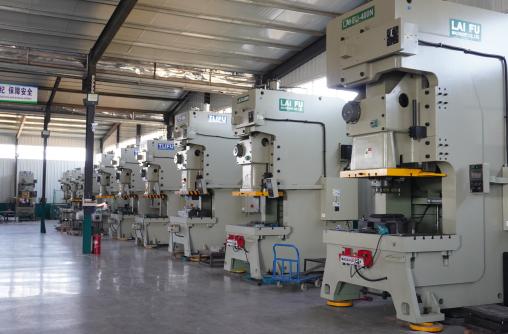
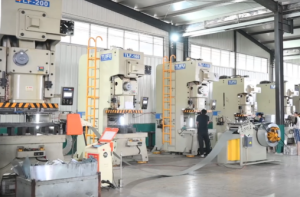
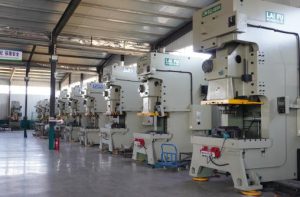
| Process | Laser cutting, CNC bending, 160–400T presses for short runs | 38 presses from 80 to 400 tons |
| What you get | Parts without tooling, FAI per project requirements, engineering response within 3 working hours | Tooling amortization, in-process checks, batch traceability |
Since 1999, we have shipped 70,000+ part numbers to 3,000+ companies in 100+ countries — with free samples, no tooling surprises, and a quote that separates tooling from piece price.
Send your drawings to tylor@xinjiuxinji.com — engineering response within 3 working hours, free samples, and both route quotes.
FAQ
Low Volume or High Volume? Get Both Quotes
Free samples · No tooling commitment · Both routes quoted
📩 tylor@xinjiuxinji.com — Send your drawing, get both route quotes within 24 hours
Sheet Metal Fabrication vs CNC Machining: How to Evaluate Supplier Capabilities