Prototype Metal Fabrication: How Faster Validation Reduces OEM Development Risk
The true value of prototype metal fabrication is not simply faster prototype production. It is enabling engineering teams to complete design verification more efficiently and reduce development risks.
Design Verification vs Sample Delivery: What Really Delays OEM Projects?
For OEM projects, samples are merely a tool for verifying the design, rather than the ultimate goal.
A truly valuable Prototype Metal Fabrication usually requires answering several key questions:
• Is the current structure manufacturable?
• Can the parts reliably undergo bending, welding, or assembly?
• Is the tolerance design suitable for future mass production?
• Are there any potential risks that may affect the efficiency or cost of mass production?
If these issues are not verified during the prototype stage, delays may still occur even if samples are delivered quickly.This is usually caused by repeated design modifications.
Therefore, what truly determines the project’s progress is not the delivery time of the samples but the completion time of the design verification.
Why Prototype Stage Rework Happens in OEM Metal Fabrication Projects
Many product development delays are not due to insufficient manufacturing capacity but rather to a lack of systematic engineering verification during the prototype stage.
In actual projects, the common problems include:
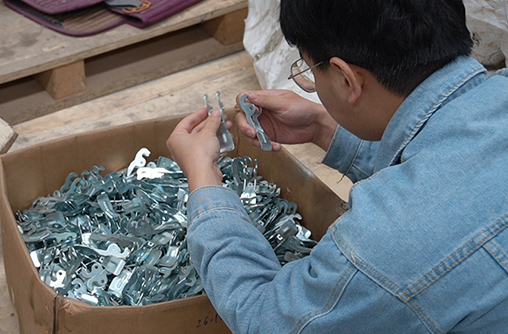
• After the bending process was completed, it was found that the hole positions had shifted;
• After the welding process was finished, the structure could not be smoothly assembled;
• The material selection met the requirements of the drawings, but deformation occurred during the processing;
• There was no problem with the single sample, but consistency in size could not be guaranteed in mass production.
These problems are usually only discovered after the samples have been manufactured. Forcing the design team to revise the drawings, reproduce the samples, and prolong the development cycle.
What actually increases the development risk is not the processing time, but the repetitive verification process.
Such issues are particularly common in products that require multiple bends and precise assembly.
Such as industrial equipment brackets, automation equipment frames, and electrical cabinets. Completing design verification during the Prototype stage in advance usually reduces subsequent assembly adjustments and lowers consistency risks in mass production.
How Free DFM Optimization Reduces Prototype Metal Fabrication Iterations
Many manufacturing problems can actually be detected before the processing stage.
Therefore, before starting the Prototype Metal Fabrication process, we will offer a free DFM (Design for Manufacturability) design optimization service. An engineering team with over 10 years of industry experience will evaluate the drawings.
The DFM analysis not only focuses on whether the dimensions are correct, but also on whether the product is suitable for actual manufacturing, including:
- Does there exist any structural interference that affects the bending process?
- Is the hole position design suitable for processing and assembly?
- Is the material selection in line with the product usage requirements?
- Is the tolerance design suitable for stable mass production?
- Can the processing technology be optimized to enhance production efficiency?
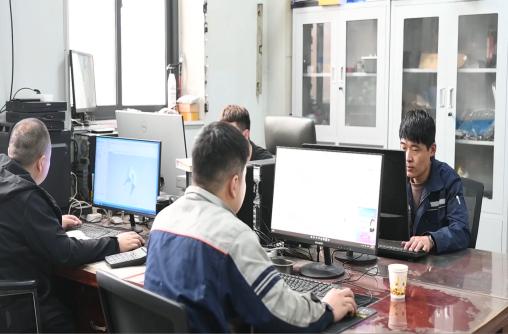
Early engineering analysis can significantly reduce later design changes and improve first-round validation success.It also helps OEM teams move product development forward more efficiently.
For example, during a DFM review for an industrial equipment bracket project. Our engineers found that two consecutive bends could cause the mounting holes to shift due to material springback and the planned bending sequence.If the part had been manufactured exactly as shown in the drawing, the assembly would not have met the required positioning accuracy.
Before prototype production began, we recommended adjusting the bending sequence and optimizing part of the structure. As a result, the customer completed assembly validation with the prototype.
This avoided additional drawing revisions and another round of prototyping, saving valuable development time.
Why 72-Hour Prototype Samples Speed Up OEM Development Decisions
For many OEM projects, reducing sample lead time allows engineering teams to start validation earlier.This includes assembly verification, functional testing, and customer review.
Therefore, we offer a 72-hour free sample service to help the OEM team expedite the verification process.
• Product assembly verification;
• Function testing;
• Engineering review;
• Customer confirmation;
• Subsequent design optimization.
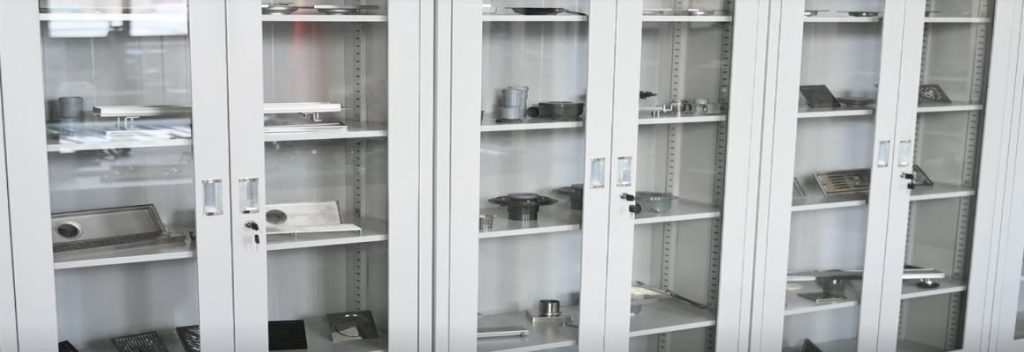
The significance of the 72-hour free sample service is not only delivery speed.It also helps customers complete design verification faster, reducing risks caused by waiting and repeated revisions.
From Prototype to Production: How We Ensure Manufacturing Consistency
The value of prototype metal fabrication depends on whether the validation results can be reliably transferred into mass production. Without a manufacturing system capable of stable, repeatable production, even a successful prototype may have limited value for future manufacturing.
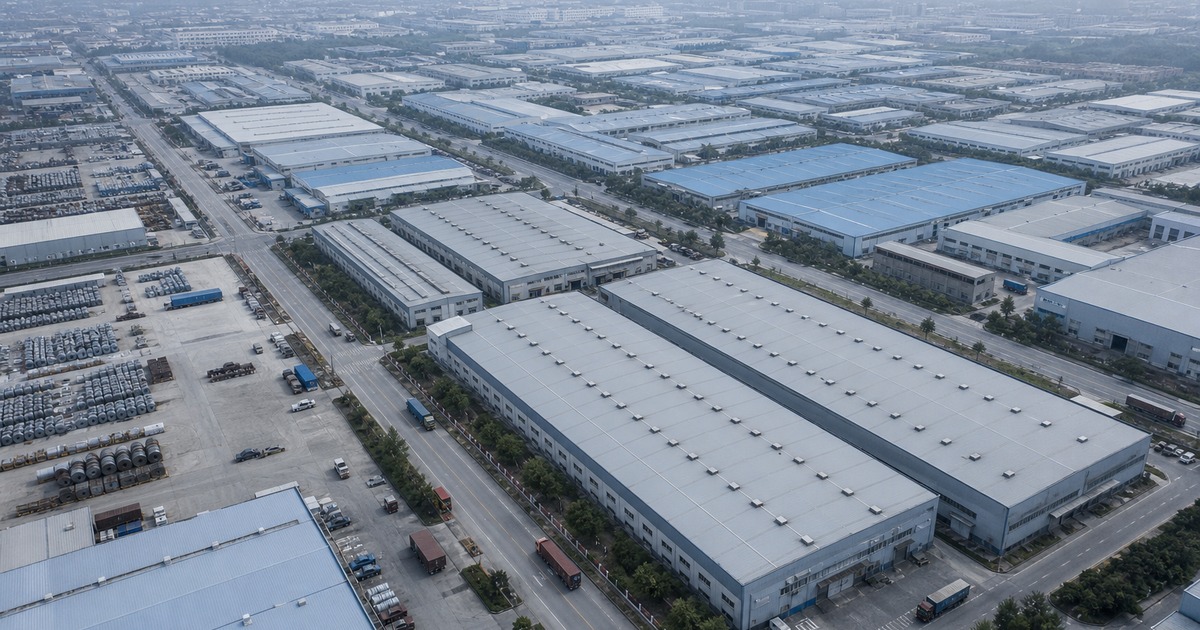
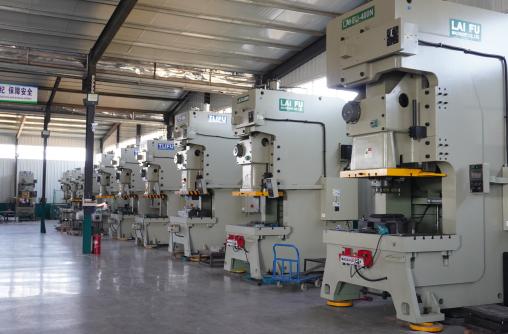
As a metal fabrication manufacturer with a 9,000 m² production facility, we have built an integrated manufacturing system.It covers laser cutting, stamping, bending, CNC machining, welding, and inspection. This enables the engineering validation completed during the prototype stage to be consistently replicated in subsequent production.
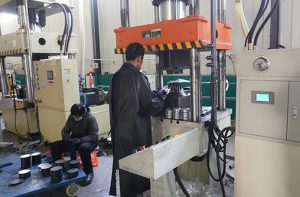
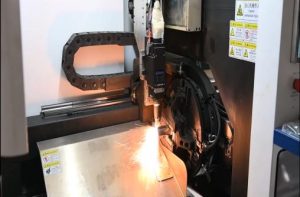
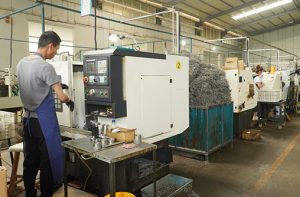
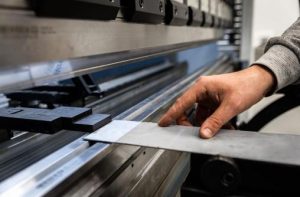
These capabilities allow us to select the most appropriate manufacturing process based on each product’s structure and functional requirements, rather than being limited to a single fabrication method.
To support both prototype validation and scalable production, the following in-house manufacturing capabilities are available:
• 38 sets of 80-400 ton stamping equipment;
• 6kW laser cutting equipment;
• Two five-axis machining centers and three vertical machining centers;
• A CMM coordinate measuring system for size inspection;
• Bending machines
As of now, we have produced over 70,000 different custom metal parts for more than 3000 enterprises in over 100 countries worldwide. At the same time, we have obtained the ISO 9001:2015 quality management system certification to provide stable support for Prototype Metal Fabrication for batch production.
What Makes a High-Value Prototype in Metal Fabrication?
A truly high-quality prototype does not merely prove that the parts can be manufactured, but rather demonstrates that the product can smoothly enter mass production.
It should help the engineering team answer several key questions:
• Can the product be manufactured stably?
• Can it be assembled smoothly?
• Is it suitable for large-scale production in the future?
If a prototype can answer these questions, then it not only completes the production of a sample, but also helps the entire project take a step closer to mass production.
This is why excellent prototype metal fabrication not only reduces sample production time but also shortens the entire product development cycle.
Conclusion
The value of prototype metal fabrication is not just creating samples.It is helping OEM teams complete design verification faster and reduce uncertainty in product development.
With a team of 19 engineers, each having over 10 years of experience, a complete manufacturing system. We also provide free DFM design optimization and a 72h free sample service. We are committed to helping customers identify problems earlier, optimize designs faster, and make each Prototype a crucial step towards stable mass production.
Start Your Prototype Metal Fabrication Evaluation
✅ DFM review · Design validation · 72h free sample support
📩 tylor@xinjiuxinji.com — Reply in 3 working hours with free design optimization.
Upload your drawings for free DFM review and 72-hour prototype support. Our engineering team will evaluate manufacturability and respond within 24 hours.
Contract Metal Manufacturing vs In-House Production: How OEM Buyers Should Choose