Contract Metal Manufacturing vs In-House Production: How OEM Buyers Should Choose
The real question is not simply whether to manufacture in-house or outsource production. The key is understanding which approach can better support long-term product quality, scalability, and business growth.
Why OEMs Are Rethinking In-House Manufacturing
In the past, many enterprises tended to establish their own production capabilities. The reason was simple: Having one’s own production line seemed to imply:
• More direct production control;
• Faster response to issues;
• Less reliance on the supply chain.
For some enterprises, internal production does have its advantages. For example:
• The manufacturing process itself is the core competitiveness of the enterprise;
• The product demand is stable over the long term;
• The annual output is sufficient to support the investment in equipment and personnel.
However, when an OEM project moves from the research and development stage to large-scale production, internal production must also address new challenges such as equipment investment, capacity planning, and process management.
The Hidden Costs of Building an In-House Manufacturing System
The manufacturing of metal components is usually not completed in a single process. A product may involve:
Sheet metal stamping
CNC Machining
Bending
Welding
Surface treatment
If the enterprise wishes to complete these processes entirely internally, it will need to invest:
• Production equipment;
• Plant space;
• Technical personnel;
• Quality management system.
These investments not only affect the initial costs but also increase the long-term operational pressure.
Why In-House Production Has Limited Capacity Flexibility
The OEM market usually experiences changes in demand:
• The order volume during the new product development stage is limited;
• The order volume increases rapidly after market validation;
• There are fluctuations in demand among different projects.
Internal production requires pre-configuring production capacity. If the orders are insufficient, the equipment utilization rate drops and the fixed costs increase. If the order volume increases rapidly, additional equipment investment is needed, personnel need to be expanded, and new production lines need to be constructed.
Therefore, an increasing number of OEM enterprises are now re-evaluating whether to continue investing in building their own manufacturing capabilities or to utilize the resources of established manufacturing partners to complete product development and achieve large-scale production.
Contract Metal Manufacturing vs In-House Production: What Is the Real Difference?
The contract metal manufacturing and internal production are not simply a distinction between “external production” and “self-production”. The biggest difference between the two lies in:
Whether the enterprise chooses to establish its own manufacturing capabilities or to utilize existing ones.
Key Differences Between Contract Manufacturing and Internal Production
On the surface, internal production offers more direct control, while contract metal manufacturing offers greater flexibility. However, for OEM enterprises, what they really need to focus on is which approach can better stabilize the control of manufacturing risks.
When Does In-House Manufacturing Make Sense for OEM Projects?
Although contract metal manufacturing offers greater flexibility, internal production still holds strategic value in certain OEM scenarios. If an enterprise meets the following conditions, internal production may be more suitable.
When Manufacturing Is a Core Competitive Advantage
If an enterprise gains market competitiveness by relying on unique manufacturing technologies, such as specialized processing techniques, proprietary production technologies, and highly customized processes, then the long-term development of internal manufacturing capabilities may hold strategic value.
When Production Volume Justifies Internal Investment
Internal production requires significant investment. Therefore, the following are more suitable: long-term stable orders, predictable output, and high equipment utilization rate. If production demand is unstable, internal production may lead to a waste of resources.
When Full Manufacturing Control Is Strategically Important
Some industries have specific requirements regarding production data, process confidentiality, and quality control procedures. In such cases, internal production may better align with the enterprise’s strategy.
When Should OEMs Choose Contract Metal Manufacturing?
For many OEM enterprises, manufacturing is not their core competitiveness; rather, it is an important step in commercializing their products. At this point, contract metal manufacturing can offer greater flexibility.
For Faster Product Development and Design Validation
In the early stage of product development, OEMs usually need to produce prototypes quickly, verify the design, and adjust the structure based on feedback. In the prototype metal fabrication stage, enterprises focus on the speed of design verification, manufacturing feasibility, and the feasibility of subsequent mass production. Professional contract metal manufacturing partners can help enterprises identify in advance: material selection issues, processing difficulties, and cost optimization potential.
For Complex Multi-Process Metal Parts Production
Many metal parts are not processed independently. For instance, an industrial structural component may require: laser cutting to ensure dimensions, stamping to increase batch efficiency, CNC to guarantee critical accuracy, welding to complete structural connections, and surface treatment to meet environmental requirements. These investments include not only equipment procurement but also personnel training, process maintenance, and quality system establishment. Professional contract metal manufacturers can complete process integration through a complete manufacturing system.
When OEMs Need Engineering and DFM Support
A top-notch contract metal manufacturing partner does not merely process according to the drawings. They should also be involved in DFM analysis, structural optimization, process planning, and mass production preparation.
Example: How Engineering Support Prevented Mass Production Risks
📌 Project Background
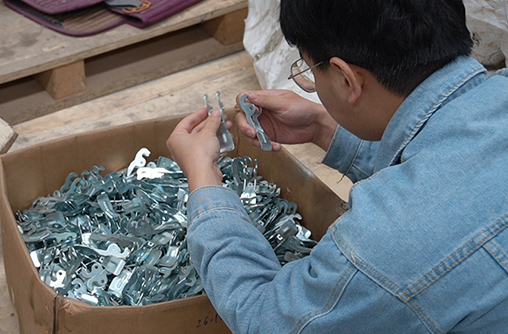
An OEM customer developed a metal mounting bracket. The initial sample fully met the requirements of the design drawings. However, during the preparation for mass production, the engineering team did not simply modify the drawings. Instead, they analyzed the material’s elasticity, the bending sequence, and the assembly requirements. They replanned the manufacturing process to ensure the design requirements were consistent with actual production capacity.
📌 Risk and Adjustment
If we proceed directly to mass production, the following situations may occur:
- Assembly difficulties;
- Increased rework;
- Batch instability.
By adjusting:
- Bending sequence;
- Process route;
- Tolerance strategy.
Ultimately, this project avoided potential batch rework during mass production while enhancing assembly consistency and long-term production stability.
How to Choose the Right Contract Metal Manufacturing Partner
If the OEM enterprise decides to adopt contract metal manufacturing, the next key issue is selecting a reliable manufacturing partner. Many purchases will initially focus on the quantity of equipment, the quotation, and the delivery cycle. However, these factors do not fully represent the manufacturing capabilities.
Engineering Capability Determines Manufacturing Reliability
A reliable manufacturer should possess the following capabilities: engineering assessment, DFM optimization, and manufacturing problem-solving. Many production issues do not arise during processing but are detected during the design phase.
A Complete Manufacturing System Improves Production Stability
For OEM projects, a reliable metal fabrication manufacturing system typically needs to cover multiple key processes, such as laser cutting, Sheet Metal Fabrication, Sheet Metal Stamping, CNC machining, welding, and surface treatment. Manufacturers with multi-process integration capabilities can reduce coordination risks among different suppliers and improve production consistency.
For instance, in the production of complex metal parts, if stamping, machining, welding, and surface treatment are carried out by different suppliers, respectively, it is prone to the following problems: process integration issues, cumulative dimensional deviations, and uncontrollable delivery cycles.
Therefore, a contract metal manufacturing partner with a complete manufacturing system can help the OEM maintain more stable production control throughout the process from sample development to mass production.
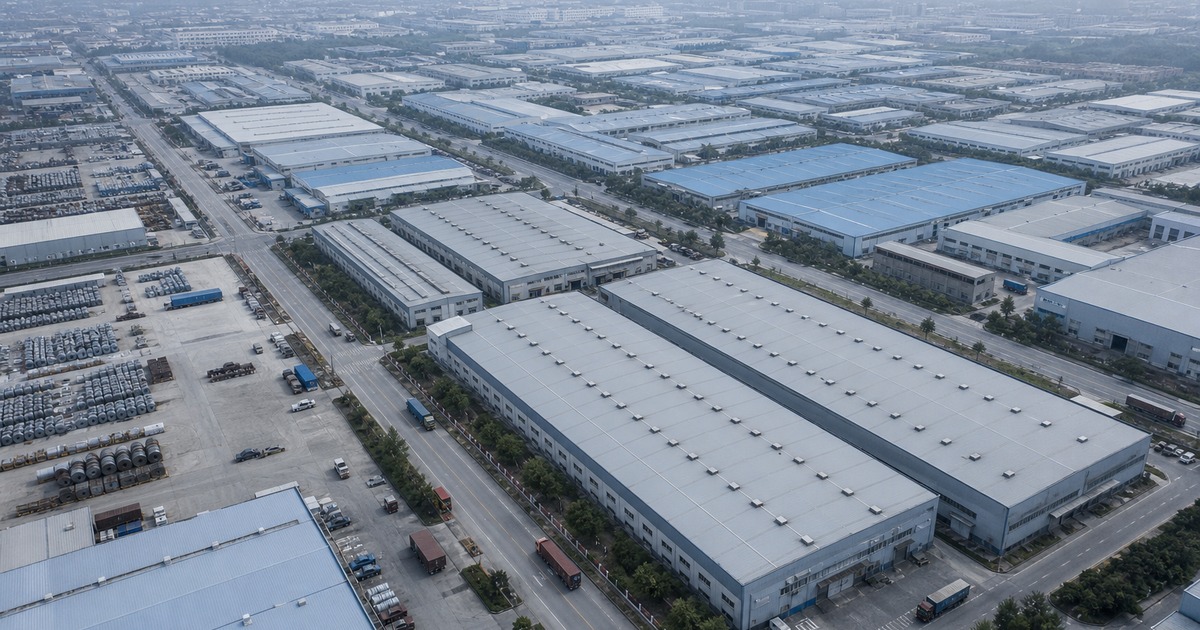
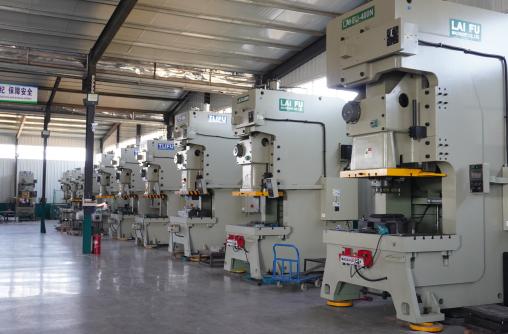
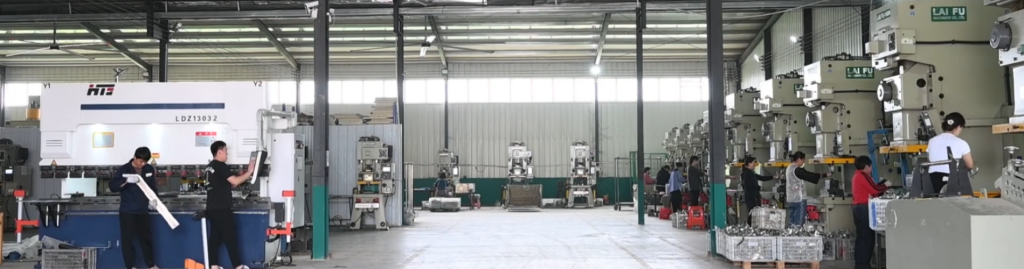
Currently, we provide the following manufacturing resources to support the entire process of OEM projects, from development to mass production:
- 38 sets of 80-400 ton stamping equipment, used for stable batch forming
- 2 sets of 6kW laser cutting equipment, used for efficient and precise cutting
- Five-axis CNC machining center, used for processing complex structures and critical dimensions
- Automatic welding and surface treatment production line, used for subsequent process integration
- CMM coordinate measuring equipment, used for verifying critical dimensions
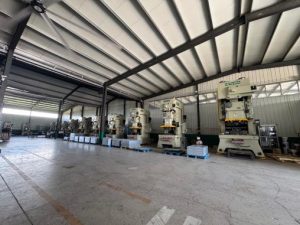
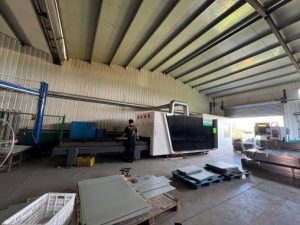
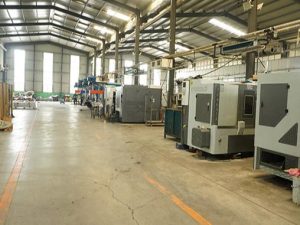
These capabilities help us maintain process continuity, quality control, and batch consistency at different manufacturing stages.
Batch Consistency is More Important than The Quality of Individual Samples
What OEMs ultimately need is not just a qualified sample but a large volume of products delivered in a stable, consistent manner over an extended period. Therefore, OEM buyers also need to pay attention to whether suppliers have a well-established quality management system, such as ISO 9001, as well as stable process control capabilities.
How OEM Buyers Should Choose the Right Manufacturing Approach
There is no single manufacturing method that is suitable for all projects. OEMs should make their decisions based on the following factors.
1
Evaluate the Product Development Stage
Product development stage
It is more suitable to consider contract metal manufacturing. Quick verification is required, possible design adjustments are needed, and it is not desirable to invest a large amount in equipment in advance. 。
Mature production stage
It is necessary to assess production volume, costs, and supply stability. Based on the enterprise strategy, decide whether to pursue in-house production or enter into a long-term manufacturing partnership.
2
Consider Manufacturing Complexity
Strict size requirements
Complex assembly relationship
If the components involve the aforementioned complex factors, professional manufacturing partners can usually provide more engineering support, helping to optimize the production process and reduce the risks of mass production.
3
Evaluate Manufacturing Partner Capabilities
✓Does the project team exist?
- ✓Do you support DFM (Design for Manufacturability)?
- ✓Does it have a complete manufacturing process?
- ✓Do you have experience in mass production?
How Reliable Manufacturing Partners Reduce OEM Production Risks
Modern OEM competition is no longer merely about cost competition. Companies now pay more attention to product launch speed, production stability, quality consistency, and supply chain reliability.
An outstanding contract metal manufacturing partner is not merely responsible for processing parts but is involved in the entire process, from design verification to mass production. For OEM enterprises, choosing a reliable OEM metal parts manufacturer essentially means selecting a long-term partner that complements their engineering and manufacturing capabilities.
Through engineering support, DFM optimization, manufacturing process management, and quality control systems, it can help OEMs reduce the risk of designs not being mass-producible, fluctuations in batch production, and supply chain coordination costs.
Final Decision: Control or Manufacturing Capability?
Internal production provides:Direct control over the manufacturing process.
Contract metal manufacturing provides: Professional manufacturing capabilities and resource flexibility.
For OEM enterprises, the correct choice depends on: product life cycle, production scale, engineering requirements, investment plan, and long-term supply strategy.
If manufacturing represents the core competitiveness of an enterprise, internal production might be more appropriate. If the enterprise aims to rapidly develop products, reduce manufacturing costs, and obtain professional support, a reliable contract metal manufacturing partner could be a more effective choice.
Ultimately, the successful manufacturing strategy does not depend on who owns the equipment, but on who can consistently provide stable quality, reliable delivery, and scalable production capacity.
Contract Metal Manufacturing vs In-House Production: Making the Right Choice
There is no absolute superiority or inferiority between contract metal manufacturing and internal production.
For many OEM enterprises, contract metal manufacturing is not only a form of production outsourcing but also a strategic choice that leverages professional manufacturing resources to reduce the risks associated with development and mass production.
Internal production is suitable for enterprises seeking long-term control over manufacturing resources; contract metal manufacturing offers another option for OEM projects requiring flexible production, engineering support, and rapid expansion.
Choosing the right manufacturing partner essentially means selecting a more stable and predictable way of product manufacturing.
Choose the Right Manufacturing Partner — Get It Right from the Start
✅ Engineering-driven support · Stable batch delivery · Full-process manufacturing system
📩 tylor@xinjiuxinji.com — Reply in 3 working hours with free design optimization.
Whether you choose in-house production or contract manufacturing — we provide professional manufacturing feasibility analysis for your project
Sheet Metal Design Optimization: How to Reduce Manufacturing Costs and Production Risks