Sheet Metal Fabrication for OEM Manufacturers: What Engineering Actually Does
 Sheet metal fabrication for OEM manufacturers is decided in the engineering office, not on the shop floor. Two suppliers can own identical presses and lasers — and still deliver completely different programs. The difference is what their engineers do with your drawing before the quote, during prototyping, and after production starts. This guide follows the engineering work behind an OEM order, so you know what to expect — and what to demand.
The right sheet metal fabrication for OEM manufacturers partner treats your RFQ as the start of a technical conversation. A fast response tells you about their process; the questions they ask tell you about their depth. Both matter, and you can measure both from the first email.
Sheet Metal Fabrication for OEM Manufacturers: Engineering Before the Quote
What Should Engineering Do Before Quoting a Sheet Metal Part?
A complete RFQ — material, thickness, tolerances, finish, annual volume — lets an engineer do real work: check bend feasibility, question tolerance stack-ups, and flag cost-driving features. A vague one gets guesses. How the supplier reads your RFQ, and what it asks back, is the first signal of engineering depth. For the sourcing context around a full RFQ, see our China sourcing guide.
The 3-Hour Response: OEM Sheet Metal Fabrication’s First Signal
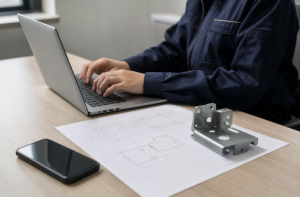 A response within 3 working hours is a process promise: the inquiry is logged, assigned to an engineer, and answered — even if the full quote takes longer. Response is speed; DFM is depth. Treat a fast, thoughtful reply as a positive signal, and a slow or templated one as the opposite.
What Does Good DFM Feedback Look Like?
Real DFM feedback before the quote flags problems: an unachievable tolerance, a bending collision, a cheaper material suggestion. A quote with no comments means nobody seriously reviewed the part. This is the engineering collaboration you will rely on for the life of the program.
Sheet Metal Fabrication for OEM Manufacturers: From Prototype to Ramp-Up
Prototype and FAI: Engineering’s First Proof
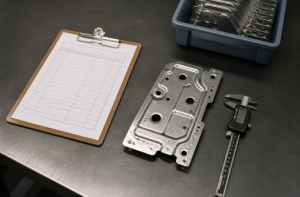
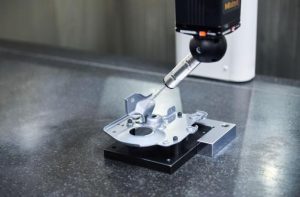
The prototype proves the process, not just the design. Expect FAI per project requirements, critical dimensions measured on CMM at high accuracy, and a sample you can assemble and test. How a supplier documents its own first article tells you how it will document the thousandth batch. Our prototype supplier test guide covers what to check on the sample.
Tooling and Trial Runs: Where Problems Get Solved
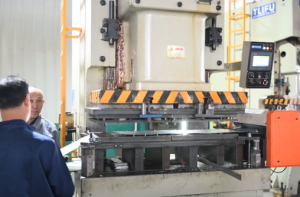
Tooling is where engineering earns its keep: die design, springback compensation, trial runs that expose burr and cycle-time issues before volume. Ask who designs the tooling, who owns it, and how revisions are priced. The decisions made here set the process route for the whole program.
Engineering Depth in OEM Sheet Metal Fabrication During Ramp-Up
The trial run proves the process; ramp-up proves the team. When batch one drifts, who notices first — and how fast is it fixed? Look for in-process checks on critical features, tolerance management that follows the drawing, and a supplier that treats your first production batches as its own problem, not yours. Our tolerances and cost guide shows how tolerance decisions carry into volume.
The Engineering Backbone Behind an OEM Program
What keeps sheet metal fabrication for OEM manufacturers programs alive after the first shipment is not capacity — it is the engineering backbone behind the order: change management, documentation, and the discipline to audit before you commit.
Change Management and Continuous Support
Drawings change. Materials get substituted—volumes spike. Engineering support after the sale keeps an OEM program alive: change review, revalidation of affected features, and cost-reduction suggestions that respect function.
What Records Should Every Production Batch Leave?
Every batch should leave a file trail: material certificates, FAI records, in-process inspection records, batch traceability. If a supplier cannot produce the file set on request, it will not exist after a year of production either.
How to Audit Engineering Depth Before You Commit
Send a real drawing — not a simple box. Ask about the last three DFM comments they made. Ask who answers technical questions. Ask how revisions are handled. The answers separate marketing from engineering. Our stamping manufacturer evaluation guide offers a structured checklist for the audit.
Inside Our Engineering Team
We have run sheet metal fabrication for OEM manufacturers programs from the same engineering core since 1999 — 19 engineers, one shared review standard, and this is what they do on your order:
 The customer service team responds to inquiries within 3 working hours and routes the RFQ to the appropriate reviewer.
- The DFM reviewer reads your drawing before committing to any price — manufacturability, tolerance risk, material selection—and sends questions, not just a quote.
- The prototype engineer ships every sample with FAI per project requirements, critical dimensions measured on CMM at high accuracy.
- The production engineer holds the drawing through volume: in-process checks, batch reports, material certificates — under ISO 9001:2015, with 70,000+ part numbers of history behind every judgment.
Send your drawings to tylor@xinjiuxinji.com — get an engineering response within 3 working hours, DFM review before the quote, and free samples for evaluation.
Frequently Asked Questions
What should engineering do before quoting a sheet metal part?
Read the RFQ properly and give the drawing the answer it deserves. A complete RFQ, covering material, thickness, tolerances, finish, and annual volume, lets an engineer check bend feasibility, question tolerance stack-ups, and flag the features that drive cost. A vague RFQ produces guesses. How a supplier responds to your inquiry is the first evidence of whether engineering is involved at all, or whether you are talking to a quoting desk.
What does a fast quote response actually tell me?
That the inquiry entered a process. We respond within 3 working hours, and that is deliberately a process promise rather than a depth promise: the inquiry is logged, assigned to an engineer, and answered, even when the full quote takes longer. Response is speed; DFM is depth. Treat a fast, thoughtful reply as a positive signal, and treat a fast price with no comments as nothing more than a price.
What does good DFM feedback look like?
It contains questions and specific warnings. Real DFM feedback before the quote flags problems such as an unachievable tolerance, a bending collision, or a cheaper material that would serve the same function. A quote with no comments means nobody seriously reviewed the part. That exchange is the core of engineering collaboration, because the supplier is telling you what will happen in production while the drawing is still open and the feedback is still free.
What should the prototype and first article prove?
That the process works, not only that the design does. The prototype should be produced on the intended route, so the sample proves the manufacturing method rather than a special one-off effort, with FAI per project requirements and critical dimensions measured on a CMM at high accuracy. How a supplier documents its own first article tells you how it will treat the second and the thousandth, because those records are the evidence trail.
What keeps an OEM program alive after the first shipment?
Change management, documentation, and discipline, rather than capacity. Drawings change, materials get substituted, and volumes spike, so engineering support has to continue after the sale: change review, revalidation of affected features, and cost-reduction suggestions that respect function. Every batch should also leave a file trail of material certificates, FAI records, in-process inspection records, and batch traceability. If the file set cannot be produced on request, it will not exist after a year of production either.
Engineering Is the Difference — Send Your Drawings
✅ Free DFM review · Free samples · 3-hour engineering response
📩 tylor@xinjiuxinji.com — Engineering response within 3 working hours, DFM review before the quote
Free samples · DFM review · engineering response within 3 working hours
Low Volume Sheet Metal Fabrication vs High Volume: Which Fits Your Part?