Custom Metal Parts Cost: What Determines Manufacturing Costs in 2026
Cost is not simply a number—it is the outcome of an integrated engineering and manufacturing system.
Why Production Costs Change in Mass Manufacturing
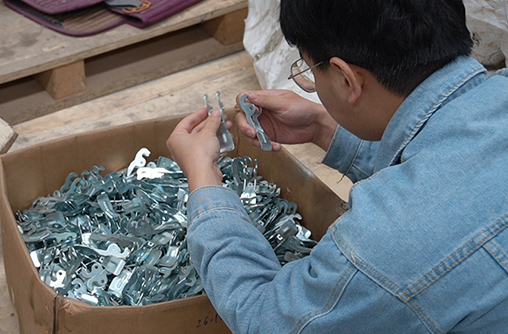
| We have provided customized metal part manufacturing services to over 100 countries and 3,000 enterprises worldwide, covering the electronics, automotive, industrial equipment, new energy, and medical industries. During long-term production, three typical phenomena were observed: • A sample being qualified does not mean that the batch cost is stable. Many “hidden costs” only appear during the mass production stage, for example: • Micro-deformation of the stamping die results in rework. |
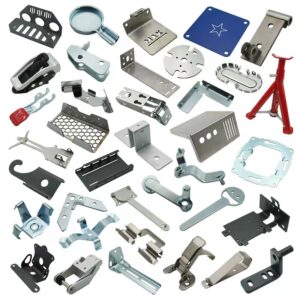 |
These factors will directly affect the final cost of custom metal parts.
What Makes Up the Cost of Custom Metal Parts
We divide the costs into five core components:
- Material cost
- Processing technology cost
- Engineering design cost (DFM)
- Batch size cost
- Testing and quality control cost
The following is a typical example of the cost structure of OEM parts :
1. Cost Structure Breakdown
2. Process Impact on Manufacturing Cost
3. Unit Cost vs Production Volume
How Integrated Manufacturing Reduces Costs
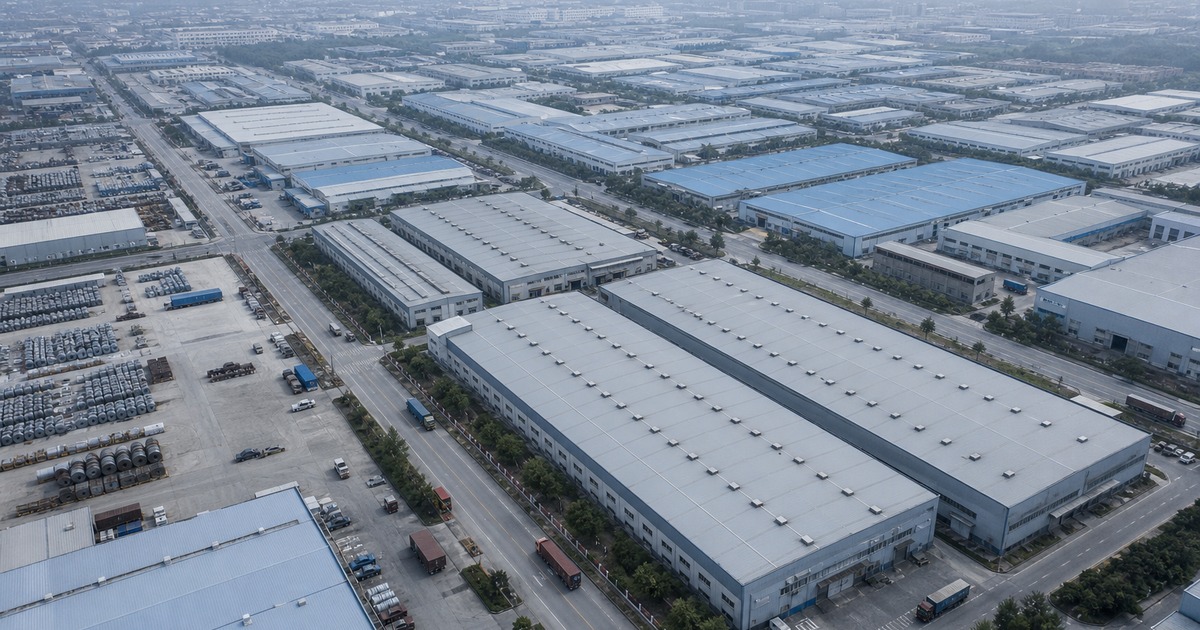
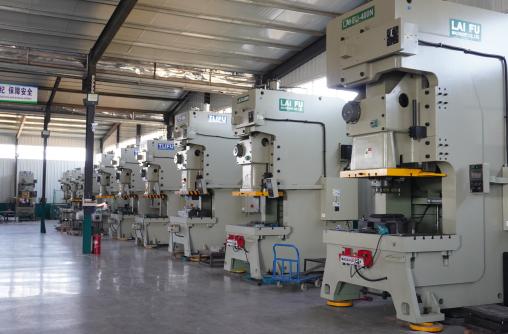
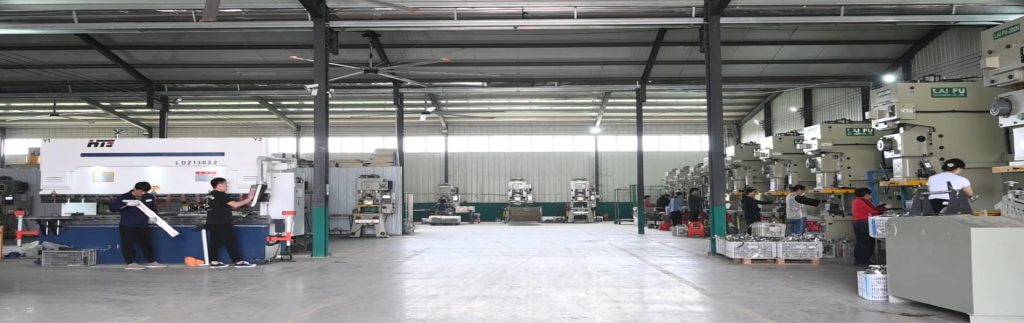
Our factory has a complete manufacturing system, enabling systematic optimization of the cost structure.
- 38 stamping machines ranging from 80 to 400 tons
- 2 × 6 kW laser cutting machines
- 3 tube bending machines
- 2 five-axis CNC machining centers
- 3 vertical machining centers
- 3 CNC milling machines
- 2 surface finishing lines
- 4 laser marking machines
- 2 coordinate measuring machines (CMMs)
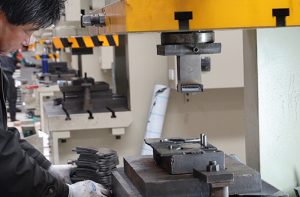
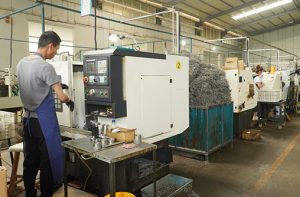
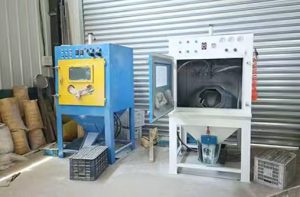
👉 By integrating sheet metal fabrication, CNC machining, welding, surface finishing, and quality inspection in-house, we minimize outsourcing, improve production efficiency, and provide more stable and competitive custom metal parts cost for OEM projects.
How Engineering Expertise Reduces Manufacturing Costs
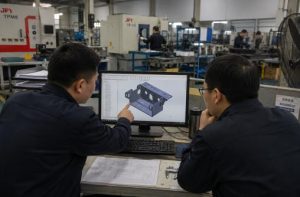 |
We have a team of 19 engineers with over 10 years of experience, and we offer free DFM analysis, including:
• Structural simplification design |
In many projects, DFM optimization alone can reduce:
📉 10% – 35% of manufacturing costs
Why Do Quotes for the Same Part Vary So Much Between Suppliers?
As a result, these differences influence not only the quoted price but also the overall cost, quality, and long-term production performance of custom metal parts.
Conclusion
In the OEM manufacturing environment of 2026, the cost of custom metal parts will no longer be a simple quote; instead, it will be the comprehensive result of the engineering system.
What truly determines the price is not a single process, but:
• Is the design reasonable?
• Is the process the most optimal?
• Is the production systematic?
• Is the quality stable?
Frequently Asked Questions
Q1. What share of custom metal parts cost comes from material versus processing?
In a typical OEM cost structure, material accounts for roughly 25% to 40%, depending on whether the part is stainless steel, aluminum, or carbon steel, while processing such as stamping, CNC machining, or laser cutting accounts for about 20% to 45%, depending on process complexity and volume. Engineering, batch setup, and quality control make up the rest. Because the two largest shares pull in opposite directions, cost work usually starts by fixing the material choice and then optimizing the process route.
Q2. Does ordering more parts always lower the unit price?
Unit cost falls in stages rather than in a straight line. At 1 to 50 pieces the setup cost per part is high and efficiency is low. From roughly 50 to 500 pieces, process optimization begins and tooling is partially amortized. Above that range, unit cost decreases significantly. The step change usually comes when tooling becomes justified, for example moving from laser cutting and bending to stamping. That is why the same drawing can be quoted differently at 100 pieces and at 5,000 pieces.
Frequently Asked Questions
Q1. What share of custom metal parts cost comes from material versus processing?
In a typical OEM cost structure, material accounts for roughly 25% to 40%, depending on whether the part is stainless steel, aluminum, or carbon steel, while processing such as stamping, CNC machining, or laser cutting accounts for about 20% to 45%, depending on process complexity and volume. Engineering, batch setup, and quality control make up the rest. Because the two largest shares pull in opposite directions, cost work usually starts by fixing the material choice and then optimizing the process route.
Q2. Does ordering more parts always lower the unit price?
Unit cost falls in stages rather than in a straight line. At 1 to 50 pieces the setup cost per part is high and efficiency is low. From roughly 50 to 500 pieces, process optimization begins and tooling is partially amortized. Above that range, unit cost decreases significantly. The step change usually comes when tooling becomes justified, for example moving from laser cutting and bending to stamping. That is why the same drawing can be quoted differently at 100 pieces and at 5,000 pieces.
Get a Free Engineering Review to Optimize Your Custom Metal Parts Cost
✅ Cost structure analysis · DFM optimization · Batch pricing
📩 tylor@xinjiuxinji.com — Reply in 3 working hours with free design optimization.
Upload your drawings today and receive a free engineering review before production begins. — 24h response
Design for Manufacturability: The Complete Guide for OEM Sheet Metal Projects