Construction Equipment Brackets: A Fabrication Guide
The short answer
Construction equipment brackets earn their keep in the worst environment a metal part can live in. So they take vibration, shock, heavy loads, dust and moisture, eight hours a day, for a decade. A bracket that fails there does not fail quietly — it drags the whole machine into the yard. This guide walks what the environment does to the part, then the decisions that answer it: material and gauge, thick plate cutting, structural welding, outdoor finishes, and the batch controls that keep the fix in the part.

What the Job Site Does to a Bracket
First, the loading is different from automotive. So an excavator support sees cyclic shock from the bucket, not the smoothed road spectrum a car sees. Then, dust and moisture get into every joint, and the fix must survive the wash-down cycle. Also, maintenance happens in the field, with a wrench and a flashlight, which means the part must reassemble cleanly after years of service.
By contrast, the failure mode is structural, not cosmetic. In other words, the engineering margin belongs in the metal and the welds, and the finish job is the part that protects them.
The Seven Bracket Families in Construction Equipment
First, construction equipment brackets sort into seven families, and each one carries a different load story. So name the family before you price the part.
| Family | Typical parts | What drives the cost |
|---|---|---|
| — | — | — |
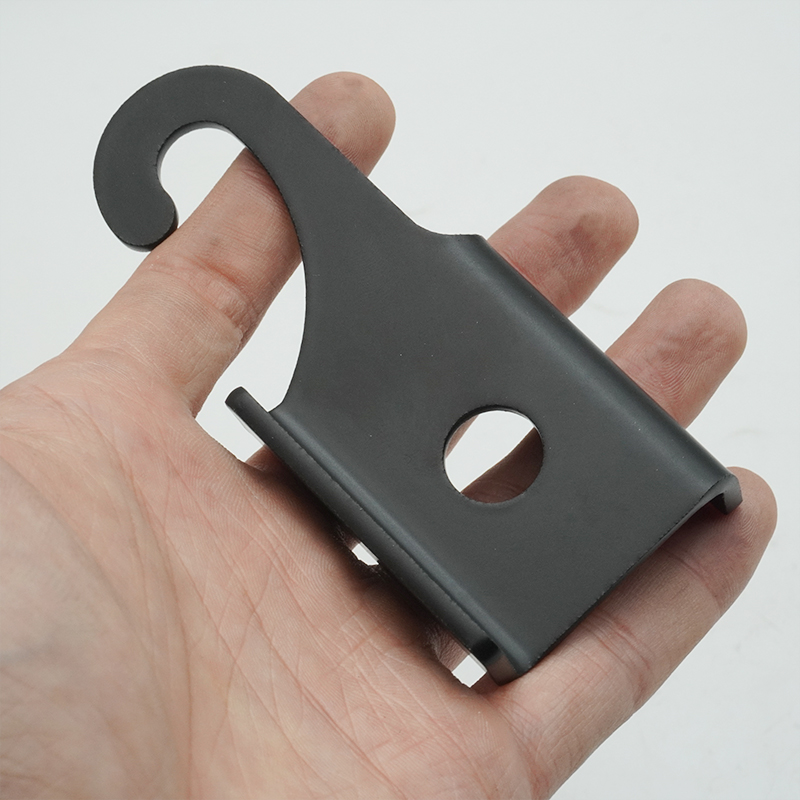
| Metal supports | Engine support, cab support, hydraulic component support, control box support | Thick plate, weld joints |
| Metal frames | Protective frame, cab skeleton, equipment base | Multi-process forming, fit-up |
| Metal enclosures | Control box shell, fuel tank shell, toolbox | Panel fit, door alignment |
| Metal pallets | Tool pallet, part pallet, fuel tank pallet | Large blanks, reinforcement |
| Metal clips | Brass hose clip, spring clip, heavy-duty pipe clip | Spring behavior, corrosion |
| Metal snap clips | Wire harness clip, hydraulic pipeline clip, quick clamp | High counts, ejection |
| Hardware tools | Construction tools, vehicle maintenance tools, repair hardware | Mixed materials, finish |
Next, the split matters for scheduling. So supports, frames and pallets are the low-count, thick-plate end. Clips and snap clips are the high-count, high-speed end. As a result, the plant should prove both ends — the thick plate line and the high-speed press line — on its own floor.
Material and Gauge: Where the Margin Lives
First, structural construction equipment brackets run on heavy-gauge carbon steel. So the gauge follows the load, and the plate thickness follows the gauge. Then, the cutting method follows the plate: thick structural blanks go through the fiber laser, while high-count clips stamp on the press line.
Also, the material call carries the corrosion plan. So galvanizing, powder coating and corrosion protection treatments sit on the shortlist for outdoor service. In other words, the spec sheet should name the metal, the gauge and the finish in one place, and the production plan follows cleanly.
The Two Cases We Ran

First, our construction equipment record covers both the structural end and the high-count end. So the two examples below come from real production.
Excavator Structural Support Components
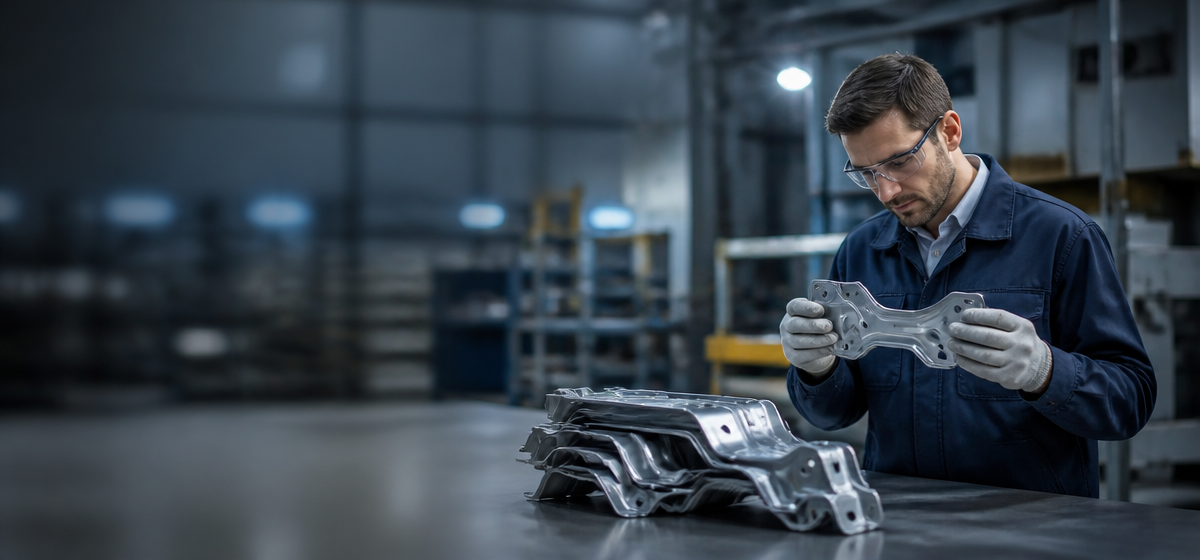
First, the program needed structural support components for heavy duty equipment with vibration resistance, structural strength and stable welding performance. So the route started with thick steel plate processing, then combined laser cutting and bending coordination. Also, reinforcement structure welding carried the joints, and weld inspection closed the quality check. Then, sample testing verified the design, and the project moved to stable batch production.
Hydraulic Pipeline Fixing Components
First, the fixing components needed stable installation performance and corrosion resistance for long outdoor use. So the route ran stamping production across multiple specifications, with structural optimization for installation stability. Also, surface galvanizing treatment handled the corrosion side, and flexible low-volume production support kept the range manageable. As a result, the long-term program held stable performance for equipment maintenance applications.
Thick Plate for Construction Equipment Brackets: Why the Laser Line Matters
First, thick bracket programs die at the subcontractor hand-off. So the plant that cuts, bends and welds the heavy blank in one building holds the geometry. Here is the floor behind the cases above, from our equipment list.
| Process | Equipment | Units |
|---|---|---|
| — | — | — |
| Laser cutting | Fiber laser cutting machines, 6 kW | 2 |
| Bending | Bending machines / press brakes | 3 |
| Stamping | Stamping presses, 80–400 tons | 40 |
| Welding | Electric welding lines | 3 |
| CNC machining | CNC milling and turning machines | 3 |
| Surface finishing | Surface treatment lines | 2 |
| Inspection | Coordinate measuring machines (CMM) | 2 |
Next, read the table as a route. So the two 6 kW lasers cut the thick structural blanks with clean edges. Then, the three press brakes form them, and the weld lines join the reinforcement structure. Also, the CNC machines machine the bolt patterns and mounting features that stamping and bending cannot. Finally, the surface lines coat the finished joint, and the CMMs verify the critical dimensions before shipment.
Outdoor Finishes for Field-Service Parts
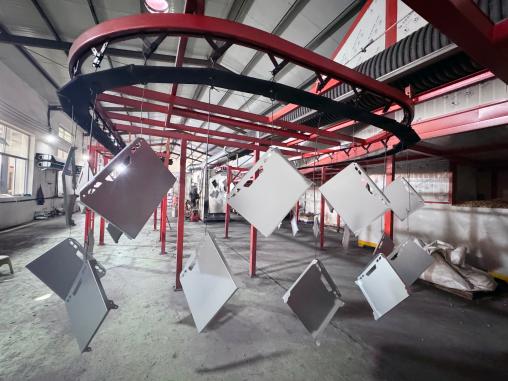
First, the finish must survive the service pattern, not just the weather. So the choice follows how the part gets abused.
| Finish | Best fit on construction hardware | Why |
|---|---|---|
| — | — | — |
| Galvanizing | Hydraulic clips, hose clips, structural supports | Sacrificial protection; survives field contact |
| Powder coating | Enclosures, toolboxes, cabs, pallets | Thick film; broad color range for OEM schemes |
| Corrosion protection treatment | Mixed service parts, maintenance hardware | Tailored for long outdoor exposure |
Next, sequence the work. So welding and machining happen before coating, and the surface preps to the coating spec. Then, the line cures and checks the film. As a result, the part leaves with protection that actually covers the weld zones, where field failures start.
Batch Controls for Equipment Programs
First, construction equipment brackets programs run in two modes at once. So the OEM line buys in big annual batches, and the maintenance channel buys in small repeat orders — often for equipment that is ten years old. The plant has to serve both without the small order breaking the big one.
- Batch production management holds the OEM line. So the annual program runs against the customer schedule, with delivery coordination through Tianjin Port.
- Flexible low-volume support serves the maintenance channel. So the multi-specification fixing components and repair hardware keep running in small batches, year after year.
- Inspection and traceability cover both modes. So the weld check and the dimensional record exist for the field batch as well as the OEM batch.
- Process parameters get recorded per job. So a repair order for 2003 equipment can still cut against the documented baseline.
- Multi-process coordination keeps one quality loop. So a fit-up problem found in welding goes back to the laser bay the same day.
FAQ
What gauge steel do construction equipment brackets use?
First, structural brackets follow the load, and the plate gets thicker as the load rises. So engine and cab supports run on heavy-gauge carbon steel, while clips and snap features stamp on lighter sheet. Then, the cut method follows the gauge, with thick blanks on the fiber laser and high-count parts on the press line. In other words, the drawing should name the gauge, and the supplier should confirm the route that serves it.
How do you protect brackets from corrosion in field service?
First, galvanizing leads for the parts that take physical contact, because the zinc keeps protecting where the surface scratches. So powder coating serves the visible and enclosed parts, where the thick film and color range matter. Then, corrosion protection treatment covers the mixed-service parts. Also, the finish must reach the weld zones, since that is where field rust starts.
Can a supplier serve both OEM batches and small maintenance orders?
First, check how the maintenance order is treated. So a plant with flexible low-volume production support keeps the small batches moving alongside the OEM line. Then, the recorded process parameters let a ten-year-old repair order cut against the original baseline. As a result, the spare part matches the original, and the machine stays in service.
What weld inspection do structural brackets get?
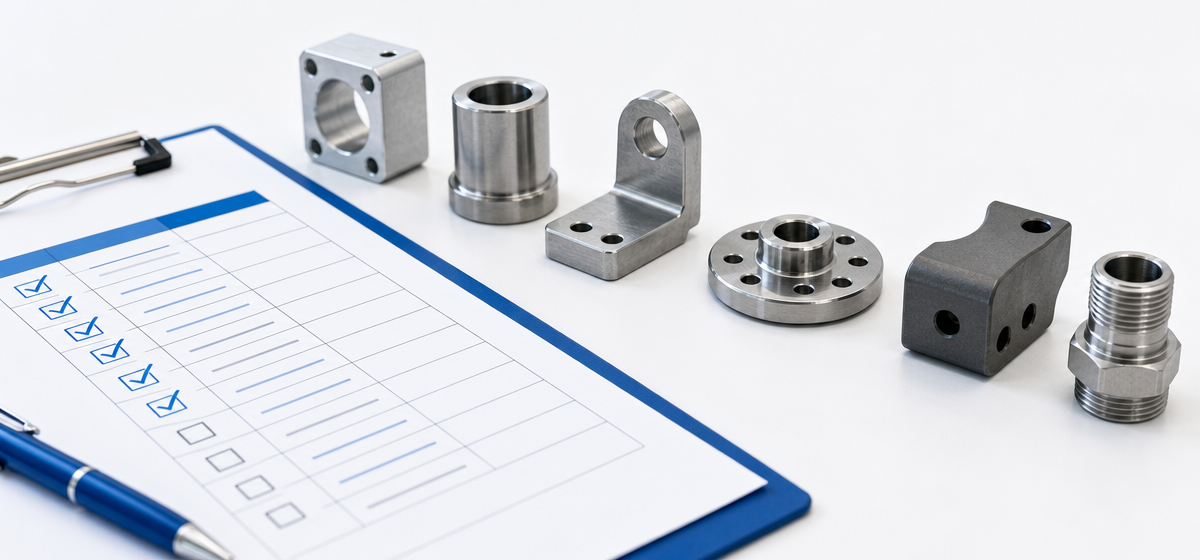
First, structural brackets get weld inspection as part of the process, not as an add-on. So the reinforcement structure welds are checked against the procedure, and the record travels with the batch. Then, critical dimensions verify on the CMM. In the end, the buyer receives a part whose welds are documented, not assumed.
What should I send to quote a construction equipment bracket?
First, send the drawing with gauge, quantity and the service environment. So the RFQ package lists twelve fields that keep the quote comparable across suppliers. Then, a complete package prices the part, and the answer comes back fast — we respond to inquiries within 2 hours on working days, and samples ship within 72 hours.
Sources and References
- Our equipment list — the laser, press, bending, welding, finishing and CMM inventory cited above
- Metal material selection guide — carbon, stainless and aluminum compared
- Sheet metal tolerance method — the three-tier structure for bracket drawings
- MOQ and lead time guide — the quantity and time calendars, including low-volume maintenance orders
Before the Next Repair Order
First, send the construction equipment brackets drawing and the service history before the replacement design locks. So we review the gauge, the weld joints and the finish call, and flag what the field will punish. In other words, the maintenance program is where the part design gets tested for real, and the fix is cheapest before tooling. Then, read the shipping and delivery page for how replacement batches reach you, and see the custom parts gallery for produced examples. Finally, request a quote with your drawing, quantity and environment.
Put the Field Service Pattern on the Drawing
✅ Direct-plant quote · 2-hour response · 72-hour sample path · Full equipment list included
📩 tylor@xinjiuxinji.com
We respond to inquiries within 2 hours.
Send the drawing with gauge and service history — the reply arrives with the corrosion plan and the batch-control record format, ready for your maintenance schedule.
Metal Fabrication Partner for a Startup: A Practical Guide