Alibaba Alternative for Custom Metal Parts: Platform vs Verified Plant
The short answer
Buyers looking for an Alibaba alternative for custom metal parts usually start at the same place: Alibaba.com. The platform launched in 1999 — the same year our Nanpi plant started producing metal parts — and it remains the first stop for most buyers sourcing from China, because it puts thousands of supplier listings in one place. Still, the platform is a directory, not a factory. Suppliers place the listings, and manufacturing plants and trading companies sit side by side — each with a badge.
So which one should you use? Here is the practical split:
- Choose a marketplace (Alibaba included) when you are exploring a new category, building a shortlist, or comparing first quotes. The density of candidates is genuinely useful for that step.
- Choose a directly verifiable plant like Xinjiuxinji when the program gets real: high-volume stamping, tooling investment, batch-to-batch consistency, and repeat production.
Both steps are legitimate. The mistake is treating a listing as a supplier. This comparison lays out what each badge actually verifies, where Trade Assurance stops, and when direct-plant economics pull away from marketplace pricing — the full answer to the Alibaba alternative question — and it ends with a six-check list you can run on any candidate, including us.
What Alibaba actually is
Alibaba.com is a B2B marketplace: a listing directory that connects buyers with suppliers, mostly in China. The platform does not manufacture anything. It sells access.
Three trust markers appear on listings, and buyers often read them as stronger than they are. Here is what each one covers:
Gold Supplier. This is a paid membership tier. Suppliers buy it the way they buy any advertising slot — it improves the listing’s placement, not the factory’s capability. Long Gold Supplier history signals platform continuity, but it does not measure the presses behind the storefront.
“Verified” badge. A third-party inspection firm completes an on-site audit. That audit confirms the business exists at the stated address and the basic registration details check out. It is not a quality certification and not a capability certification — a trading company can be verified. The badge confirms the business, not the press shop that will run your part.
Trade Assurance. This is the marker buyers most often mistake for protection. Trade Assurance is an escrow: Alibaba or an affiliated financial institution holds your funds and releases them to the supplier once you confirm the goods arrived in satisfactory condition and shipped on time. It covers on-time shipping and product quality measured against the contract — so the contract itself becomes your protection. Vague specifications lose to vague claims. Per-order coverage limits apply and they shift with your buyer tier, off-platform payments void the protection entirely, and transit damage usually falls to freight insurance instead. Disputes run through platform mediation, and resolution commonly takes weeks.
None of this makes Alibaba unsafe. It makes Alibaba a screening tool, and the reason buyers search for an Alibaba alternative is that the screening work never gets smaller. The verification work — samples, inspections, entity checks — is still on you.
Where that leaves custom metal parts
For commodity parts, this model works: the specification is thin, the risk is bounded, and escrow holds the line.
Custom metal parts are the opposite shape. A stamped bracket is defined by tolerances, tooling, and process parameters. When a listing looks promising, the marketplace cannot answer the questions that actually matter:
- Which factory will the order actually run at?
- Which press will run the die — and who owns the tooling after the run?
- How does the supplier prove batch-to-batch consistency over a year of orders?
- Which legal entity signs the contract, makes the part, and ships it?
Trading companies posing as factories are the recurring failure mode on listing marketplaces, and the red flags are consistent: lead time shifts once you mention tooling, the equipment list gives tonnage ranges with no unit counts, and design changes get answered with “we will ask the factory.”
So the honest answer to “what is the best Alibaba alternative for custom metal parts” has two parts. Part one: keep using the marketplace as a discovery layer. Part two: make sure the final supplier is a plant you can verify directly. That is what the rest of this article covers.
What Xinjiuxinji actually is
We are the opposite shape. One campus, one team, one accountable chain:
- A 9,000 m² plant in Nanpi County, Cangzhou, Hebei Province — close to Beijing and Tianjin, with export shipments leaving through Tianjin Port
- Metal stamping and sheet metal production at this site since 1999
- 120 employees, including 19 engineers and 6 dedicated QA/QC inspectors
- 40 stamping presses from 80 to 400 tons, plus 4 hydraulic presses for deep drawing
- 2 fiber laser cutting machines at 6 kW, 3 CNC milling and turning machines, five-axis CNC machining centers
- 3 bending machines, 3 electric welding lines, 1 automatic spot welder, 2 surface treatment lines
- 2 coordinate measuring machines (CMM) for in-house dimensional inspection
- More than 70,000 types of custom metal components produced since 1999
- The Nanpi plant is ISO 9001:2015 certified, and TÜV Rheinland verified our manufacturing site onsite
- Inquiries answered within 2 hours on working days; samples ship within 72 hours
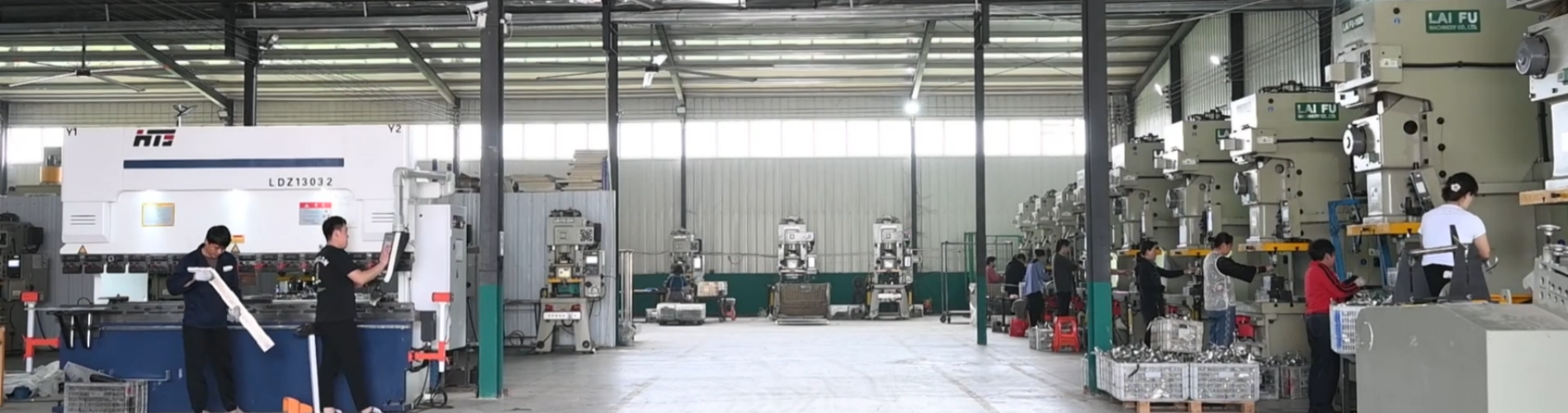
The full machine inventory is public on our equipment list page, and the plant layout, team, and process flow are documented on the Our Factory page. You do not have to take our word for any number in this article.
Side-by-side comparison
| Dimension | Alibaba (marketplace model) | Xinjiuxinji (direct plant) |
|---|---|---|
| What you buy | Access to a list of suppliers | A specific, documented facility |
| Who makes your part | Unknown until you verify — factory or trading company | The plant you visit or video-walk |
| Verification burden | On you: samples, third-party inspection, entity checks | On us: public equipment list, certificates, visitable plant |
| Trust markers | Gold Supplier (paid), Verified (on-site existence audit), Trade Assurance (escrow) | Plant ISO 9001:2015 certificate, TÜV Rheinland onsite verification, CMM records |
| Payment protection | Trade Assurance escrow, per-order limits by buyer tier | Direct contract with first-article gate and inspection report on every shipment |
| Stamping capacity | Varies by listing; no platform-level guarantee | 40 presses, 80–400 tons, plus 4 deep-drawing presses |
| Best fit | Discovery, shortlisting, first quotes, commodity parts | High-volume stamping, tooling investment, repeat production |
| History | Marketplace operating since 1999 | Metal parts production since 1999 |
Sources: Alibaba Rules Center for Trade Assurance terms; our Equipment List and Our Factory pages for plant figures.
When Alibaba is the better starting point
We would rather tell you this than win a bad fit:
- You are exploring a new category. Listing density helps you learn the price bands and process vocabulary before you commit a budget.
- You are shortlisting for a commodity or standard part. When the specification is thin, escrow plus a sample is a reasonable risk stack.
- You want a payment backstop on a first order with a supplier you have not met. Trade Assurance is exactly that — provided the contract is precise and the payment stays on-platform.
- You are comparing quotes across many candidates. A direct plant like ours is one data point; the marketplace is twenty.
Use it this way and you are using a directory for what it is. The moment the order carries tooling, tolerances, and repeat volume, the model stops fitting — because the marketplace verifies the business behind a listing, not the factory that will run the die. A marketplace shortlist is not an Alibaba alternative; it is the input, not the answer.
When a direct plant wins for your program
If you have run the marketplace shortlist and you are now asking the Alibaba alternative question for real, the pattern we see from North American and European OEM buyers is consistent:
- Tooling investment. Progressive dies and stamping tooling cost real money, so you want the tooling owner to be the same entity that runs it — with records showing how the die was cut, tried, and tested. At a direct plant, the die sits next to the press that runs it.
- Batch-to-batch consistency. At 10,000+ pieces per run, consistency comes from recorded process parameters and one team owning the line. A routed order passes through several hands, and each handoff is a place where the record gets thinner.
- One part, several processes. Stamped blanks that then need laser cutting, CNC features, welding, and coating stay on the same floor. When final inspection finds a deviation, we trace it to the specific operation in minutes — not across facility boundaries.
- Long-term repeat production. Since 1999 we have produced more than 70,000 types of custom components. Repeated programs benefit from recorded baselines, in-house tooling, and engineers who walked the previous runs.
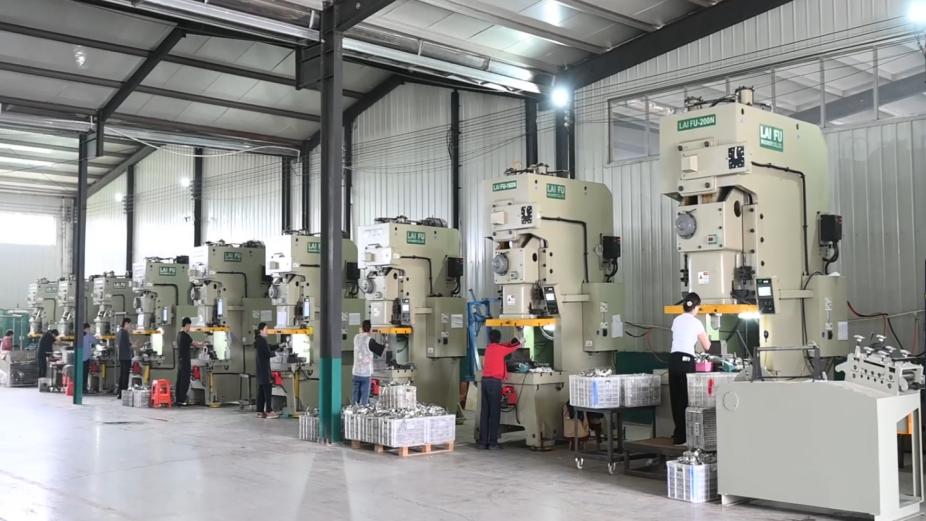
A useful rule of thumb: once your annual requirement crosses the point where tooling becomes a real line item — typically somewhere between a few thousand and ten thousand units per die — direct-plant economics start to pull away from marketplace pricing.
The real Alibaba alternative: verification, not switching
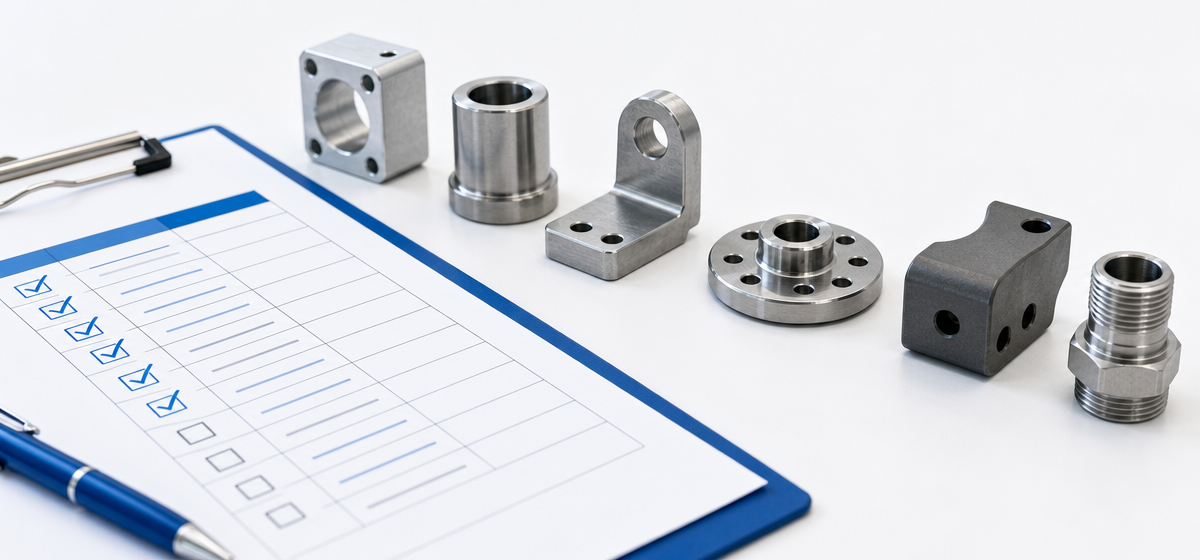
Most “Alibaba alternative” searches look for another marketplace. The more useful shift is from badges to evidence. Whatever channel you find the supplier through, run the same six checks on every candidate — including us:
- Ask for the equipment list, not the brochure. Tonnage range, press count, CMM availability. A stamping supplier that cannot tell you its press fleet is not a stamping supplier.
- Verify certificate scope and entity. Check which legal entity holds the ISO certificate and what the scope covers. A storefront badge is not a certificate whose scope matches your part family.
- Match the entity across your documents. Listing, contract, invoice, and shipping marks should name the same entity. Mismatches are the classic trading-company signal.
- Video-walk the exact area that will run your part. Ten minutes, live, with specific questions — that press, that CMM, that fixture. A recorded tour is a brochure.
- Order a sample made on production equipment and compare it against your own inspection. Ours ship within 72 hours of approval, under the same process controls as the volume run.
- Start with a trial order sized so a mistake stays affordable. Then scale on evidence — FAI reports, material certificates, on-time records — not on badges.
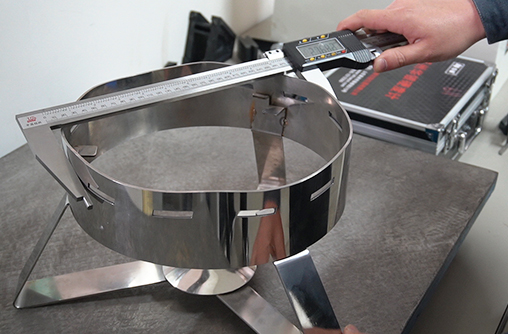
If you already run a marketplace shortlist, this checklist turns it from a pile of profiles into a ranked, defensible decision — and it is the same audit you would apply to us before awarding a program.
Frequently Asked Questions
How can I verify a metal-parts factory before placing an order?
Check the legal entity, production address, process capability, equipment, quality records, certificate scope, inspection process, sample history, and communication trail. The evidence should match the site, company, and manufacturing work being quoted.
Does a marketplace profile or badge prove manufacturing capability?
No. A profile can help with initial discovery, but it does not replace verification of the actual factory, equipment, process ownership, certificate scope, inspection records, and ability to support repeat production.
What documents should I request from a potential supplier?
Depending on project risk, request the relevant company information, certificate and scope details, material or inspection records, sample or first-article evidence, process information, and traceability documents. Define which records are required before the quotation is accepted.
When should I consider working directly with a factory?
A direct factory relationship may be worth evaluating when the project requires repeat production, tooling control, coordinated stamping or fabrication processes, stable inspection records, and direct communication with the production team.
Start with your drawing
If your program is stamping, deep drawing, or mixed sheet metal plus CNC at production volumes, send us the drawing and the quantity. You will have a reply within 2 hours on working days, and a sample path within 72 hours of approval — from one plant, one team, one accountable chain. If your shortlist started on a marketplace, treat this as the Alibaba alternative that has to pass your own verification — the same six checks you would run on anyone else. You can also compare how we stack up against a quoting platform in our RapidDirect alternative comparison, or read the mechanics behind the price in our guide on what drives a metal part’s price.
Related pages: Metal Stamping Equipment List · Inside Our 9,000 m² Plant · RapidDirect Alternative for Custom Metal Parts · Request a Quote
Skip the Badge Guesswork — Send the Drawing to a Verified Plant
✅ Direct-plant quote · 2-hour response · 72-hour sample path · Full equipment list included
📩 tylor@xinjiuxinji.com
We respond to inquiries within 2 hours.
Send your drawing with quantity and destination — the reply arrives with the plant’s scope lines filled in, so you can compare marketplace vs plant like for like
Heavy-Duty Automotive Brackets: RFQ and Stamping Guide