How to Evaluate a China Metal Parts Manufacturer for an Automotive Program
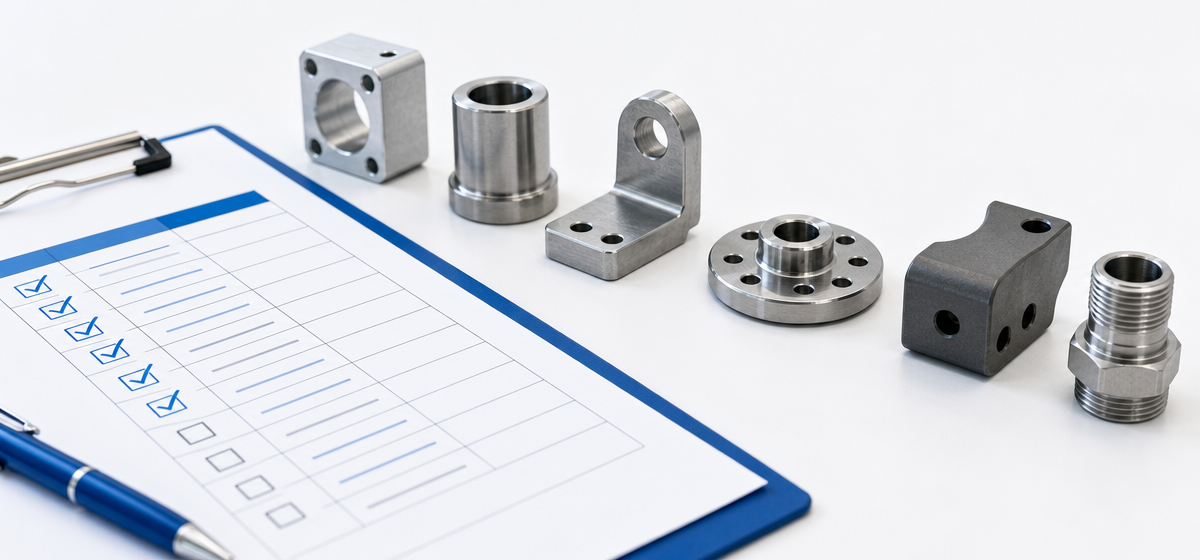
Illustrative editorial image only; it does not show a specific supplier, part, or approval decision.
Nine Readiness Gates
The gates below form a sequence. Each one answers a question that the next gate depends on.
| Gate | Question to answer | Evidence to request |
|---|---|---|
| 1. Capability | Can the supplier make this part family? | Equipment list, past part examples, capacity plan |
| 2. Quality system | Is the quality system suited to the program? | Certificate with scope, control procedures |
| 3. DFM | Is the design manufacturable to the drawing? | Written DFM review with open questions closed |
| 4. Tooling | Who owns the tooling, and is it controlled? | Tooling plan, ownership note, maintenance schedule |
| 5. First article | Does the first production part match the drawing? | Dimensional report with method and instrument IDs |
| 6. Capability study | Does the process hold the critical characteristics? | Study plan, sample size, measurement system check |
| 7. Trial production | Does a production-like run stay within limits? | Run record across shifts or lots |
| 8. Release | Is the process approved for series production? | Signed release record with conditions |
| 9. Monitoring | Does the process stay stable over time? | Control charts, claim records, corrective actions |
However, the gates ask for evidence, not promises. A supplier that cannot produce a record for a gate should not move to the next one.
Process Capability: Specify the Study
In particular, a capability study should name the characteristic, the sample size, the measurement system, the time window, and the statistic used. Process capability indices such as Cp and Cpk apply to stable processes with a known distribution. Therefore, confirm that the characteristic is suitable for the index before you accept a result. For an approach to measurement system and capability statistics, consult the reference material published by the automotive quality manuals and your customer’s quality team.
Trial Production and Release
Then, a trial run should use production tooling, production material, and the planned shift pattern where possible. Record every interruption, adjustment, and rework. Then decide release only when the trial record shows the required stability. A release should name the conditions under which the approval applies, such as the die revision, the material lot, and the process route.

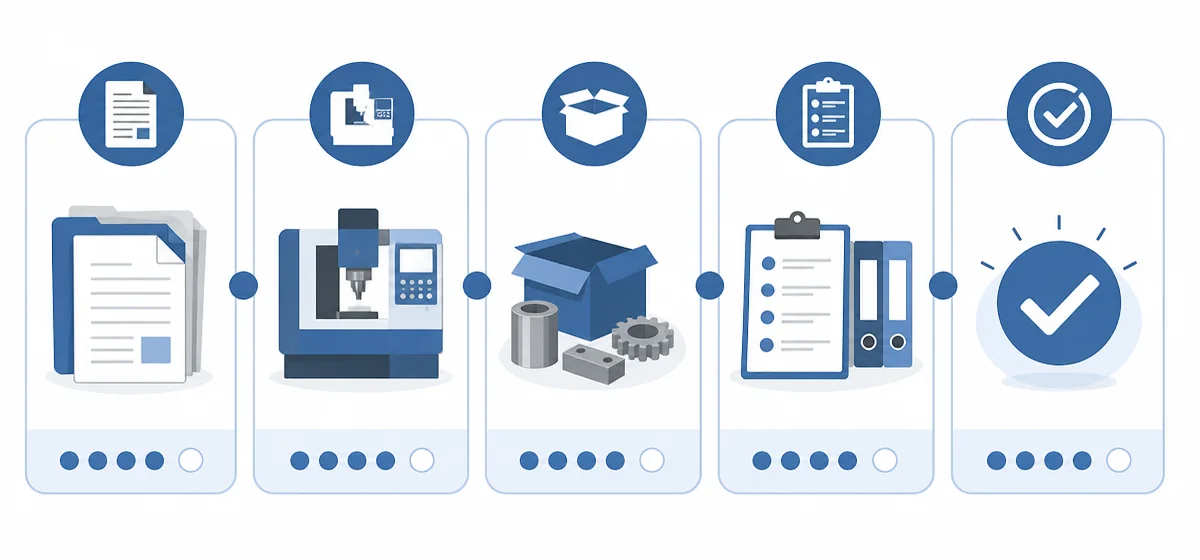
Illustrative editorial image only; it does not show a specific trial record or capability result.
Monitoring After Launch
Monitoring turns approval into control. Ask for control charts on critical characteristics, a claim log, and a corrective-action record for each nonconformance. A repeated defect should trigger a review of the process, the tooling, and the inspection method, not only a sorting action.

Illustrative editorial image only; it does not show a specific control chart or supplier record.
Quality System Scope
Finally, an automotive program may require a quality system standard beyond ISO 9001. Confirm the requirement with the customer or the program quality plan. Do not treat a general certificate as proof of automotive readiness. Verify the certificate scope and validity through IAF CertSearch, and check the requirement with the customer.
FAQ
Can a supplier skip the capability study for a low-volume program?
Therefore, the customer decides whether the study applies. If the study is not required, use a documented alternative that still shows the critical characteristics are controlled.
What sample size should the study use?
In contrast, set the sample size with the customer’s quality plan and the statistic in use. State the number and the time window in the study plan.
Does a first article prove that the process is capable?
No. A first article verifies one production part and the setup. The capability study and the trial run verify that the process holds over time.
What should I do if the trial shows a borderline result?
Record the result, investigate the cause, and repeat the study after a corrective action. Do not release the process on an unexplained borderline result.
For one component family that lives under exactly these gates, see our heavy-duty automotive brackets stamping guide.
Start the Gate Review with Your Drawing
✅ Capability evidence · DFM review · Tooling ownership · Study plan
📩 tylor@xinjiuxinji.com
We respond to inquiries within 2 hours.
Send the drawing, the program quality requirement, and the annual volume — the reply lists the gates and evidence for your program.
Custom Metal Stamping Parts Manufacturer in China