Manufacturer vs Trading Company for Metal Parts from China
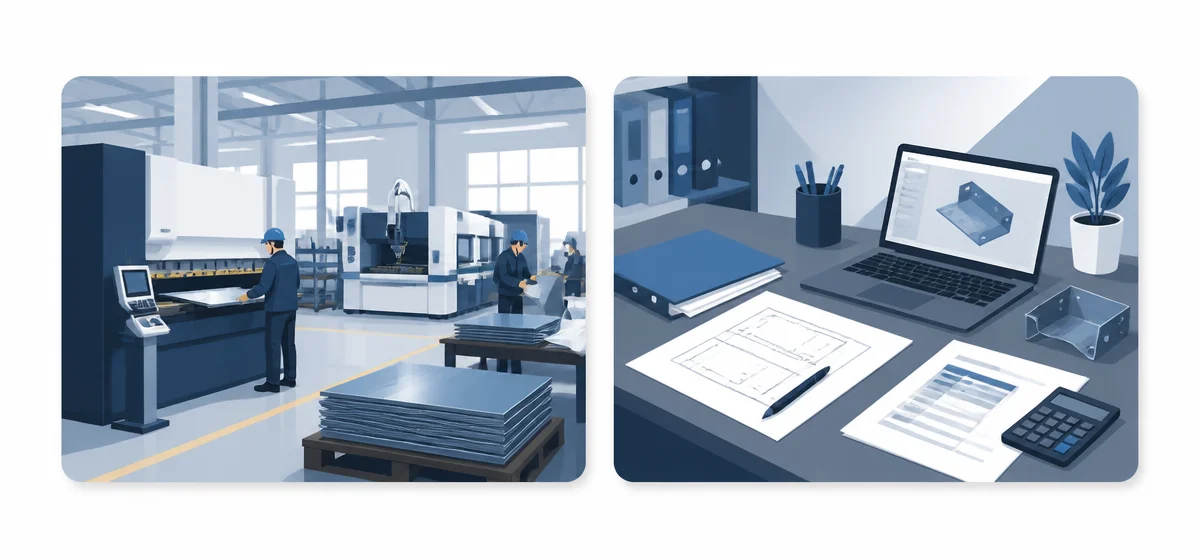
Illustrative editorial image only; it does not identify a specific company or describe a specific business arrangement.
Define the Roles Before You Compare Prices
A quotation can show a lower unit price from either model. However, the price difference may reflect a different scope. A trading company may include factory coordination and export services. A manufacturer may include tooling, process control, and direct inspection. Therefore, compare the same scope lines before you judge the price.
Comparison Table: Who Does What
| Role | Manufacturer | Trading company |
|---|---|---|
| Production line | Owns or operates the press, machining, or welding line | Usually coordinates one or more partner factories |
| Engineering and DFM | Reviews the drawing with the production team | Relays questions and may involve the partner factory |
| Tooling | Usually owns or manages the die and fixture | Depends on the contract and the partner factory |
| Quality control | Runs in-process checks and final inspection | Arranges inspection, often through the factory or a third party |
| Export documents | May prepare invoices and packing lists | Often prepares documents and manages shipping |
| Commercial invoice and payee | Usually the factory company on the invoice | Usually the trading company, which must match the contract |
This table describes common roles, not a rule. Still, every company must be checked against its own documents.
Check the Legal Entity Chain
In addition, ask which company holds the business licence, which company owns the production site, which company signs the contract, and which company receives payment. If these are different companies, record the relationship in the contract. Furthermore, check that the factory name on the audit report matches the production site named in the agreement.
Compare Service Fees by Scope
Some trading companies add a service fee. The fee may cover supplier coordination, independent inspection, export paperwork, consolidation, or project management. In addition, a fee can be justified when the buyer receives a defined service. However, the buyer should ask for the fee to be listed by service item, not as a single unexplained percentage.
Ask the following questions to compare fees fairly:
- Which services does the fee include?
- Which costs are paid directly to the factory?
- Is inspection performed by the trading company, the factory, or a third party?
- Who carries the risk if a shipment is delayed or rejected?
Verify Production Control in Practice
Therefore, request evidence that the production company controls the process. For a manufacturer, ask for dated photos of the line, the equipment list, and the inspection area. For a trading company, ask for the partner factory’s name, its equipment list, and the audit record. In both cases, confirm who approves engineering changes and who can stop the line.

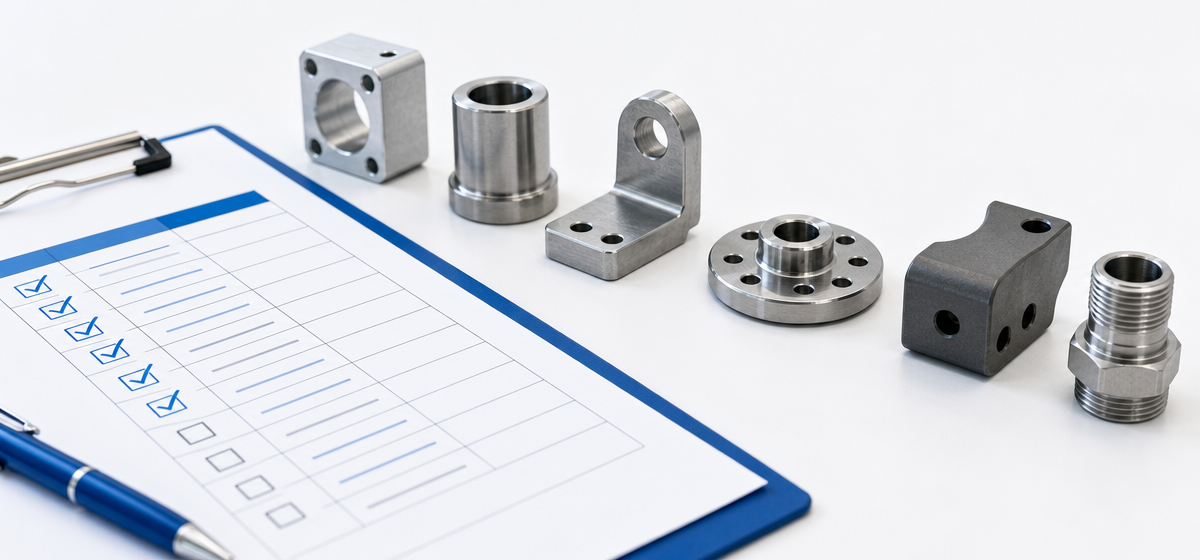
Illustrative editorial image only; it does not show a specific product, supplier, or inspection result.
A Five-Point Verification Checklist
- Match the business licence, invoice, and bank account to the contract.
- Confirm the production site and its equipment list.
- Review the certificate scope and the certified site.
- Request a sample run with a dimensional report.
- Agree on who inspects, who approves changes, and who issues the shipment documents.
When a Trading Company Is a Reasonable Choice
However, a trading company may suit a buyer who needs one contact for several products, or a buyer who lacks an import team. In that case, the value comes from coordination and document control. Confirm that the company reports the actual factory, the actual inspection results, and the actual changes made during production.
FAQ
Is a manufacturer always better than a trading company?
Therefore, a manufacturer may give more direct control, but a well-run trading company can add value. Compare the verified roles and the scope of service.
Why does the factory name differ from the seller name?
The seller may be a trading company that orders from a factory. Ask for both names in writing and record which company is responsible for each stage.
Can a trading company provide an FAI or material certificate?
It can coordinate them, but the certificate should trace back to the actual production source. Verify the issuer and the lot or heat.
Should I pay the trading company or the factory?
Pay the company named in the contract and on the invoice. If that company changes, verify the new beneficiary through a second channel before paying.
Confirm Who Makes, Inspects, and Invoices Your Parts
✅ Legal entity chain · Production site · Certificate scope · Payee matched
📩 tylor@xinjiuxinji.com
We respond to inquiries within 2 hours.
Send your drawing and the company names on your current quotation — the reply maps the production owner, quality owner, and payee for your order.
First Article Inspection Explained for Metal Buyers