Metal Stamping Supplier China: A Buyer’s Guide from Screening to Mass Production

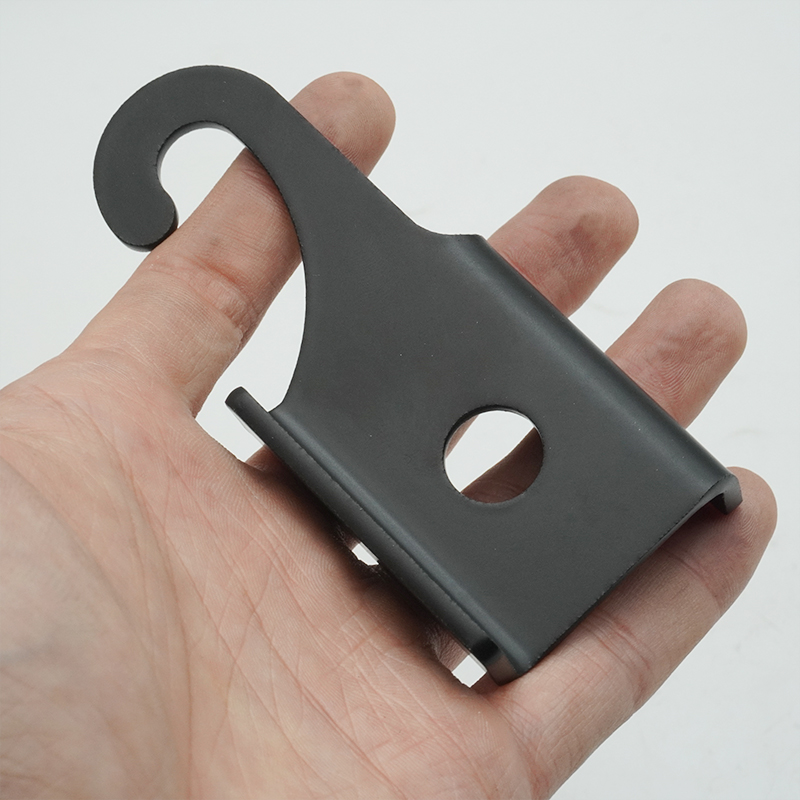
Illustrative editorial image only; it does not identify a specific supplier or press line.
Stage 1: Screen Capability
To begin, start with the part family. Ask which press tonnages and bed sizes the supplier runs, whether the part needs single-hit or progressive dies, and whether secondary operations such as tapping, deburring, or plating happen in-house. A supplier that cannot match the part family should exit the list early.
Stage 2: Verify Dies and Tooling
Moreover, dies often carry the most value and the most risk. Confirm who owns each die, where it is stored, who maintains it, and what happens at program end. Also ask how the supplier handles die changes and whether a die modification triggers a new first article.
Stage 3: Check Material Traceability
In addition, ask how the supplier links each shipment to a coil or sheet lot. A useful record connects the material certificate, the coil lot, the die, the press run, the inspection results, and the packing date. Without this link, a nonconformance cannot be traced to its source.
Supplier Scorecard
Use the following weighted scorecard. Adjust the weights to your program, and record the evidence for every score.
| Criterion | Evidence to request | Sample weight |
|---|---|---|
| Press capacity and equipment | Equipment list with tonnage and maintenance records | 15% |
| Die design and ownership | Die register and ownership note | 15% |
| In-house versus subcontracted steps | Process map and subcontractor list | 10% |
| Material traceability | Material certificate linked to coil lot | 15% |
| First article and FAI | Dimensional report with method and instrument IDs | 15% |
| Batch inspection reports | Sample batch reports from recent production | 10% |
| Capacity and lead time | Capacity plan tied to equipment and shift pattern | 10% |
| Change control | Engineering change procedure and a closed example | 10% |
The weights above are a buyer’s template, not an industry standard. Adjust them to the risk of the part, and state the weights in the decision record.
Stage 4: Run the First Article
Approve the first article only after the sample uses the production die, the production material lot, and the intended press. Require a dimensional report against the controlled drawing revision. A first article from a different press or a hand-made die does not prove production capability.

Illustrative editorial image only; it does not show a specific first article, report, or approval.
Stage 5: Control Mass Production
Finally, after launch, request batch inspection reports for critical characteristics. Review them against the process data, not only the pass/fail result. Require a change-control process so that a material, die, or process change is approved before it reaches the line.
Stage 6: Protect the Payment Path
Similarly, confirm the payee and the bank account in the contract. Match them to the company on the invoice and the company that operates the press line. Verify any change of bank details through a second channel. This control reduces payment fraud and keeps the supplier relationship clear.
FAQ
Should I choose the lowest-priced stamping supplier?
No. Compare the scorecard and the landed cost on the same scope. A low price with weak traceability or unclear die ownership can cost more over the program.
Do I need an FAI for every die change?
Not always. A change that affects form, fit, or function usually needs a review and an approval route. Confirm the trigger rule in the purchase order.
How often should I review batch reports?
Set the review frequency with the risk of the part and the customer requirement. Review critical characteristics on each batch and trend the results over time.
What if a supplier subcontracts plating or tapping?
Ask for the subcontractor name, its process specification, and its inspection records. Otherwise, the audited factory may not control the full part history.
Screen Your Stamping Supplier with a Written Scorecard
✅ Press capacity · Die ownership · Traceability · First article · Change control
📩 tylor@xinjiuxinji.com
We respond to inquiries within 2 hours.
Send the drawing, annual volume, and press tonnage needed — the reply maps the screening evidence for your part family.
Manufacturer vs Trading Company for Metal Parts from China