Metal Material Selection for Steel, Stainless, Aluminum
Introduction: This metal material selection guide helps OEM and procurement teams choose steel, stainless steel, or aluminum by service environment, forming route, grade, condition, finish, inspection, and traceability.
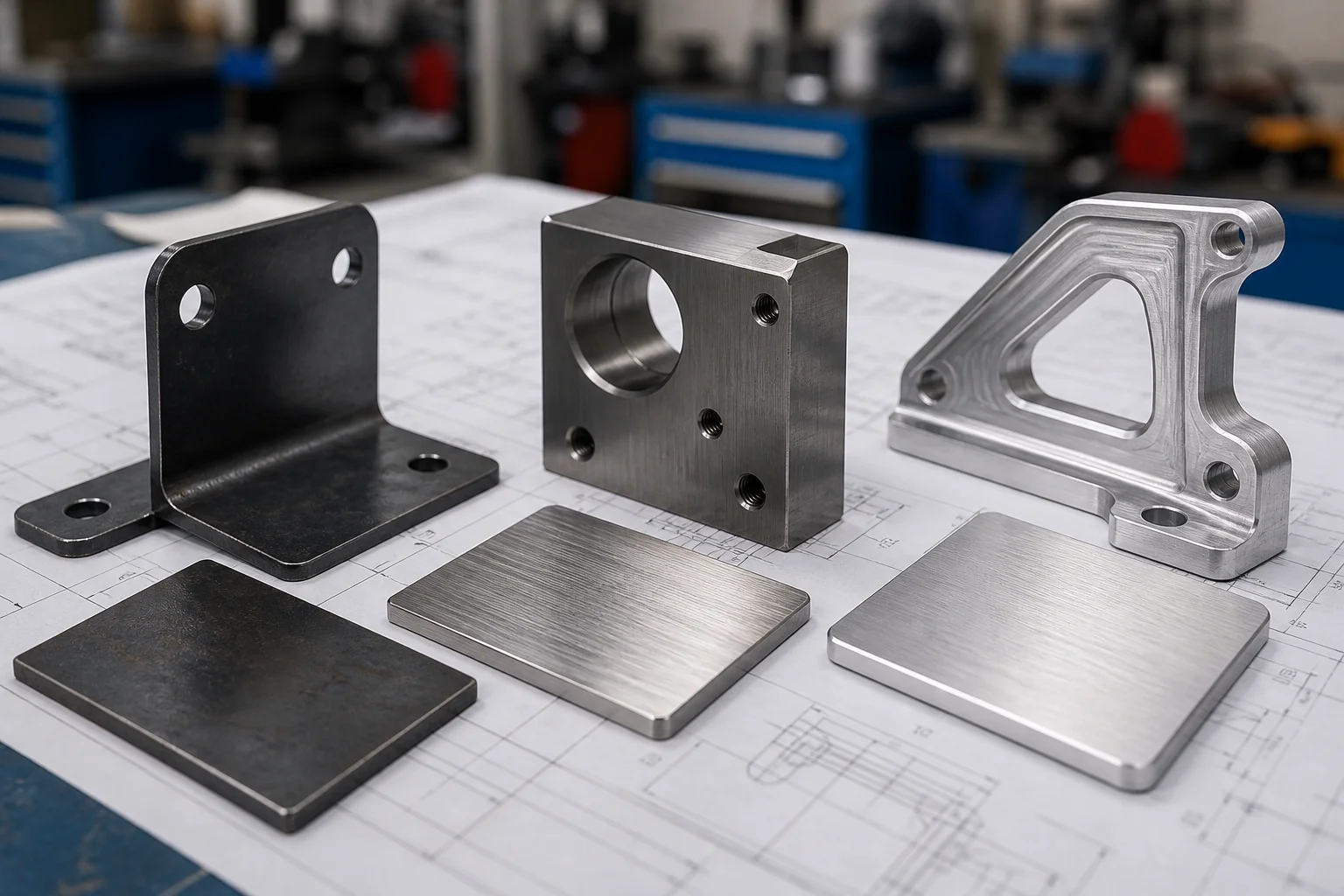
Illustrative editorial image only; it does not represent a specific alloy certificate, test result, or performance guarantee.
A controlled decision, not a catalog choice
Material selection is not a choice between “steel, stainless, or aluminum” in the abstract. Instead, it is a controlled decision about load, corrosion, temperature, appearance, joining, forming, machining, availability, and evidence. For this reason, the table below works as a practical starting point, and engineering, product risk, the applicable standard, and qualified supplier data should approve the final grade and condition.
Metal Material Selection Starts with the Application
Application drivers and grade choice
Ask what the part must do in service. For instance, a structural bracket may prioritize stiffness, weldability, and cost control. By contrast, a food-contact cover may prioritize cleanability, corrosion resistance, and surface condition. Similarly, a machined housing may need dimensional stability and a documented temper. Meanwhile, a marine or chloride-exposed part may need a different corrosion strategy from a dry indoor enclosure.
Sequence for choosing a grade
In practice, follow this sequence:
- Define loads, movement, temperature, chemicals, humidity, and expected cleaning.
- Identify the process: laser cutting, stamping, bending, machining, welding, or a combination.
- Select a grade and condition that the process can reliably obtain and verify.
- Set thickness from strength, stiffness, buckling, forming radius, and tolerance—not from price alone.
- Define surface treatment and appearance acceptance.
- Agree on certificates, inspection, and traceability before requesting a quote.
Six-column selection worksheet
Use this worksheet with engineering, procurement, and the supplier. Additionally, the team intentionally keeps “Confirm internally” where the correct value depends on the product or approved process.
| Application driver | Grade / condition | Thickness | Surface treatment | Certificates / inspection | Decision notes |
|---|---|---|---|---|---|
| Indoor structural bracket; static load and weldability | A36 or 1018, condition to drawing and process capability | Internal design value to confirm; verify bend and weld distortion | Paint, powder coat, or other specified protection | Material test report (MTR), dimensions, weld or coating checks as required | Use corrosion protection if service is humid; do not treat a general steel grade as a complete coating specification |
| General formed enclosure; low weight is useful | 5052, condition to drawing | Internal design value to confirm; verify forming radius | Anodize, paint, or as-fabricated finish per appearance requirement | MTR, temper/condition, dimensional report | Confirm whether forming or machinability is the priority before choosing a condition |
| Machined aluminum housing; strength and machinability matter | 6061, condition to drawing | Internal design value to confirm; account for machining stock | Anodize, conversion coating, or specified finish | MTR, condition, dimensional and surface checks | Confirm heat-treatment condition and post-finish dimensions with the supplier |
| General corrosion-resistant fabricated part | 304, condition to drawing | Internal design value to confirm; account for forming and welding | Brushed, passivated, electropolished, or specified finish | MTR, PMI when required, surface and dimensional inspection | Confirm chloride exposure, weld condition, and appearance class |
| Higher concern about chlorides or aggressive environments | 316, condition to drawing | Internal design value to confirm; verify forming and weld details | Passivation, electropolish, or other specified treatment | MTR, PMI when required, surface and dimensional inspection | 316 is not a universal solution; validate the actual media, temperature, crevices, and cleaning regime |
Moreover, this table serves as a specification aid, not a substitute for design validation. A supplier should never silently substitute a similar-looking grade or condition. If a supplier proposes a substitute, record the reason, technical comparison, sample approval, and change authorization.
Grade boundaries: 304 and 316 stainless steel
304 is a common stainless option for general indoor, architectural, food-equipment, and fabricated applications where corrosion resistance and clean appearance are important. Its practical boundary is the environment: chloride exposure, salt spray, chemical contact, crevices, temperature, and cleaning agents can exceed what the application can tolerate. Welded areas, trapped moisture, and contamination from carbon-steel tools also affect performance.
Where 316 becomes relevant
Engineers often evaluate 316 when chloride exposure or a more demanding chemical environment makes 304 uncertain. However, that does not mean it automatically suits every marine, chemical, or outdoor application. Therefore, the buyer should define the actual medium, concentration, temperature, exposure pattern, crevice conditions, and cleaning method. If failure carries safety, warranty, or regulatory consequences, a corrosion specialist or product test may help.
For both grades, “stainless” does not describe the final appearance or cleanliness. Specify whether the part is mill finish, brushed, polished, passivated, electropolished, or otherwise treated. For welded parts, include weld-cleaning expectations and acceptance criteria. ASTM A240 is an official reference point for chromium and chromium-nickel stainless steel plate, sheet, and strip products; review the current standard and the product form that applies to the part: ASTM A240 official page.
Grade boundaries: 5052 and 6061 aluminum
5052 suits sheet-metal work where formability and corrosion resistance matter. Its boundary usually appears when a design needs significant machining, a particular heat-treated strength level, or a tightly controlled post-machining condition. Ask the supplier to confirm the ordered temper and condition, along with the forming method. A condition that forms easily may not be interchangeable with a condition chosen for strength.
6061 suits machined, extruded, or structural aluminum components where strength and machinability are useful. Its boundary appears with a highly formed sheet-metal design or a part whose performance depends on a specific welded condition. Welding, heat treatment, machining stock, and anodizing can change dimensions and appearance. Therefore, define the condition, the critical dimensions before and after finishing, and any cosmetic limits.
Do not specify only “aluminum” on a production drawing. Instead, include alloy, condition, product form, thickness, tolerance, and finish. Furthermore, if the drawing allows alternatives, state the functional reason for the allowance and the inspection method that demonstrates equivalence.
Grade boundaries: A36 and 1018 steel
A36 engineers typically evaluate it for general structural shapes, plates, and fabricated structures, where design strength, weldability, and availability matter. Its boundary appears in precision machining or in an application that depends on a particular chemical composition, hardness, or surface response. Therefore, confirm the applicable product form and the mechanical properties the design requires.
1018 is a low-carbon steel that engineers often consider for bars, shafts, machined parts, and general-purpose components where a predictable low-carbon material helps. Its boundary appears when a structural specification calls for a different product form or certified property set, or when a wear application needs a dedicated hardening strategy. Do not use “1018” as a generic replacement for every mild-steel requirement.
Both grades require a corrosion plan. Bare carbon steel can rust in storage, transit, and service. Therefore, specify temporary protection, permanent coating, masking, coating thickness or appearance requirements where relevant, and the acceptance method. Finally, review welding design, distortion control, and post-fabrication treatment together.
Thickness: design, forming, and total cost
Engineering should choose thickness from the load path and manufacturing process. Engineering should review stiffness, buckling, fatigue, bearing, thread engagement, forming limits, weld access, and tolerance stack-up. Procurement should also confirm whether the specified thickness is a nominal value, a minimum value, or a finished dimension, and which standard tolerances apply.
A thicker sheet can reduce risk in one feature while adding weight, forming force, weld heat, machining time, or shipping cost. In contrast, a thinner sheet can reduce mass but raise distortion risk or require ribs and reinforcements. Therefore, request a manufacturability review before changing thickness. Document any thickness alternative as a controlled engineering change rather than an informal purchasing substitution.
Surface treatment and appearance
Surface treatment should answer three questions: which failure mode it prevents, which appearance it requires, and how the team will measure acceptance. Carbon steel may use a system that includes cleaning, pretreatment, primer, paint, or powder coating. Stainless may need passivation or electropolishing, but its cleanliness and visual standard still need a definition. Aluminum may suit anodizing, conversion coating, painting, or an as-fabricated finish.
Cosmetic acceptance
For cosmetic parts, include sample photographs or an approved master sample. Next, define visible and non-visible zones, allowable scratches or shade variation, masking, edge coverage, and rework. If coating performance matters, specify the test method and reporting format rather than an ambiguous term such as “premium finish.”
Certificates, inspection, and traceability
A purchase order should identify the evidence each risk level requires. Typical records can include an MTR, heat or batch traceability, grade and condition, dimensional report, surface-finish report, coating report, weld inspection, PMI, and packaging inspection. However, avoid requesting tests that no one will review. Instead, align the inspection plan with critical characteristics and product risk.
For quality-system or certification questions, use official sources and verify the actual certificate rather than relying on a logo in a quotation. ISO provides standards information at ISO. For accredited management-system certificate searches, consult IAF CertSearch where it applies. Finally, confirm that the certificate scope, validity, issuing body, and site match the supplier and the work being purchased.
Cost planning without publishing internal prices
Material price is only one input. A complete procurement model should include yield, nesting, scrap treatment, forming or machining time, welding, finishing, inspection, packing, freight, duties, and risk reserves. For a project-specific quotation, email the application, quantity, material form, finish, destination, and inspection requirements to Tianjin Xinjiuxinji. Then the team can confirm the applicable scope and formal commercial offer during technical review.
Frequently Asked Questions
Is stainless steel always better than carbon steel?
No. The right material depends on the service environment, load, forming or machining process, corrosion exposure, finish, inspection needs, and total project risk. Stainless steel may reduce corrosion risk, while carbon steel may be more suitable when cost, weldability, or structural requirements have priority.
Should I choose 304 or 316 stainless steel?
Start with the actual environment, including chlorides, chemicals, temperature, crevices, cleaning conditions, and exposure pattern. 316 may be considered for more demanding chloride or chemical exposure, but the final grade should be approved against the actual application rather than selected from the material name alone.
What is the difference between 5052 and 6061 aluminum?
5052 is commonly considered when sheet-metal formability and corrosion resistance are important. 6061 is often considered when machining, extrusion, or a specified strength and condition are important. The required product form, temper, forming route, and post-processing should be confirmed before selection.
What information should I provide for a material review?
Provide the application environment, loads, temperature, chemicals, preferred process, material form, thickness, finish, quantity, destination, and required certificates or inspection records. This allows the material choice to be reviewed as a controlled specification rather than as a material name alone.
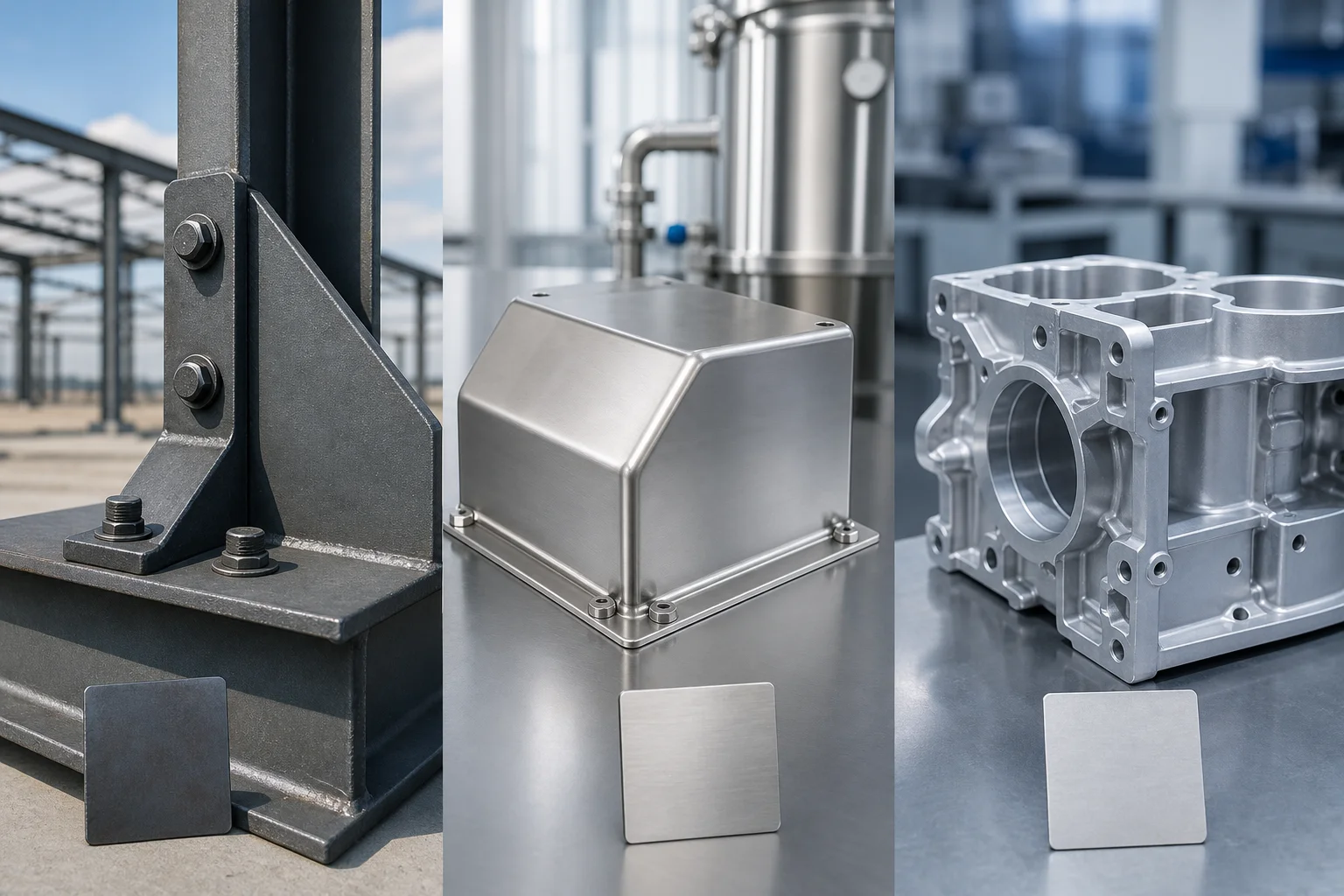
Illustrative editorial image only; it does not represent a specific alloy, certificate, corrosion test, or performance guarantee.
State the Environment — Get the Grade Back in Writing
✅ Grade recommendation by application · Bend behavior and finish route attached · Certificate plan stated
📩 tylor@xinjiuxinji.com
We respond to inquiries within 2 hours.
Send your drawing with the application environment and top two drivers — the reply names the grade, bend behavior, finish route, and certificate plan before the price locks.
Metal Stamping Supplier China: A Buyer’s Guide from Screening to Mass Production