China Custom Sheet Metal Fabrication: Engineering Collaboration from Drawing to Production
In cross-border sourcing, distance isn’t the biggest risk—engineering communication is. For buyers sourcing custom sheet metal fabrication China, the drawing is only the starting point. What determines whether a project moves smoothly into production is whether the supplier can understand the drawing, offer effective DFM suggestions, iterate samples quickly, and provide engineering support throughout production.
This guide shows what engineering collaboration with a custom sheet metal fabrication China partner looks like—from a manufacturing-ready drawing to the first article, and through production.
How Does Engineering Collaboration Work from Drawing to Production?
The collaboration runs in six stages, and every stage is a conversation, not a one-way handoff:
| Stage | What happens | What you receive |
|---|---|---|
| 1. Inquiry & drawing handoff | You send drawings, materials, and target quantity | Confirmation with clarifying questions |
| 2. Drawing review & DFM feedback | Engineers check manufacturability and tolerance risk | Specific questions, not just a price |
| 3. Quoting with engineering input | Cost built from the actual process route | Transparent quote with DFM suggestions |
| 4. Sample iteration & FAI | Prototype parts with first-article inspection | Measured critical dimensions in writing |
| 5. Production with batch documentation | Batches with inspection reports and certificates | Documentation that survives your audits |
| 6. Continuous improvement | Yield data and cost-reduction ideas over time | A partner that gets cheaper and better |
Start with a Manufacturing-Ready Drawing
The drawing is the contract. A manufacturing-ready drawing — material, thickness, tolerances, bend radius, surface finish, quantity, and critical dimensions clearly defined — earns accurate quotes and useful DFM feedback; a vague one earns guesses. Before sending:
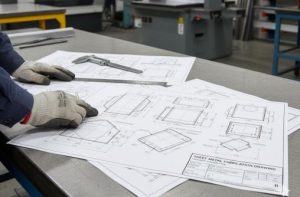 Material grade and thickness — SPCC vs 304 stainless changes process and price
- Critical dimensions with realistic tolerances — laser-cut and stamped features can reach ±0.05 mm; bends and welds need wider allowances (see our precision sheet metal fabrication tolerance guide)
- Bend radius and direction — prevents springback surprises
- Surface finish — powder coating, plating, or bare metal
- Target quantity and delivery window — sets the right process route
The more complete the drawing, the more valuable the DFM conversation that follows.
What Does Good DFM Feedback Look Like?
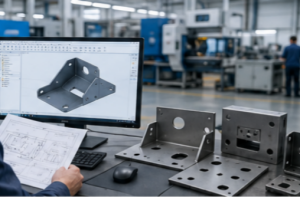
The reply you get after sending drawings is the first signal of engineering depth in a custom sheet metal fabrication China partner. A quote with no comments usually means nobody seriously reviewed the part; a reply with questions means engineers are actually thinking about your product. DFM feedback can reduce unnecessary processing costs—by optimizing bend radii, tolerances, material selection, or manufacturing sequence—while avoiding rework later.
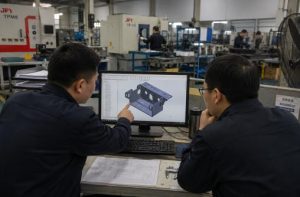 What good DFM feedback looks like in practice:
- “Is this bend radius a requirement? If it can be adjusted, forming risk goes down.”
- “Is this ±0.05 mm tolerance functional? If not, relaxing it lowers processing cost.”
- “Must this part be 304 stainless? Without a corrosion requirement, other materials are worth discussing.”
- “The current weld positions may cause local distortion — consider changing the welding sequence.”
None of these questions change the product’s function — they make it more manufacturable. For a complete look at the services behind this conversation, see our custom sheet metal fabrication services guide.
From Drawing to First Article: Engineering Verification
Samples Validate the Part — and the Fabrication Method
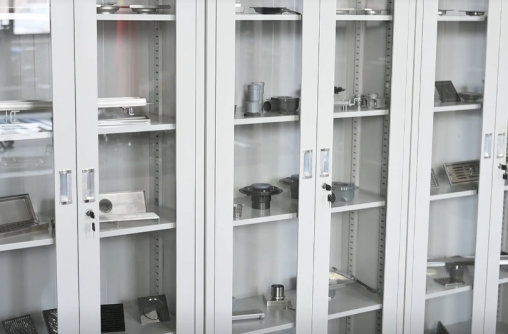 A prototype should validate not only the part but also the manufacturing method—it is the first physical verification of the engineering decisions made during DFM review. That is why the sample must match production in four ways: the same tooling, the same material, the same process route, and the same method of controlling critical dimensions. For relatively simple formed parts, first samples can often be produced within 5–10 working days after drawing approval, and every prototype ships with a first-article inspection (FAI) covering your critical dimensions — each one measured and documented against the drawing before production runs. So the two things to confirm at the quoting stage are how many revision rounds are included and whether samples use the same tooling and processes as production—which the one-stop sheet metal fabrication model guarantees, because everything stays in one facility.
A Real Case: Engineering Judgment on a Bending Collision
A European industrial equipment manufacturer submitted a stainless steel part in 1.0 mm material with two adjacent bends spaced closely together. The original drawing was technically manufacturable, but the specified bend sequence created a collision risk: the second bend would interfere with the first, and as drawn, the part would be scrapped or require rework that delayed delivery. Instead of quoting as-is, the engineer flagged the risk during DFM review and proposed two changes: adjust the bending sequence and increase the local spacing slightly without affecting assembly function. The customer confirmed the plan, the prototype was made, and the first article passed inspection in one round — all critical dimensions within tolerance, no rework, no extra iteration.
That is engineering collaboration: identify the risk → explain it → propose a solution → prototype → FAI → production. This is not a one-off — the same pattern repeats across projects: changing a welding sequence to avoid distortion, relaxing a non-critical tolerance, or adding a fixture before production. It is how our engineers work on every drawing, not just the difficult ones.
How Do You Keep Batch Consistency After the Sample Is Approved?
Engineering support continues after the sample is approved — this is where collaboration shifts from verifying one part to controlling the consistency of every batch. Three things keep that consistency: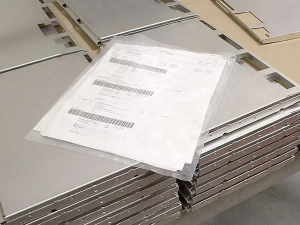
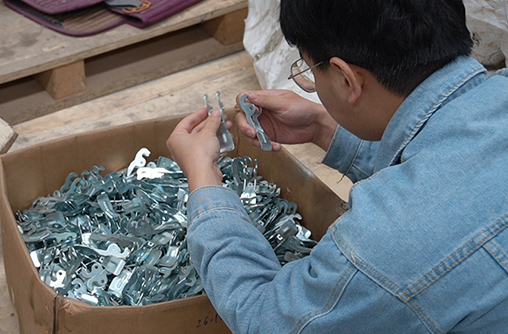
- Batch inspection reports — dimensional data travels with every shipment, not just the first one. You can compare batch to batch and spot drift before it becomes a problem.
- Deviation management — deviations and changes are recorded in writing and communicated, not discovered at arrival. If a material substitution or process adjustment is needed mid-run, you know what changed, why, and how you verified it.
- Engineering change support — drawing revisions are reviewed for manufacturability before they reach the floor. A revision that is costly to make is flagged in the review, not after tooling is cut.
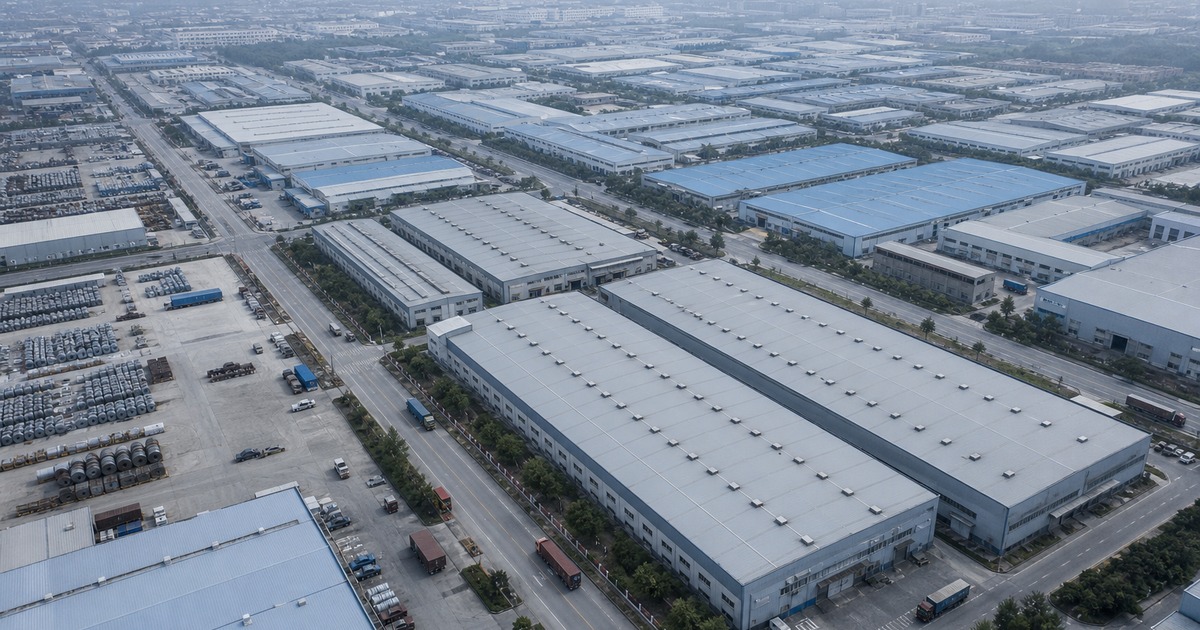
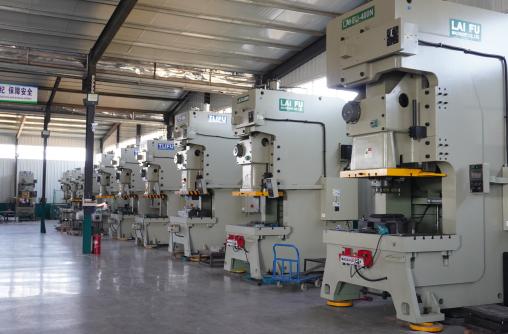
When cutting, forming, welding, and finishing are controlled under one production system, engineering changes can be reviewed and implemented without coordinating several unrelated subcontractors — one engineer sees the whole process, so the impact of a change is assessed end to end. For the full framework on evaluating a partner — beyond samples and quotes — see our guide on choosing a China sheet metal fabrication manufacturer.
Our Engineering Team, Your Project
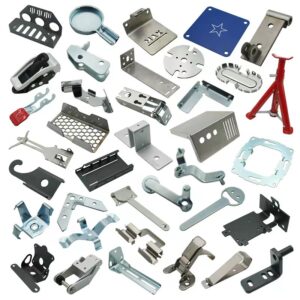 Engineering collaboration is our daily work, and it starts before the quote. Engineers review every drawing before quoting—manufacturability, tolerance risk, material selection—and DFM feedback comes with every quote, not after you ask. When you raise questions, you talk to the engineers who will make the part, not a sales relay. Every prototype ships with a first-article inspection; every production batch ships with inspection reports and material certificates, so the quality you see in the sample is the quality you can verify in every batch. We respond within 24 hours on working days — including the drawing review that starts your project. Whether you are in Europe or North America, a drawing sent in your afternoon gets initial DFM input by your next morning. Process data — springback compensation, deep-drawing parameters — comes from 70,000+ part numbers of accumulated experience, so engineering judgment is backed by data, not guesswork.
Since 1999, we have delivered over 70,000 custom part numbers to 3,000+ companies in 100+ countries, with a 90.4% on-time delivery rate and a 5.0/5 customer satisfaction score. Send us your drawing — the engineering conversation starts with your first email.
Frequently Asked Questions
How does engineering collaboration work from drawing to production?
As a sequence of conversations rather than a one-way handoff. You send drawings, material, and target quantity; engineers confirm with clarifying questions and return DFM feedback on manufacturability and tolerance risk; the process route is agreed; a sample validates both the part and the manufacturing method; first article inspection confirms it; and production runs with batch inspection data travelling with each shipment. Every stage produces an output you can check, which is what keeps a project from drifting silently between the drawing and the delivered parts.
What makes a drawing ready for accurate quoting?
Clear definition of the inputs that drive process and price: material grade and thickness, tolerances, bend radius, surface finish, quantity, and critical dimensions. Material choice alone changes both route and cost, because different grades are processed and priced differently. A drawing that defines these points earns a specific quote and useful DFM feedback; a vague one earns guesses. If something is still undecided, saying so is more useful than leaving it implied, because engineering can then propose an option instead of assuming one.
What does good DFM feedback look like?
It asks questions. A quote with no comments usually means nobody seriously reviewed the part; a reply with specific questions about bend sequence, datum choice, tolerance intent, surface treatment, or quantity band means engineers engaged with the design. Useful feedback names the risk, explains the consequence, and proposes a change you can accept or reject. That reply is the first reliable signal of engineering depth in a custom sheet metal fabrication partner, and it arrives before you have paid for tooling.
How is a prototype used to verify the manufacturing method?
The sample should validate both the part and how it will be made, which means the prototype must match production in the way that matters: the same tooling approach, the same process route, and the same inspection method. A part produced by a shortcut proves only that the geometry is possible. One European industrial equipment customer submitted a stainless part in 1.0 mm material with two closely spaced bends; the drawing was manufacturable, but the specified bend sequence created a collision. Engineering identified the risk, revised the sequence, and the prototype confirmed the fix.
How is consistency maintained after the first article is approved?
Consistency shifts from verifying one part to controlling every batch. Three things carry it: the same documented process route for every run, batch inspection reports so dimensional data travels with each shipment and drift can be compared batch to batch, and engineering support that stays available after the sample is approved. Since 1999 we have delivered over 70,000 custom part numbers to 3,000+ companies in 100+ countries, with a 90.4% on-time delivery rate; those figures only matter because they come from the same process discipline, not from individual exceptional batches.
Let Our Engineers Review Your Drawing Today
✅ Verified factory · Free samples · From RFQ to delivery — all in-house
📩 tylor@xinjiuxinji.com — Reply in 3 working hours with free design optimization.
Free samples available for evaluation — Send your drawings now and verify before you commit
Sheet Metal Fabrication Process Guide: The Complete Five-Stage Walkthrough