Sheet Metal Parts Manufacturer: 7 Types of Custom Parts We Manufacture
Most buyers searching for a sheet metal parts manufacturer are not asking “what is sheet metal” — they hold a part in their hand, or a drawing, and ask “can you make this?” The answer depends on the part family: enclosures, brackets, panels, deep drawn components, chassis, and assemblies each use different processes and tolerances.
This guide catalogs the part families a complete sheet metal parts manufacturer can produce, the processes behind each, and what buyers should prepare when requesting them.
Which Types of Custom Sheet Metal Parts Can One Factory Produce?
| Part family | Typical parts | Core processes |
|---|---|---|
| Enclosures & housings | Electronic enclosures, equipment covers, control boxes | Stamping, bending, welding, finishing |
| Brackets & mounts | L-brackets, mounting plates, corner brackets | High-volume Stamping |
| Panels & covers | Front panels, service covers, dust covers | Laser cutting, bending |
| Deep drawn parts | Battery cases, sensor housings, drawn containers | Deep drawing |
| Chassis & frames | Equipment racks, structural frames | Bending, welding |
| Heat-sink components | Stamped heat sinks, cooling shrouds | Stamping |
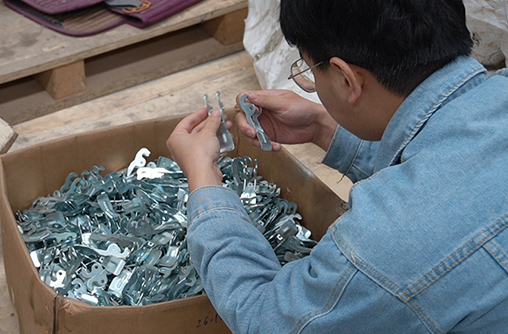
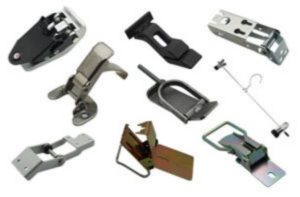
| Hardware parts | Latches, hinges, custom fittings | Stamping, assembly |
One factory covering all seven families is what “one-stop” actually means — no subcontractor hand-offs, no tolerance disputes between shops. The rest of this guide walks through each family and what to prepare when ordering.
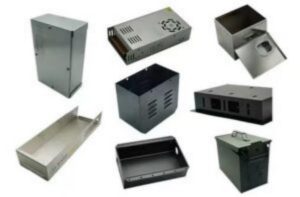
Enclosures and Housings
The most common part family: enclosures protect electronics, controls, and equipment. They typically combine Stamping or laser cutting for blanks, bending for box geometry, welding for sealing seams, and powder coating or plating for protection. Buyers should specify:
- Material and thickness (steel, aluminum, or stainless)
- IP rating and sealing requirements
- Finishing (powder coating color, plating)
- Assembly needs (screws, standoffs, gaskets)
For a complete look at the processes behind these part families — stamping, laser cutting, bending, and finishing — see our custom sheet metal fabrication services guide.
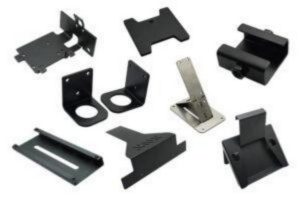
Brackets and Mounts
Brackets are the high-volume workhorse of sheet metal. L-brackets, mounting plates, and corner brackets are produced by stamping at low unit cost — the die is the investment, and volume amortizes it. Buyers should provide load requirements and hole patterns; the manufacturer optimizes the die for material yield.
Panels and Covers
Front panels, service covers, and dust covers favor laser cutting plus bending — no tooling investment, fast turnaround, ideal for medium volumes. Key specifications: cut quality, edge finishing (deburring), hole patterns, and surface treatment.
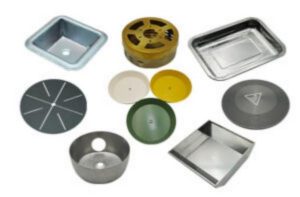
Deep Drawn Parts
Deep drawn parts — battery cases, sensor housings, drawn containers — are produced by progressive deep drawing on stamping presses. This family is where formability matters: material choice (aluminum 5052, stainless steel), draw ratio, and wall-thickness control. Deep drawing needs specialized tooling, so prototypes and FAI reports are essential before production.
Chassis and Frames
Equipment racks and structural frames combine bending and welding. Weld quality, flatness, and dimensional stability after welding are the acceptance criteria. Buyers should specify weld standards, load capacity, and whether surface treatment comes before or after assembly.
How Do I Place an Order with a Sheet Metal Parts Manufacturer?
Ordering parts from a sheet metal parts manufacturer follows a simple sequence:
- Send the drawing — 3D model or 2D with material, thickness, and finish
- Get a transparent quote — tooling, piece price, and MOQ separated
- Approve the prototype — with a first-article inspection report on critical dimensions
- Run production — batch inspection reports with every shipment
- Receive and verify — dimensional data travels with the parts
For the sourcing journey behind this sequence — finding, vetting, and working with suppliers — see our sheet metal fabrication China supplier guide.
How Do I Choose a Sheet Metal Parts Manufacturer?
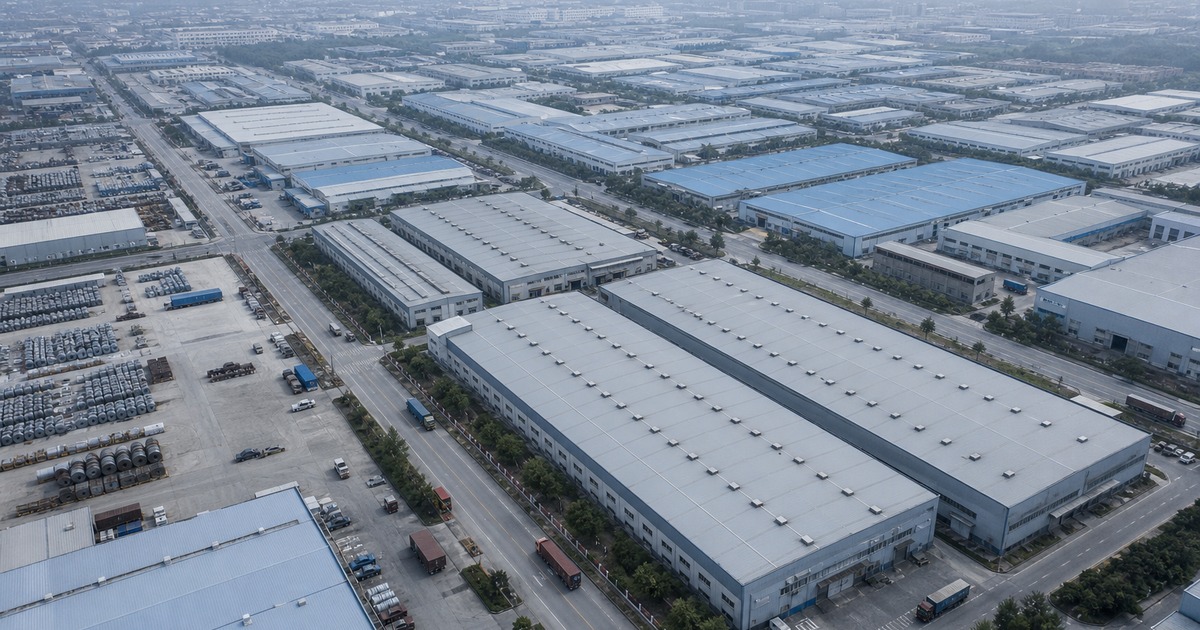
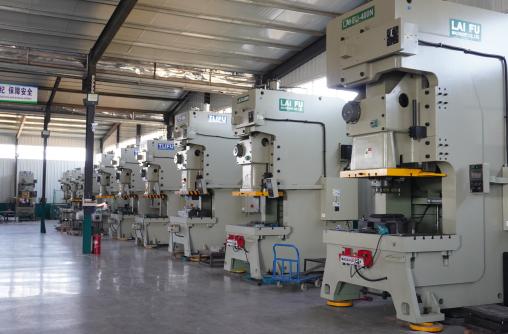
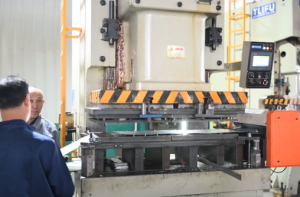
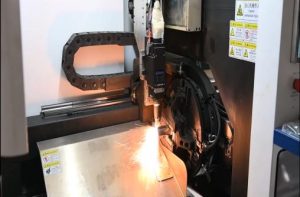
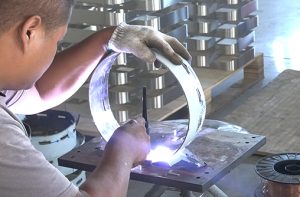
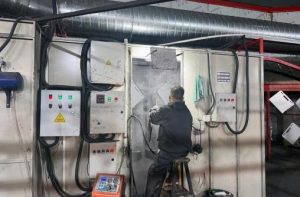
Every part family in this guide — enclosures, brackets, panels, deep drawn parts, chassis, heat-sink components, and hardware — is one we produce in-house, from first drawing to finished batch. That is the reason buyers choose us as their sheet metal parts manufacturer: one factory, all seven families, no subcontractor hand-offs. Since 1999, our factory in Nanpi has delivered over 70,000 custom part numbers to 3,000+ companies in 100+ countries, spanning automotive, electronics, medical, firefighting, and agricultural industries. The equipment behind it: 40+ stamping presses up to 400 tons with deep drawing capability, two 6kW laser cutters, bending and welding lines, surface finishing, and CMM inspection — all in-house under ISO 9001:2015. Send us your drawing; we will confirm which part family fits and quote it transparently.
Questions? The key takeaways and FAQ below cover the essentials — or upload your drawings to get started.
Key Takeaways
- Seven part families: enclosures, brackets, panels, deep drawn parts, chassis, heat-sink components, and hardware — each with its own processes and tooling logic
- One-stop means owning all the processes — stamping, laser, bending, welding, finishing in one factory
- Prepare the right specs per family — IP ratings for enclosures, load for brackets, draw ratio for deep drawn parts
- Prototype with FAI is standard before production — especially for deep drawn and welded parts
Frequently Asked Questions
Which types of custom sheet metal parts can one factory produce?
Seven families cover most OEM demand: enclosures and housings, brackets and mounts, panels and covers, deep drawn parts, chassis and frames, heat-sink components, and hardware. Each family has its own process logic: enclosures combine stamping or laser cutting, bending, welding, and finishing, brackets are stamping work, and panels favour laser cutting plus bending. When one factory covers all seven families, one-stop means no subcontractor hand-offs and no tolerance disputes between shops.
When should brackets be stamped rather than fabricated?
When there is volume. Brackets are the high-volume workhorse of sheet metal: L-brackets, mounting plates, and corner brackets are produced by stamping at low unit cost, because the die is the investment and volume amortizes it. At lower volumes the same geometry is usually cheaper as a laser-cut and bent part, since no tooling is required. When requesting a quote, provide the load requirements and the expected quantity, because those two inputs decide which route is genuinely cheaper.
What should I specify for panels and covers?
The details that decide whether the panel looks right and fits: cut quality, edge finishing such as deburring, hole patterns, and surface finish. Front panels, service covers, and dust covers usually favour laser cutting plus bending, because that route needs no tooling investment and turns around quickly, which suits medium volumes and parts that may still be revised. Specifying edge and hole requirements up front avoids the rework that appears when appearance standards are assumed rather than written down.
What matters most for deep drawn parts and chassis?
Different things, and both should be specified early. Deep drawn parts such as battery cases, sensor housings, and drawn containers are produced by progressive deep drawing on stamping presses, where formability is the constraint: the material choice, such as aluminium 5052 or stainless steel, and the draw ratio decide whether the part forms without tearing. Chassis and frames combine bending and welding, so weld quality, flatness, and dimensional stability after welding are the acceptance criteria.
How do I place an order with a sheet metal parts manufacturer?
Start with a complete drawing and let the engineering review follow. The sequence is simple: send a 3D model or a 2D drawing with material, thickness, and finish, and the manufacturer reviews it for manufacturability before quoting. Providing the part family context helps as well, because the same geometry is produced differently as an enclosure than as a bracket. The more completely the inputs are stated, the more specific the DFM feedback and the quote will be.
Find Your Part Family — Free Sample Available
✅ All 7 families in-house · Free samples · From drawing to delivery — no subcontractors
📩 tylor@xinjiuxinji.com — Reply in 3 working hours — free design optimization & quotation.
Send your drawing — we will confirm which part family fits and quote it transparently
One-Stop Sheet Metal Fabrication vs Multiple Suppliers: The Real Difference