How to Choose a China Sheet Metal Fabrication Manufacturer: The 2026 Buyer’s Guide
Finding a China sheet metal fabrication manufacturer you can trust is one of the highest-leverage decisions in your supply chain. The right partner turns a drawing into a production-ready part at a fraction of Western manufacturing costs—the wrong one costs you months of delays, rejected batches, and scrapped tooling.
This guide walks through what actually matters when evaluating a China sheet metal fabrication manufacturer: equipment, certifications, engineering support, quality control, and the hidden costs buyers only discover after signing. Use it to shortlist suppliers with confidence and send RFQs that get accurate quotes.
Why OEMs Source Sheet Metal Parts from China
China remains the world’s largest production base for sheet metal fabrication — and for good reason. Three advantages are hard to replicate elsewhere:
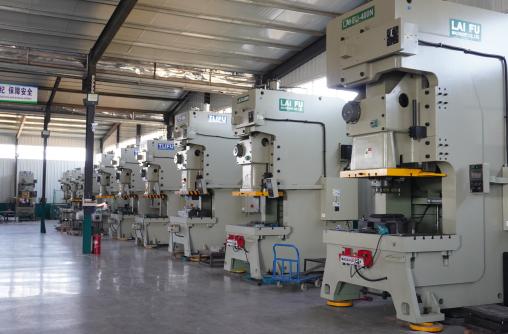
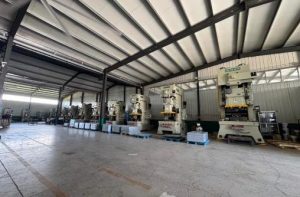
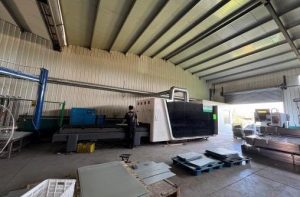
- Equipment density. Tier-one fabrication shops in China operate press lines, laser cutters, and welding bays at a scale most Western job shops cannot match. A single factory may run dozens of stamping presses from 60 to 400 tons, 6kW fiber lasers, and full CMM inspection rooms.
- One-stop capability. Many buyers choose a China sheet metal fabrication manufacturer because one supplier can stamp, laser cut, bend, weld, and finish a part — no hand-offs between subcontractors, no tolerance disputes between shops.
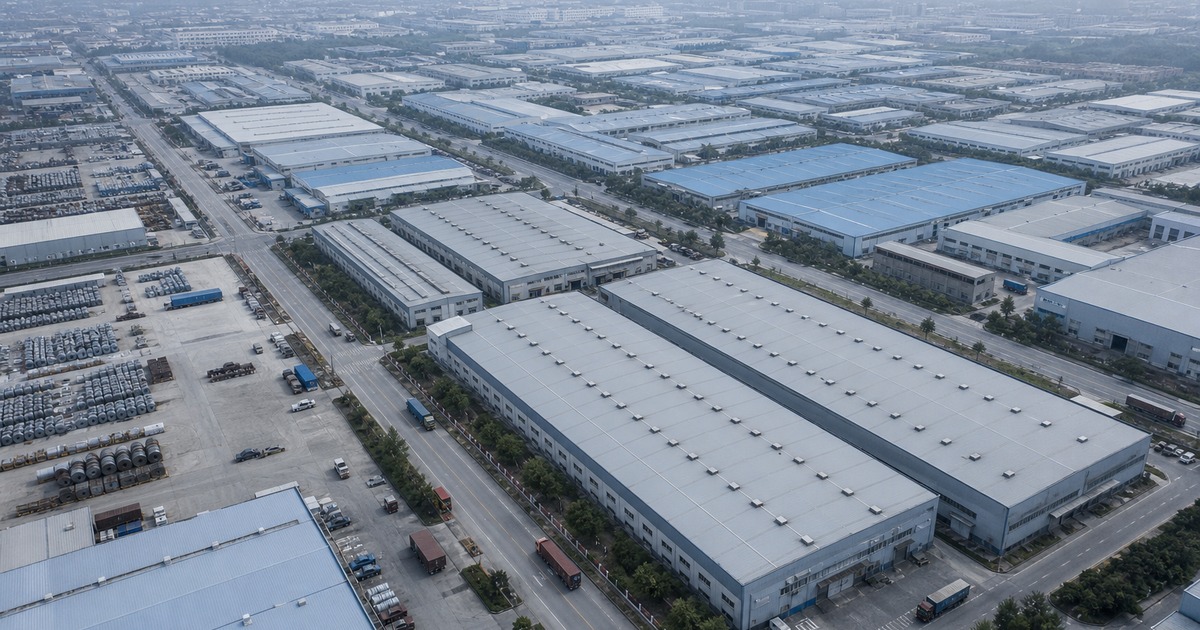
- Industry ecosystems. Clusters like Nanpi County in Hebei Province — known as China’s hardware manufacturing hub, less than two hours from Beijing and Tianjin — concentrate hundreds of fabrication specialists in one region, along with tooling makers, surface finishers, and logistics providers.
The result: Western OEMs consistently source stamped brackets, enclosures, chassis, and housings from China at 30–50% landed-cost savings — provided the supplier is chosen correctly.
10 Things to Check Before You Choose a China Sheet Metal Fabrication Manufacturer
1. Equipment that matches your part
Ask for a specific equipment list, not a marketing sentence. If your part is stamped, what press tonnage can they run? If it is laser-cut, what laser power? A serious supplier will tell you their largest press (e.g., 400 tons), their laser wattage, and their number of machines — and should show you the machines in a video call.
2. Certifications that are real
ISO 9001:2015 is the baseline for export fabrication. Verify it is current and covers the plant you are actually buying from — certificates can be borrowed or expired. For automotive or medical work, look for IATF 16949 or ISO 13485 next.
3. A quality system you can see
Ask how parts are inspected: CMM (coordinate measuring machine) reports, first-article inspection, and batch sampling. A reliable China sheet metal fabrication manufacturer should send you inspection reports with every shipment — before you have to ask.
4. Relevant industry experience
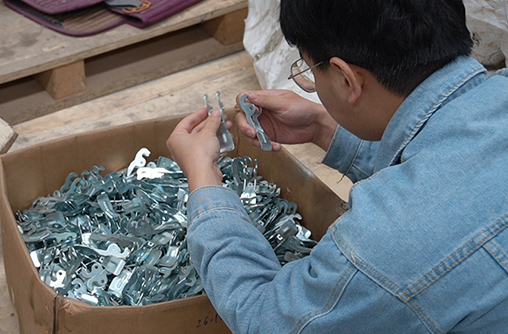
A shop that has produced 70,000+ custom parts across automotive, electronics, firefighting, and agriculture understands tolerances you will not have to explain. Ask for case studies in your industry, not just their headline numbers.
5. One-stop or multi-step?
If your product needs stamping plus welding plus powder coating, one supplier owning all three steps saves you logistics costs and quality arguments. Confirm they do not quietly subcontract critical steps.
6. Engineering support before you buy
The best suppliers give DFM (design for manufacturing) feedback before quoting — suggesting material grades, bend radii, or tooling simplifications that cut your cost. That requires real engineers, not just salespeople.
7. Communication that survives a crisis
You are buying from the other side of the world. Does the supplier respond in English within 24 hours? Do they flag problems early or hide them? Test their communication during the quoting stage — it predicts the production stage.
8. Capacity and lead time honesty
Ask for current capacity utilization and typical lead times for your order size. A factory promising 50,000 parts a day is impressive — but only useful if your order gets scheduled, not deprioritized.
9. Transparent pricing
A professional quote separates tooling cost, piece price, and MOQ. Be wary of quotes that are suspiciously low — die quality, material grade, and inspection all have a floor price.
10. A path to scale
Your first order may be a prototype; your tenth may be 100,000 units. Choose a China sheet metal fabrication manufacturer with both prototype stamping and high-volume capacity, so you do not have to re-qualify suppliers when you grow.
The Core Capabilities a Top China Sheet Metal Fabrication Manufacturer Should Have
| Capability | Why it matters |
|---|---|
| Metal stamping (incl. deep drawing) | High-volume, low-piece-cost production; deep drawn parts for housings, covers, and enclosures |
| Laser cutting (6kW class) | Precision blanks and complex profiles with fast turnaround |
| Bending & forming | Boxes, brackets, and frames from flat sheet |
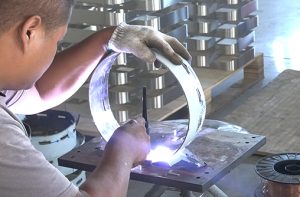
| Welding (MIG/TIG/spot) | Assemblies and enclosures that need structural joints |
| Surface finishing | Powder coating, plating, anodizing — the finish buyers actually judge |
| CNC machining (supporting) | Secondary precision features on fabricated parts |
| CMM inspection | Verifiable dimensional quality on every batch |
Quality Control: What “ISO 9001 Certified” Really Means
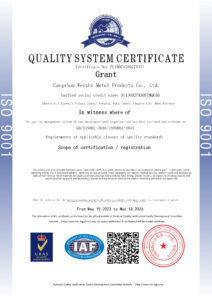
An ISO 9001:2015 certificate is not a sticker — it is a documented quality management system: controlled processes, traceable records, corrective action loops. When a China sheet metal fabrication manufacturer couples ISO 9001 with CMM inspection and per-batch inspection reports, you get parts that match the drawing, not the photo.
For first-time buyers, request a first-article inspection report (FAI) on the prototype batch. It lists every critical dimension with measured values — the single best document for judging whether a supplier will hold your tolerances at scale.
Cost, MOQ, and Lead Time: What to Expect
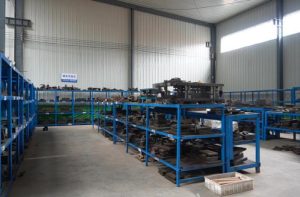 Tooling cost: Stamping dies are a one-time investment, typically amortized into the piece price. Laser-cut and bent parts need minimal tooling — better for low volumes.
- Piece price: Drops with volume; expect the biggest step-down between prototype/short-run and full production.
- MOQ: Many Chinese fabricators accept low-volume or prototype orders (even 50–200 pieces), which is how they win long-term customers.
- Lead time: Prototypes typically take 1–2 weeks; production depends on tooling and order size — a professional quote states both clearly.
How to Send an RFQ That Gets Accurate Quotes
- 3D model or 2D drawing with dimensions and tolerances
- Material grade and thickness (or ask for a recommendation)
- Surface finish requirements
- Annual quantity and order frequency
- Target price (optional but speeds up the process)
- Certifications or standards you must meet
- Delivery destination country
- Your deadline
Complete RFQs get complete answers. Vague RFQs get vague quotes — and surprises later.
Red Flags to Avoid
- No equipment list — capability claims without machines to back them
- No inspection reports — “we check everything” with nothing in writing
- Mysterious tooling fees — dies quoted without a breakdown
- No industry references — especially when they claim to serve aerospace or medical
- Instant yes to everything — a supplier who never pushes back on your design is not optimizing your cost
Why Work with a Fabrication Partner Like Ours
Since 1999, our factory in Nanpi — China’s hardware manufacturing hub — has supplied custom sheet metal parts to more than 3,000 companies in 100+ countries, producing over 70,000 different part numbers. Our 120-strong team includes 19 engineers who review every drawing before quoting. We run 40+ stamping presses up to 400 tons, two 6kW laser cutting systems, bending and welding lines, deep drawing and metal spinning capability, CNC machining support, and CMM inspection — all under ISO 9001:2015.
Whether you need a prototype next week or a million parts next year, send us your drawing and we will come back with DFM feedback, a transparent quote, and a realistic lead time.
Frequently Asked Questions
Ready to Choose Your China Sheet Metal Partner?
✅ ISO 9001 certified · 20+ years experience · 70,000+ parts produced
📩 tylor@xinjiuxinji.com — Reply in 3 working hours — free design optimization & quotation.
Send your drawings today for a free feasibility review & transparent quote
Custom Sheet Metal Fabrication Services: A Complete Guide for OEM Buyers