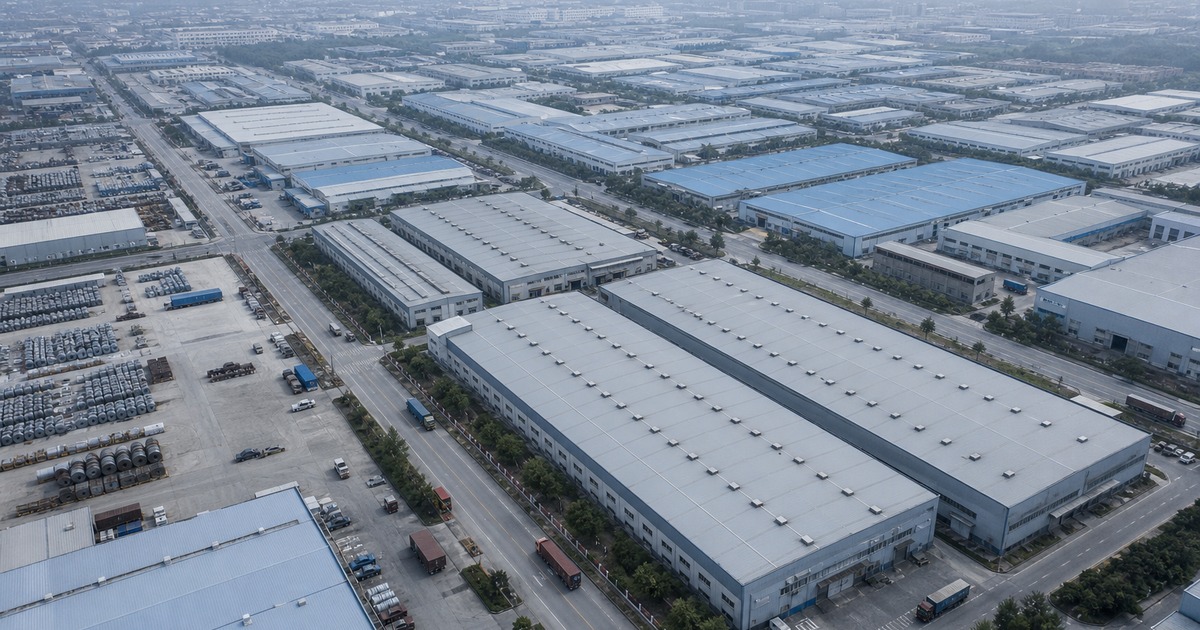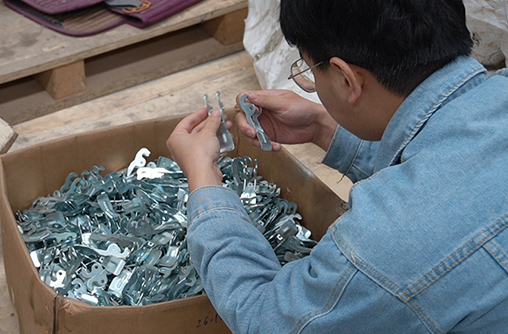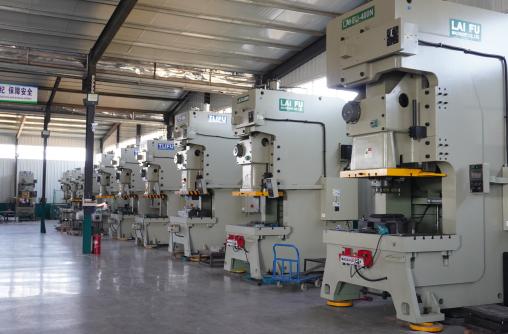
Custom Sheet Metal Parts: Behind 70,000+ Manufacturing Projects
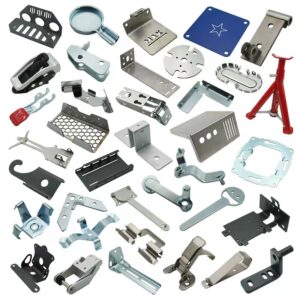
With 26 years of metal processing experience and over 70,000 manufacturing projects, we have accumulated not just the number of processed items, but also the manufacturing judgment developed through dealing with different products, materials, and production requirements.
What Should OEM Buyers Check Beyond Processing Capability?
When many OEM customers are looking for a custom sheet metal parts manufacturer, they usually pay attention to several basic conditions:
• Whether there are complete production facilities;
• Whether they can process according to the drawings;
• Whether the quotations are competitive;
• Whether they can meet the delivery requirements.
These factors are, of course, important. But for long-term OEM projects, the real difference between suppliers is not just “whether they can process” but whether they can transform the design into stable, mass-produced products.
Because a single drawing only represents a part of the product requirements. Once the design progresses to the production stage, continuous evaluation is necessary to determine:
| 01 Is the current structure suitable for mass production? | 02 Which production method can balance quality and efficiency? |
| 03 Do the material properties match the actual application environment? | 04 Which positions need to be carefully controlled to avoid subsequent problems? |
Inexperienced suppliers usually look for solutions after problems occur. However, experienced manufacturers identify risks before production begins and reduce subsequent problems by adjusting the plan. This is where the true value of manufacturing experience lies.
What 70,000+ Projects Taught Us
The greatest value of over 70,000 manufacturing projects lies not merely in having completed a large number of orders, but in accumulating methods for solving real manufacturing problems across different product structures, material selections, and application requirements.
These experiences ultimately translate into three key capabilities, which are also important factors influencing the long-term success of OEM projects:
1
Evaluating Design for Mass Production
Many product designs seem to be flawless during the research and development stage. However, from a manufacturing perspective, whether the design can be reliably produced is another issue.
For example, a metal support piece:
The customer desires to reduce the product’s weight while also cutting material costs. The most straightforward approach might be to reduce the sheet’s thickness. However, manufacturing experience suggests this may not be the best solution.
Because when the material becomes thinner, it may lead to:
- ✗Reduced product rigidity
- ✗Higher risk of deformation during processing
- ✗educed assembly accuracy
- ✗Lower long-term stability
Manufacturing experience is not simply about fulfilling customer requirements; it involves balancing product performance, manufacturing costs, and production stability. Sometimes, the cheapest material solution is not the one with the lowest overall cost.
2
Choosing the Right Manufacturing Process
The same part can be produced using different methods. However, different processes will have an impact on:
For example:
- ▶
Small batch or development stage:Laser cutting and CNC machining can offer greater flexibility - ▶
Long-term mass production:The stamping process may be better suited to enhancing efficiency and maintaining consistency.
The truly valuable manufacturing experience lies in knowing when to choose which approach, rather than simply using the existing equipment.
3
Ensuring Long-Term Production Stability
After conducting numerous sample development and batch production projects, we have discovered that what truly determines a project’s success is not the first product but the long-term replication capability.
-
- ✓Is the production process stable?
- ✓Are the processing standards uniform?
- ✓Can the product quality be consistently maintained?
Over 70,000 project experiences have enabled us to have a clearer understanding of:
The production of a part is just the first step.
What really matters is that it can be replicated consistently and reliably over a long period of time.
How Does Manufacturing Experience Prevent Problems Before Mass Production?
Many production problems do not appear suddenly during processing. In many cases, they are hidden in the early stages of product development.

An OEM customer was developing a metal structural component and planned to move into mass production after completing sample verification.
During the prototype stage:
However, during our mass production evaluation, our engineering team identified potential risks in the original design.
The part included multiple bending areas. Although the prototype met the requirements, we found that the original bending structure and process sequence could affect long-term production consistency.
During thousands of repeated production cycles, small variations in bending operations could accumulate and lead to:
Based on similar sheet metal manufacturing projects, our engineers further reviewed the bending sequence, deformation risks, and assembly requirements. We then optimized the manufacturing approach and adjusted certain structural details before mass production started.
As a result, the customer avoided potential batch production issues and achieved a more stable transition from prototype validation to mass production.
This project experience reinforced three important manufacturing principles:
Manufacturing processes need to consider both efficiency and repeatability.
Product requirements must match actual production capabilities.
The value of manufacturing experience lies not only in solving problems after they occur but also in identifying potential risks before production begins.
How Do You Keep Quality Stable from Prototype to Mass Production?
Out of the 70,000 projects, we gradually realized that stable mass production does not rely on a single process but requires establishing a complete manufacturing control system from the very beginning of the project.
→
During Production Maintain Process Stability
→
Before Delivery Verify Product Requirements
Before Production: Confirm the Manufacturing Plan
Before production begins, it is important to confirm that product requirements are clearly defined, the manufacturing approach is appropriate, and key production steps are properly planned. Early preparation helps reduce repeated adjustments and delays during mass production.
During Production: Maintain Process Stability
Once mass production starts, the focus shifts to maintaining consistency. This includes ensuring that critical dimensions remain stable, that manufacturing standards are consistently followed, and that different production batches meet the required specifications. This stage determines whether the product can be delivered reliably over the long term.
Before Delivery: Verify Product Requirements
Before shipment, the final products need to be verified to ensure they meet quality requirements, assembly expectations, and customer standards. Stable mass production does not depend on a single step, but on a complete manufacturing process that works together from planning to delivery.
Building a Reliable Manufacturing System for Custom Sheet Metal Parts
Over 70,000 manufacturing projects have also made us realize that complex OEM parts usually cannot be produced by a single processing capability alone.
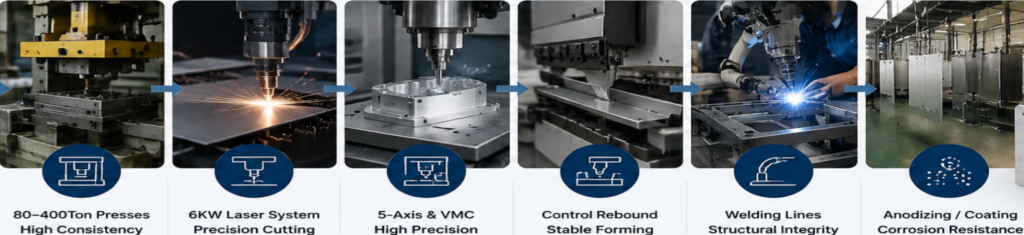
For instance, a structural component might require cutting to ensure dimensional accuracy, bending to form the structure, welding to complete the assembly, and, finally, surface treatment to meet the requirements of the usage environment. Reliable production of customized metal sheet parts requires the collaboration of multiple production stages.
To support different projects from development to mass production, we have established complete sheet metal fabrication capabilities, including:
Stamping Machining
Bending
CNC Machining
Welding
Surface treatment
Effective connections between different processes can reduce the information transmission among multiple suppliers, thereby improving project management efficiency. At the same time, a complete production system can also help customers: shorten the development cycle, enhance production stability, and better support batch orders.
Why OEM Buyers Choose Experienced Custom Sheet Metal Parts Manufacturers
For OEM customers, choosing a supplier is not about finding a factory that can complete the processing. What’s more important is finding a manufacturing partner who understands the product requirements and can provide continuous support throughout development, production, and subsequent upgrades.
Experienced manufacturers can assist customers with:
- Reduce project development risks –Help customers identify potential problems before production begins.
- Improve mass production stability – Avoid discrepancies between samples and batch production.
- Support long-term supply needs – Continuously provide manufacturing support as orders increase and products evolve.
Over the past 26 years, we have completed more than 70,000 metal parts manufacturing projects and served OEM customers in more than 100 countries. These project experiences have enabled us to optimize the manufacturing process continuously and have helped our customers transition more smoothly from design verification to mass production.
custom-sheet-metal-parts-behind-70000-manufacturing-projects.txt
Frequently Asked Questions
What should OEM buyers check beyond processing capability?
Basic conditions such as production facilities, the ability to process to drawings, competitive quotations, and delivery performance are entry requirements, not differentiators. The capability that decides whether a project succeeds is engineering judgement applied to the specific part: whether the design can be produced reliably at volume, which process route fits, and where the risks sit. Across more than 70,000 manufacturing projects the pattern is consistent: parts fail not because a machine could not make them, but because nobody questioned the design and the route early enough.
Why can a design that works in R&D still fail in mass production?
Because R&D proves function while production has to prove repetition. A design that looks flawless during development may be difficult to produce at volume: tolerances that need constant adjustment, features that demand manual intervention, or geometry that creates tooling problems. These issues are cheap to correct on a drawing and expensive to correct after tooling is built. That is why every drawing is evaluated for manufacturability before quoting, as part of the project rather than an optional extra.
How do you keep quality stable across a long production run?
By controlling the process rather than inspecting harder at the end. What determines long-term success is replication capability: the same route, the same parameters, and the same inspection method applied to every batch. In practice that means planning before production, maintaining process stability during the run, and verifying the product against requirements before delivery. When a batch does drift, it should be caught from batch inspection data rather than from an assembly line that no longer fits.
Why do complex OEM parts need more than one process?
Because a structural part usually has to be cut for dimensional accuracy, formed or bent for structure, welded for assembly, and surface treated for the environment it works in. When those steps sit with different suppliers, every handoff adds a new interpretation of the drawing and a new place for tolerance to drift. That is the argument for an integrated manufacturing system: when engineering review, the process route, and quality control sit under one roof, manufacturing intent stays the same from the first operation to the last.
What does experience with more than 70,000 projects actually change?
It changes what gets flagged before production starts. Experience is not the number of orders; it is the accumulated method for recognising problems across different product structures, material selections, and application requirements. In practice it means engineers identify likely failure points at the drawing stage, choose the process route that fits the volume and tolerance demand, and set the control points that keep the batch stable. For OEM buyers that shows up as fewer surprises between prototype approval and the third production run.
Custom Sheet Metal Parts — Full Support from Design to Production
✅ Engineering review · Manufacturing feasibility · Stable batch delivery
📩 tylor@xinjiuxinji.com — Reply in 3 working hours with free design optimization.
Submit your drawings for professional custom sheet metal parts assessment — Control production risks from the start
Aluminum Fabrication Supplier Selection Guide: Key Factors Beyond Price