Tens of Thousands of Precision Stamping Parts Later: What Makes Production Reliable
Many precision stamping projects appear successful during the sample stage. Dimensions meet requirements, assembly tests pass, and production seems ready.
However, problems often appear after entering long-term mass production: Why do identical parts become inconsistent months later? Why does prototype approval not always lead to stable supply?
Based on over 26 years of metal processing experience and the production of tens of thousands of precision stamping parts, we have found that reliable precision stamping production is not only about manufacturing qualified parts, but also about continuously controlling variations throughout long-term production.
Precision Stamping Risks Often Begin Before Production Starts
In actual OEM projects, the customers usually provide only the final product requirements rather than the complete manufacturing plan. The dimensions, materials, functions, and assembly requirements have all been clearly defined. However, for manufacturers, the key question is whether this part can be produced consistently over a long period.
Our engineering team will focus on evaluating the following aspects in the early stage of the project:
• Which dimensions are the key ones that truly affect the final assembly?
• Which tolerances must be strictly controlled, and which requirements can be optimized based on manufacturing capabilities?
• Which structural designs may increase deformation, rebound, or production risks during the stamping process?
This ability to make judgments does not stem from the quantity of equipment, but rather from project experience accumulated over many years across different products, materials, and production conditions.
📌 Real case
Further analysis revealed that the problem originated from the rebound changes after material forming. Since this part contains multiple consecutive bending areas, certain dimensions are affected by the material batch and forming conditions. These effects are difficult to observe in the single-piece verification stage. Still, they will gradually become more pronounced in long-term continuous production. If this risk is not identified before mass production, the following might be required:
Therefore, in precision stamping projects, sample qualification does not necessarily guarantee stable mass production. What is truly important is to identify the manufacturing factors that may affect long-term consistency before production begins. |

Does a Successful Prototype Guarantee Stable Mass Production?
When many OEM customers first contact a supplier, they primarily focus on confirming: “Can this part be produced?” However, for long-term projects, the more important question is: “Can this part be produced continuously and stably?”
- The production quantity is limited.
- The verification requirements can be met quickly through process adjustments and optimization.
- As the production volume increases, any minor changes will gradually become more significant.
- One needs to address batch-to-batch variations in materials, mold changes over long periods of use, and cumulative deviations during the production process.
For instance, the same material may yield completely different manufacturing outcomes under different component structures and production quantities. For ordinary parts, such variations have a limited impact. However, for precision-stamped parts with strict size requirements, changes in material properties may affect the forming effect, the degree of springback, and the final size.
Therefore, a reliable and precise stamping supplier needs to focus not only on the results of the first production run, but also on the stability throughout the entire lifecycle.
How Does Material Selection Affect Stamping Stability?
In the OEM project, material selection usually starts with the product’s usage environment, including strength, corrosion resistance, weight, and cost. However, for precision stamping manufacturing, it is also necessary to further determine whether this material can support long-term stable production.
Customers usually focus on corrosion resistance. However, due to the high strength, the rebound after continuous bending may affect the assembly dimensions. If this point is not considered at the early stage, the sample stage may pass, but in mass production, the frequency of adjustments will increase.
Suitable for lightweight requirements. However, during production, the following factors need to be controlled: surface scratches, local deformation, and dimensional stability.
It has a wide range of applications and significant cost advantages. However, attention should be paid to material batch consistency and long-term production stability.

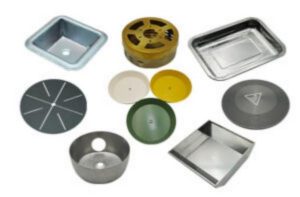
In actual projects, material selection is not simply about comparing performance. Instead, it involves finding a balance among product requirements, manufacturing methods, and long-term production stability. It also requires a comprehensive judgment based on the product structure, production quantity, and manufacturing method. This is why experienced suppliers often participate in discussions about materials and processes at the early stage of the project.
Why Is Unit Price a Poor Measure of Stamping Cost?
During the OEM procurement process, many customers will compare the quotations from different suppliers. This is quite normal. However, the actual cost of a precision stamping project is not merely the quoted unit price.
A lower part price, if it leads to repeated modifications, quality issues, delayed delivery, and batch rework, may actually increase the final cost.
For instance, a proposal with an initially lower price, if the manufacturing risks are not identified in advance, may lead to problems during the mass production stage:
• Mold adjustment
• Repeat pilot production
• Delivery delay
These hidden costs are usually much higher than the difference between the project’s initial price and the final price. For long-term supply projects, a single price difference usually only represents a part of the cost. Therefore, the real way to reduce costs is not simply to lower the manufacturing price, but to reduce errors before production begins.
How Reliable Suppliers Maintain Stable Precision Stamping Production
Once precision stamping production enters mass production, the biggest challenge is not production speed, but maintaining consistency. As production volume increased, any minor changes could gradually become more significant.
Continual attention is required:
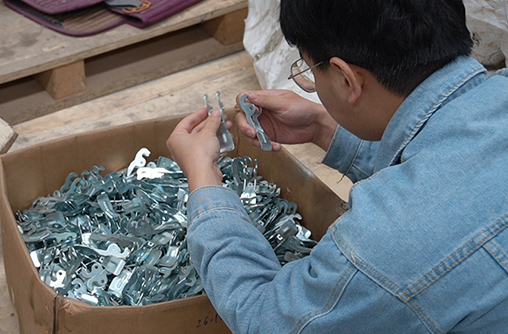
During long-term production, the number of stamping operations increases, molds are constantly under stress, and part dimensions may change slightly. It is necessary to detect changes in trends promptly through regular inspections and process monitoring.
The same equipment and molds may still lead to batch variations if the production control is not properly implemented. Therefore, continuous management of key processes is necessary.
Change in product quality
Our quality control covers incoming material inspection, in-process monitoring, and final inspection to ensure consistency throughout production. Through the ISO9001:2015 quality management system, the goal is not to identify more defective products but to reduce the likelihood of problems.
Why Precision Stamping Suppliers Need Complete Manufacturing Capability
For OEM customers, the real issue is not whether they have stamping equipment, but whether the supplier can quickly adjust the manufacturing plan when the project changes. This is why we have established not just stamping production capacity, but a complete metal processing system.
Based on the product structure and application requirements, additional processes such as laser cutting, CNC machining, welding, surface treatment, and other assembly or secondary processing may be necessary in the future.
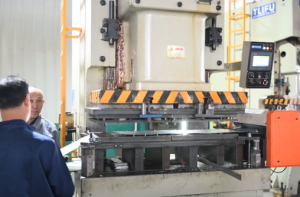
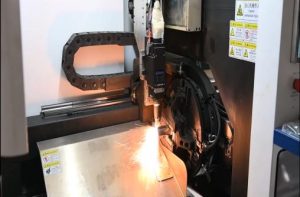
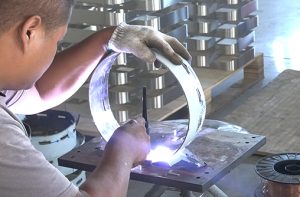
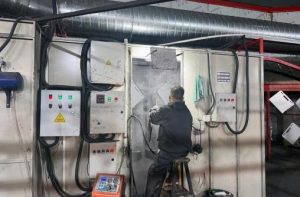
If these processes are carried out by multiple suppliers separately, the project management will become more challenging. There may be differences in understanding of size standards, inconsistent process coordination, difficulties in tracing quality issues, and difficulties in coordinating delivery schedules among different suppliers.
The purpose of an integrated manufacturing system is not simply to provide more processes, but to maintain consistency when a project involves multiple manufacturing stages.
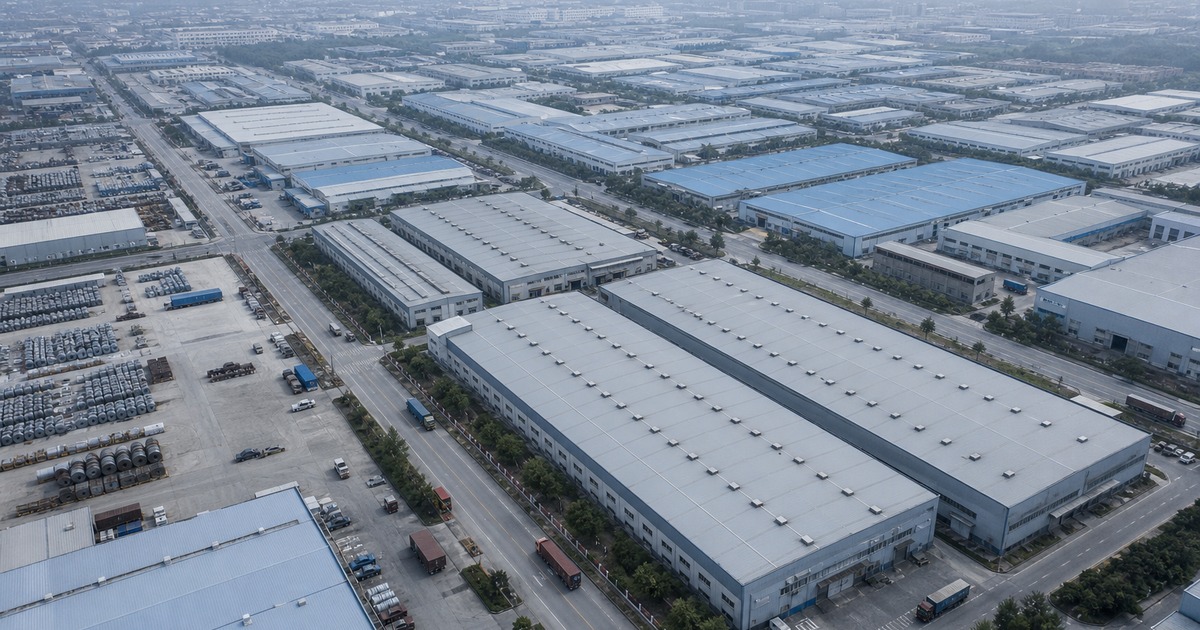
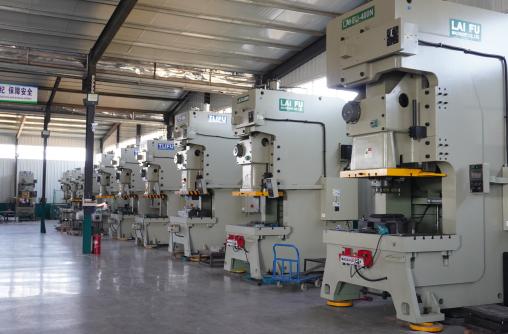
Relying on a 9000㎡ production base, we have established a comprehensive manufacturing capability that covers precision stamping, laser cutting, CNC machines, welding, and surface treatment. This includes 38 stamping machines with capacities ranging from 80 to 400 tons, meeting the requirements of precision stamping for different structures and batch sizes.
The significance of these capabilities lies not merely in expanding the processing range. Instead, during project development and mass production, when the product structure, process requirements, or production plans change, they can adjust plans more quickly, thereby reducing quality fluctuations and delivery risks associated with multi-supplier collaboration.
From Product Development to Mass Production: Supplier Support Matters
A successful precision stamping project requires the supplier’s participation at an early stage. Our support process includes:
Project Evaluation:Understand the product structure, usage requirements, and manufacturing goals. Manufacturing Process Optimization: Analyze manufacturing risks, optimize production methods, and enhance the feasibility of mass production. Sample Verification:Confirm the product dimensions, assembly effect, and production stability. Mass Production Support:Continuously monitor product consistency, quality requirements, and delivery schedules. |
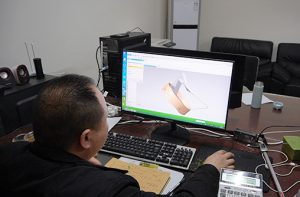 |
A team of 19 engineers participated in the project assessment, helping OEM customers reduce uncertainty throughout the process, from product development to mass production.
Conclusion: Reliable Precision Stamping Comes From Process Control
After producing tens of thousands of precision-stamped parts, our greatest experience lies not in how many pieces of equipment we have, but in understanding which factors can affect long-term production outcomes.
True and reliable precision stamping requires: identifying risks before production, controlling variations during manufacturing, and maintaining consistency in long-term supply.
For OEM customers, choosing a precision stamping supplier is not merely about selecting a processing cost, but rather about choosing a manufacturing partner that can bear the risks associated with mass production.
tens-of-thousands-of-precision-stamping-parts-later-what-makes-production-reliable.txt
Frequently Asked Questions
Why do precision stamping problems usually start before production?
Because most instability is designed in, not discovered on the press. When a drawing goes straight to tooling without an engineering review, tolerance stack-ups, material behaviour, and station layout are never challenged, and the first sign of trouble appears long after the die is built. The projects that stay stable are the ones where manufacturability was evaluated before tooling was committed, not the ones that were corrected after the first batch failed inspection.
Does a successful prototype guarantee stable mass production?
No. A prototype proves the design works, not that the process repeats. Sample parts are often produced with extra attention, slower settings, and manual intervention, so they pass while the production route is still unproven. What has to be confirmed before mass production is whether the same tooling, the same process parameters, and the same inspection method can hold the tolerances batch after batch. That is a different question from whether one good part can be made.
How does material selection affect precision stamping stability?
Material choice decides how the process behaves at volume. Beyond strength, corrosion resistance, weight, and cost, the material has to support long-term stable production: consistent thickness and hardness, predictable formability, and a supply source that does not shift between batches. Two suppliers can both deliver the same stainless grade and still behave differently on the same die. That is why the material is confirmed against the production route before the batch plan is locked, not after problems appear.
Why is unit price a poor measure of precision stamping cost?
Because the cost that hurts is the one that does not show up in the quotation. Rework, sorting, line stoppages, and rejected batches are all driven by process stability, and they appear after the order is placed. A part quoted at the lowest unit price is expensive if the tooling has to be adjusted every few thousand pieces, or if dimensional drift is only caught at final inspection. The real comparison is total cost per accepted part, which is why tooling, processing, and inspection belong in the same quote.
What should a buyer check in a precision stamping supplier?
Look past the equipment list. What matters is whether the supplier controls the whole route: engineering review before tooling, stable stamping with documented parameters, and secondary operations such as welding, machining, and surface treatment kept under the same quality system rather than outsourced. Ask how dimensional drift is detected between batches and who owns the corrective action. Machine count tells you what a supplier can start; process control tells you whether the parts received in month six still match the drawing you approved.
Ensure Long-Term Stability for Your Precision Stamping Project
✅ Engineering review · Production feasibility · Quality control
📩 tylor@xinjiuxinji.com — Reply in 3 working hours with free design optimization.
Submit your drawings for professional stamping feasibility analysis — Control production risks from the start
Custom Sheet Metal Parts: Behind 70,000+ Manufacturing Projects