Is Low Volume Manufacturing Right for Your Next OEM Project?
• Should we directly move to mass production now?
• Is it necessary to conduct low-volume manufacturing first?
• Will the small-scale production increase costs and delivery time?
• Or is the risk of direct mass production higher?
The real issue that many projects face is not manufacturing capabilities but whether the product has already met the conditions for stable mass production.
The value of low-volume manufacturing is not merely about “producing a small batch first”; rather, it helps the OEM team confirm whether the product, process, and manufacturing procedures have already met the conditions for stable mass production before officially commencing large-scale production.
How Do You Know If Your OEM Project Needs Low Volume Manufacturing?
Many people believe that small-batch production is merely a manufacturing method used when the order quantity is relatively small. In fact, in OEM projects, whether to adopt low-volume manufacturing depends more on the project’s current development stage, manufacturing preparation status, and mass production goals, rather than solely on production quantity.
The following criteria can help you quickly determine whether your project is suitable for small-batch production.
Has Your Design Been Validated for Repeatable Production?
This is a point that many OEM projects tend to overlook. Because product development is complete, it does not mean the conditions for stable mass production have been met.
The reason is that product development and mass production address two distinct issues.
In many OEM projects, the engineering team typically conducts a DFM (Design for Manufacturability) analysis first to determine whether the product meets the requirements for stable mass production, rather than moving directly into mass production.
Completing the drawings and making the samples does not mean that the product is ready for mass production.
A functional sample only proves one thing: It can be manufactured.
What is truly necessary for mass production to prove is: Whether the product can maintain consistent quality throughout continuous production.
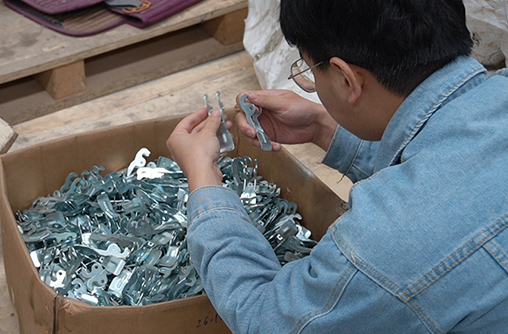
For metal parts that involve bending, welding, laser cutting, and multi-process assembly, the engineering team usually also needs to confirm:
- Can dimensional consistency be maintained throughout production?
- Do the tolerances after multi-process processing meet the assembly requirements?
- Can the process deliver consistent results over time?
By conducting low-volume manufacturing to verify consistency with mass production, it is possible to confirm process stability before official mass production begins and reduce rework and adjustment costs in subsequent mass production.
Does Your Order Volume Justify Mass Production?
If the product has the manufacturing conditions in place, the next step to consider is the order size.
The reason is simple: Mass production processes usually entail higher upfront investment. Therefore, not all projects are suitable for the high-cost batch manufacturing method from the very beginning.
For projects with a small number of orders and where demand may gradually increase, adopting flexible manufacturing methods such as laser cutting and numerical control processing can often reduce initial investment while maintaining greater manufacturing flexibility.
When product demand becomes stable and order size is sufficient, it is evaluated whether to introduce stamping molds and other batch-processing techniques. Usually, a better balance can be achieved between cost and efficiency.
Therefore, what really needs to be considered is not which process is more advanced, but:
Is the current order volume sufficient to support large-scale production?
Is Reducing Risk More Important Than Lowering Unit Cost?
Even if the order size is appropriate, the goals of different projects may still be different.
If the product has reached a mature stage and orders have been stable for a long time, the main focus is usually on reducing the manufacturing cost per unit and improving production efficiency.
However, for new products that have just been developed and are about to enter the market, or those being introduced into the supply chain for the first time, what is more important is reducing manufacturing risks.
For example:
- Will the initial delivery meet the customer’s requirements?
- Will subsequent orders maintain the same quality?
- Will the production volume need frequent adjustments after entering the production stage?
- Can it smoothly switch to long-term stable production?
If these issues are more critical than unit cost, low-volume manufacturing is usually better aligned with the project requirements.
Can Your Supplier Scale with Your Project?
Finally, even if a decision is made to adopt small-batch production, the supplier’s corresponding capabilities will also affect the outcome.
The value of low volume manufacturing is not simply producing a small batch first. It helps OEM teams verify whether the product, manufacturing process, and production workflow are truly ready for full-scale production.
In an OEM project, a reliable supplier is usually capable of providing:
- DFM (Design for Manufacturability) recommendations;
- Select the appropriate manufacturing process based on the product structure;
- Respond quickly to the design optimization requirements during the sample stage;
- When the project enters mass production, maintain the same quality standards and manufacturing logic.
For OEM projects, small-scale production is just the beginning. What’s more important is whether the supplier can successfully support the subsequent mass production. If different engineering standards are adopted during the sample and mass production stages, the process and quality often need to be re-verified.
In our project, 19 engineers with over 10 years of experience will participate in DFM analysis during the sample stage. They will propose optimization suggestions based on the product structure and process requirements. For projects that require rapid verification, we can usually provide free samples within 72 hours to help customers quickly confirm whether the product meets the manufacturing and assembly requirements.
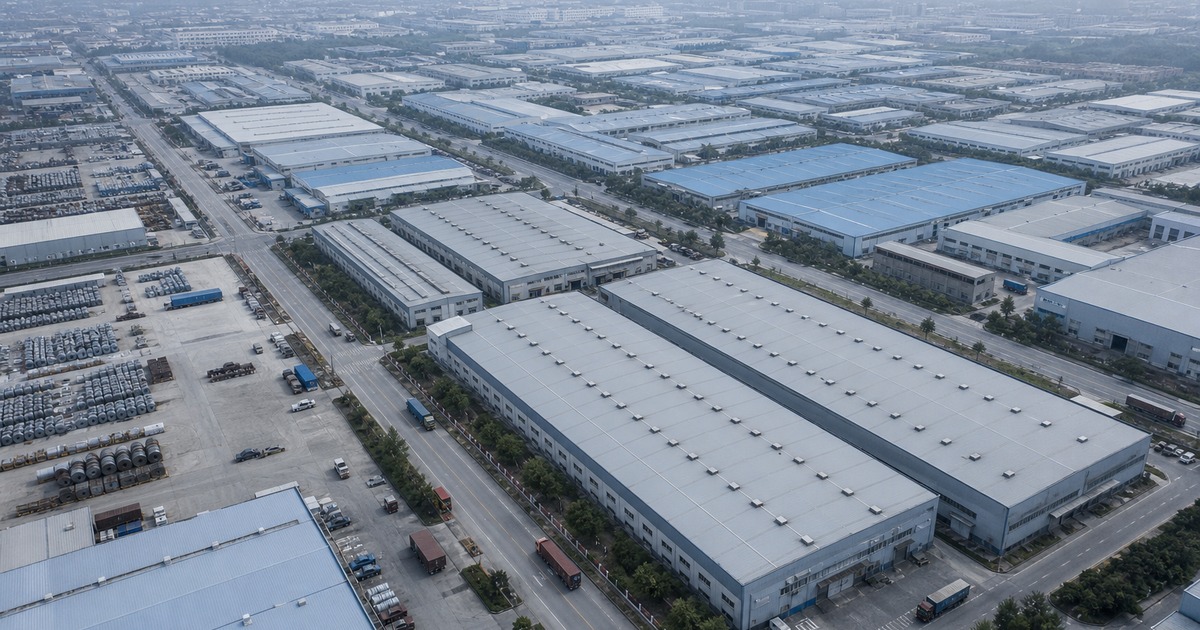
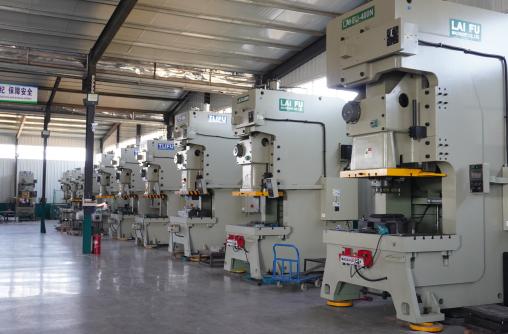
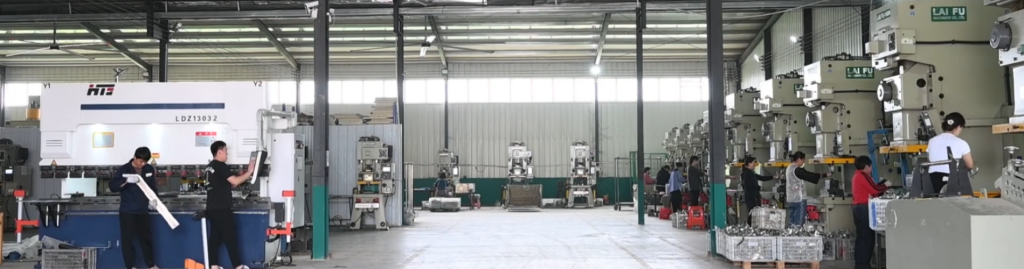
Backed by our 9,000 m² manufacturing facility and a complete manufacturing system, we can select the most suitable process route based on the product structure, expected order volume, and precision requirements, rather than being limited to a single processing method. When the project is completed and verified, and enters the mass production stage, the same engineering team will continue to follow up on the production plan and help customers achieve a smooth transition from samples and small batches to mass production.
Does Your OEM Project Need Low Volume Manufacturing?
If your project meets the following conditions, and if one or more of the answers are “Yes”, your project is generally worthy of serious consideration for Low Volume Manufacturing.
However, not every OEM project requires low volume manufacturing. If your product design is finalized, demand is stable, and the manufacturing process has already been validated for mass production, moving directly into production is usually the more cost-effective option.
Making the Right Production Decision
For OEM projects, low-volume manufacturing is not a fixed production model; rather, it is an engineering strategy that helps enterprises reduce development risks, verify manufacturing capabilities, and plan the production path for mass production.
What it truly addresses is not “How many items should be produced”, but:
Is your product ready to enter stable, replicable large-scale production?
If your project is currently in the decision-making stage regarding whether to enter mass production, we can, based on the product structure, projected order volume, and manufacturing process, offer you free DFM design optimization suggestions and 72-hour sample support. This will help you better determine whether the product has the conditions for stable manufacturing before entering mass production.
Start with a Free DFM & Manufacturing Review
✅ DFM review · Process validation · Production readiness assessment
📩 tylor@xinjiuxinji.com — Reply in 3 working hours with free design optimization.
Upload your drawings and receive a free DFM review, manufacturing assessment, and process recommendation from our engineering team.
Prototype Metal Fabrication: How Faster Validation Reduces OEM Development Risk