Why Global Buyers Choose Metal Fabrication China
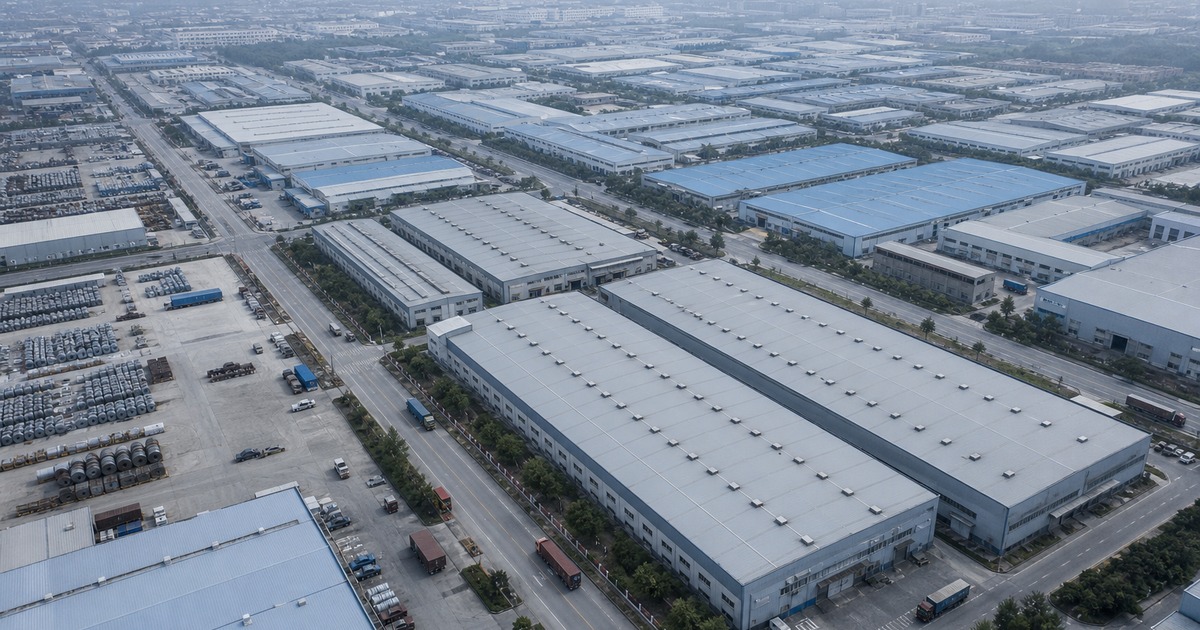
In the context of the ongoing restructuring of the global manufacturing system, metal fabrication in China has become an important choice for international procurement.However, during actual sourcing processes, more and more buyers have discovered a key issue:
Even within China, final delivery results can vary significantly from one supplier to another.
This means that choosing metal fabrication services in China is not simply choosing a country, but choosing a capability system.
Why Differences Exist Between Metal Fabrication China Suppliers
In real projects, the most common issues are not “we cannot manufacture”, but:
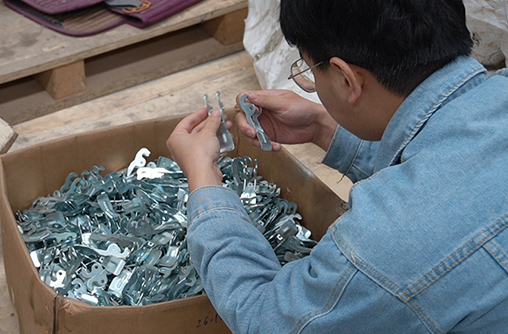
- Samples meet requirements, but mass production deviates
- Drawing interpretation inconsistencies lead to rework
- Dimensional stability issues affect assembly
- Weak coordination across multiple processes
The root cause is simple:
Many factories remain at a single-process stage rather than a system-based one.
System Manufacturing vs Single-Process Capability
Isolated equipment usage
Lack of process integration
Inconsistent mass production results
Engineering + Equipment + Process integration
Unified standards across multiple production stages
Stable batch-to-batch consistency
The real challenge in metal fabrication is not processing itself, but maintaining consistency across multiple processes in mass production.
Our Manufacturing System
1.Factory Scale & Experience
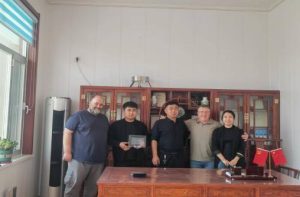
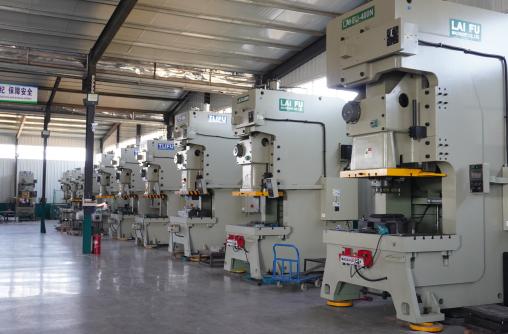
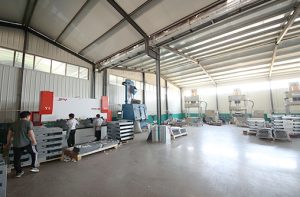
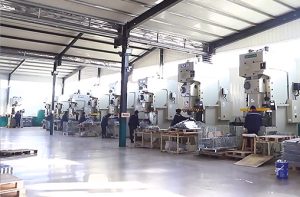
- 80T–400Tstamping machines × 38
- 6kW laser cutting machines × 2
- metal bending machine × 3
- automatic spot welding machine × 1
- welding production lines × 3
- five-axis CNC machining centers × 2
- vertical machining centers × 3
- CNC milling machines × 3
- Forging equipment × 1
- surface treatment production lines × 3
- laser marking machines × 4
- Coordinate Measuring Machines (CMM) × 3
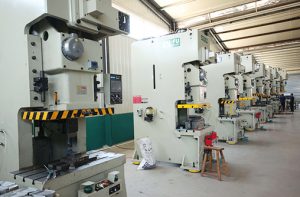
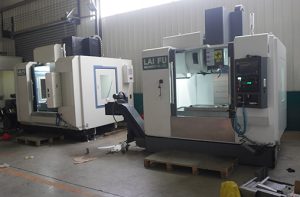
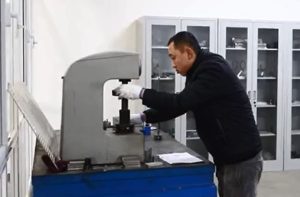
✅The core significance of these systems lies in:
They are not a collection of independent operating devices, but rather form a complete closed loop for metal fabrication and manufacturing, enabling complex structural components to be completed within a unified system:
Sheet metal forming → CNC precision machining → Welding & assembly → Surface treatment → Precision inspection → Batch consistency control
Engineering-Driven Manufacturing
Many customers have failed in their purchases in China, not because of insufficient manufacturing capabilities, but because of a lack of effective integration between design and manufacturing.
Therefore, our core capability is not only equipment, but also engineering involvement throughout the manufacturing process.
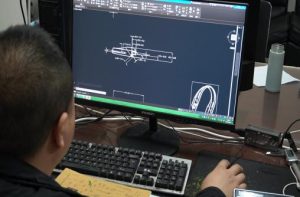
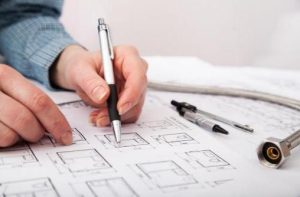
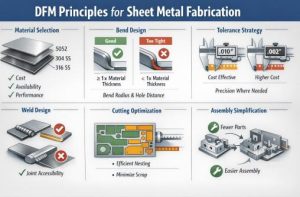
Free design and DFM optimization support
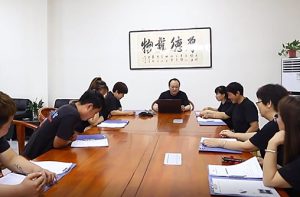
Before production, our engineering team will conduct:
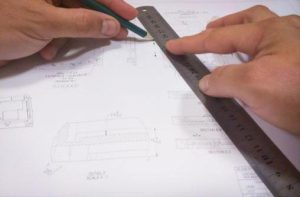
• DFM analysis of the drawings
• Structural and assembly optimization suggestions
• Cost and process path optimization
• Early identification of risk points
Why Can We Consistently Deliver?
When advanced equipment, engineering support, and manufacturing experience work together, the real result is:
• Higher consistency between prototypes and mass production
• More stable multi-batch production performance
• Better control over complex structural components
• More predictable delivery timelines
This level of stability is what global buyers value most in the metal fabrication China supply chain.
The Manufacturing Capabilities Have Been Verified in Multiple Industrial Sectors
These manufacturing capabilities have been widely applied across multiple industrial sectors, including:
• Industrial equipment structural components, and enclosures
• Automation equipment components
• Structural components for new energy systems
• Metal structural parts for communication equipment
• Mechanical brackets and connection components
• Custom functional metal components
These industries share a common requirement for manufacturing capability:Extremely high standards for precision, consistency, and stable batch production.
Why Global Buyers Choose Our Metal Fabrication China Services
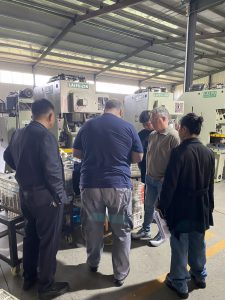
Among the numerous metal fabrication suppliers in China, the reason why the customer ultimately chose us was not a single advantage, but a complete system:
- Proven manufacturing experience with scale
- Complete equipment supporting complex processes
- Engineering capabilities to solve problems in advance
- Stable capacity for mass production delivery
What we offer is not just processing, but a complete manufacturing solution ranging from design to production.
Frequently Asked Questions
Q1. What actually separates metal fabrication suppliers in China?
Not equipment lists. The common failure pattern is a supplier whose samples meet requirements while mass production drifts: drawings are interpreted differently between steps, parts are reworked, and dimensional stability problems only appear at assembly. What separates suppliers is whether engineering, equipment, and process standards work as one system or as a set of isolated machines. Capability should be judged by how a supplier coordinates the whole route, not by how many machines stand in the workshop.
Q2. What does an integrated manufacturing system change for a buyer?
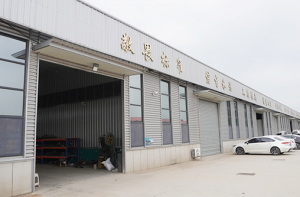
It changes what you can predict. When engineering, equipment, and process integration are handled in one system, the gap between prototype and mass production narrows, multi-batch production stays stable, and communication runs through one technical owner instead of several outsourced workshops. Our system covers a 9,000 m² production facility, 19+ engineers with 10+ years of experience, customers in 100+ countries, and more than 70,000 custom parts delivered under one process standard.
Q3. Why does engineering-driven manufacturing matter more than equipment?
Because most purchase failures in China are not caused by insufficient manufacturing capability; they come from a lack of effective integration between design and manufacturing. When engineering runs inside the same system as production, drawings are interpreted once, process standards stay consistent across batches, and problems are caught before they reach the line instead of being discovered at assembly. That integration is what turns advanced equipment into consistent output.
Frequently Asked Questions
Q1. What actually separates metal fabrication suppliers in China?
Not equipment lists. The common failure pattern is a supplier whose samples meet requirements while mass production drifts: drawings are interpreted differently between steps, parts are reworked, and dimensional stability problems only appear at assembly. What separates suppliers is whether engineering, equipment, and process standards work as one system or as a set of isolated machines. Capability should be judged by how a supplier coordinates the whole route, not by how many machines stand in the workshop.
Q2. What does an integrated manufacturing system change for a buyer?
It changes what you can predict. When engineering, equipment, and process integration are handled in one system, the gap between prototype and mass production narrows, multi-batch production stays stable, and communication runs through one technical owner instead of several outsourced workshops. Our system covers a 9,000 m² production facility, 19+ engineers with 10+ years of experience, customers in 100+ countries, and more than 70,000 custom parts delivered under one process standard.
Q3. Why does engineering-driven manufacturing matter more than equipment?
Because most purchase failures in China are not caused by insufficient manufacturing capability; they come from a lack of effective integration between design and manufacturing. When engineering runs inside the same system as production, drawings are interpreted once, process standards stay consistent across batches, and problems are caught before they reach the line instead of being discovered at assembly. That integration is what turns advanced equipment into consistent output.
Get Reliable Metal Fabrication Solutions in China
Manufacturing support solution
- ✓ Free drawing evaluation and DFM optimization suggestions
- ✓ Fast prototyping and precise quotation support
- ✓ Manufacturing process plan formulation for mass production
- ✓ Stable long-term batch supply capability
What Makes a Reliable Metal Fabrication Company