Payment Terms for Metal Parts from China
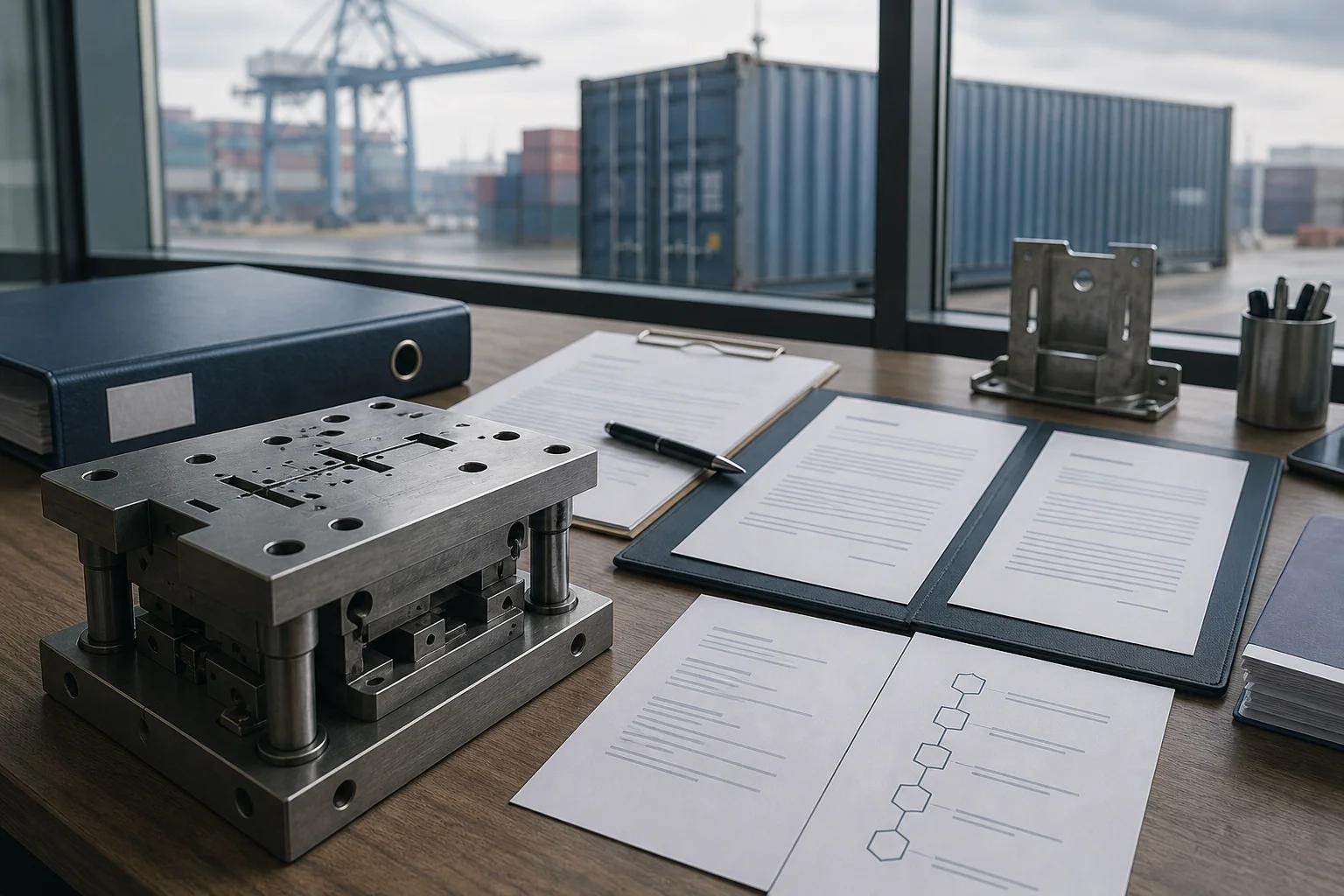
Illustrative editorial image only; it does not represent a specific contract, payment arrangement, or legal outcome.
For an OEM importing fabricated, machined, stamped, welded, or finished metal parts, the buyer should design payment together with the technical package. A payment schedule cannot repair an unclear drawing, missing acceptance criteria, weak change control, or unidentified tooling ownership. Therefore, align part number and revision, quantity, material, finish, inspection, packing, Incoterm, destination, lead time, warranty, and remedies before negotiating.
Payment Terms for Metal Parts: Compare the Main Methods
| Method | How it is normally structured | Buyer control | Supplier cash-flow benefit | Key points to negotiate |
|---|---|---|---|---|
| T/T (telegraphic transfer) | Bank transfer against agreed contract milestones | Depends on milestone evidence and inspection rights | Direct and usually operationally simple | Deposit structure, balance trigger, documents, bank charges, refund or remedy language |
| L/C (letter of credit) | Bank payment against compliant documents under the credit | Document-based control; not a substitute for product inspection | Bank-mediated payment can support production and shipment | Issuing/advising banks, expiry, presentation, discrepancies, required documents, fees |
| OA (open account) | Supplier ships or delivers before the payment due date | Higher buyer control after delivery; supplier takes credit exposure | Lowest advance funding need for buyer | Credit limit, due date, late-payment remedies, title/risk, insurance, dispute process |
| Tooling milestones | Separate payments linked to design, tooling, sample, and release gates | Direct control over non-recurring assets and approvals | Funds expensive setup work earlier | Ownership, storage, maintenance, transfer, acceptance, change charges, refund or credit |
This is a negotiation framework, not a guarantee of bank treatment or legal effect. Banks, insurers, customs authorities, and counsel may impose requirements that differ by transaction and jurisdiction. For documentary-credit questions, use the official ICC resource and obtain transaction-specific advice from the relevant bank.
T/T: simple, but define every trigger
T/T suits repeat manufacturing when buyer and supplier can administer clear milestones. Yet the risk lies not in the name of the payment method. Instead, it lies in ambiguity about what releases each payment and what happens if the part fails inspection or the schedule changes.
Parties may structure a payment schedule with a deposit and a balance released after the agreed inspection and document package. However, the exact split remains a negotiation subject to contract, not a market rule or legal standard. The contract should define the exact documents, inspection window, non-conformance process, and whether the balance falls due on passing inspection, release of conforming goods, or another objectively defined event. If a supplier proposes a different structure, compare the risk allocation rather than treating one percentage as standard.
Repeat business may support a smaller advance, a retention amount, or a credit arrangement once performance data exists. Each option remains subject to contract. Therefore, avoid describing a payment split as “normal” without a transaction-specific basis.
L/C: document control with operational discipline
An L/C can shift payment control to documentary compliance. However, it does not guarantee product quality. The credit should identify the parties, amount, currency, expiry, shipment terms, presentation period, required documents, and discrepancy process. Buyers should coordinate the draft with the issuing bank before asking the supplier to produce against it.
Define how the L/C interacts with inspection. If an independent inspection report or certificate of conformity is needed, state who issues it, what standard applies, what date is valid, and what happens if the report identifies non-conformity. Avoid requiring documents that are difficult or impossible for the supplier to obtain. Moreover, every extra document can create a discrepancy risk and bank cost.
For large or operationally critical purchases, ask the bank and counsel to review the proposed credit wording. ICC is the authoritative industry organization for current trade rules and resources, so use ICC rather than an unofficial summary.
OA: useful only when credit risk is accepted
OA means the supplier ships or delivers, and the buyer pays later under agreed credit terms. It can improve buyer cash flow, but it transfers more collection risk to the supplier. Consequently, a supplier may ask for credit insurance, a limit, a guarantee, or a shorter due date. The parties should state when the due date begins: shipment, delivery, accepted inspection, invoice date, or another event.
The contract should cover late payment, disputed invoices, partial acceptance, rejected goods, title and risk transfer, currency, bank costs, and the right to suspend future shipments. Buyers should avoid promising OA terms that their accounts-payable process cannot administer. Likewise, suppliers should not accept open credit exposure without a credit review and a documented remedy path.
Tooling milestones: protect the asset and the schedule
Tooling payments deserve a separate schedule, because a die, fixture, gauge, welding jig, checking aid, or machining fixture may hold value beyond one shipment. Therefore, divide the work into objective gates, for example: approved tooling design, tooling completion, sample submission, sample approval, and production release. These gates are examples to negotiate, not automatic industry stages.
| Milestone | Evidence to define | Commercial question |
|---|---|---|
| Tooling design approval | Drawing, 3D data, material and process assumptions | Who owns the design and who approves changes? |
| Tooling completion | Photos, inspection record, identification, storage location | Is the tool complete, usable, and identified as buyer-owned if agreed? |
| Sample or first article | Sample report against the controlled revision | Does sample approval authorize production, or only evaluate the sample? |
| Production release | Written release after technical and commercial review | What happens if approval is delayed or the sample is rejected? |
| End-of-program decision | Maintenance record and transfer plan | Can the buyer recover, transfer, or retire the tooling? |
If the supplier amortizes the tool into part pricing, record the assumed quantity and whether unused amortization is refundable, credited, or not recoverable. If the buyer pays the tooling charge directly, define ownership, access, storage, maintenance, insurance, and transfer rights. Payment alone does not prove ownership, so write the position into the contract and identify the asset.
Amounts and order history: label negotiation examples
Payment amounts, credit thresholds, and order-history triggers vary by project and contract. Therefore, this article does not publish internal commercial figures or universal thresholds. Buyers and suppliers should define the actual order value, currency, approval policy, performance evidence, and change authority in the written contract. If the parties revisit terms after an established performance history, they should document the reviewed quality, delivery, claims, credit, and payment records rather than relying on a general rule of thumb.
Keep the commercial record factual. Record contract value, currency, part family, shipment history, acceptance results, payment performance, claims, and open corrective actions. Do not use an internal rule of thumb as though it were an industry statistic.
Contract fields that prevent payment disputes
Read the payment clause together with the technical and logistics clauses. Confirm at least the following points:
- legal names, bank details, and authorized change procedure;
- currency, tax treatment, and bank-charge allocation;
- deposit, milestone, balance, or OA due date;
- conditions for releasing each payment;
- inspection method, acceptance criteria, and inspection window;
- required MTRs, certificates, packing lists, invoices, and shipping documents;
- Incoterm, named place, destination, and risk transfer;
- tooling ownership, storage, maintenance, and transfer;
- delay, shortage, defect, rework, replacement, refund, and dispute remedies;
- change-control process for drawing, quantity, material, finish, or schedule; and
- governing law, dispute forum, language, and notice details as reviewed by counsel.
For management-system certification questions, consult ISO. When a supplier certificate matters for qualification, use IAF CertSearch as an official verification resource where applicable. Certificate verification, however, does not replace production inspection or contractual acceptance.
A practical risk-based negotiation sequence
Begin by classifying the order: prototype, first production, repeat production, or a critical safety-related part. Next, define the evidence needed before each payment. Then separate tooling from recurring part cost, and match the Incoterm and destination to the payment and document flow. Finally, set a change and non-conformance process that both finance and quality teams can use, and record all exceptions in the signed contract or purchase order.
For a first transaction, buyers may prioritize inspection and document control. For a long-running relationship with verified performance, the parties may negotiate less advance funding or OA, subject to credit approval. In tooling-heavy work, staged payments can reduce disputes by tying funds to design, sample, and release evidence. These are risk-management choices, not market promises.
Frequently Asked Questions
What should a metal-parts payment schedule identify?
It should identify the quotation scope, tooling or mold costs, sampling or first-article milestones, production balance, inspection requirements, packaging, shipping responsibilities, and the documents required at each stage.
Why should tooling payments be separated from production payments?
Tooling is a project-specific cost with its own design, fabrication, trial, approval, maintenance, and ownership considerations. Separating it from production payments makes the commercial milestones and approval responsibilities easier to review.
What should I confirm before making a production payment?
Confirm the drawing revision, material and condition, quantity, finish, tolerance requirements, approved sample or first-article status, inspection records, packaging, delivery scope, and any agreed change or rework terms.
Can payment terms vary between metal-parts projects?
Yes. Terms can depend on tooling, project scope, sampling, production quantity, inspection requirements, shipping arrangements, and the commercial agreement. The final terms should be stated clearly in the quotation or order documents.
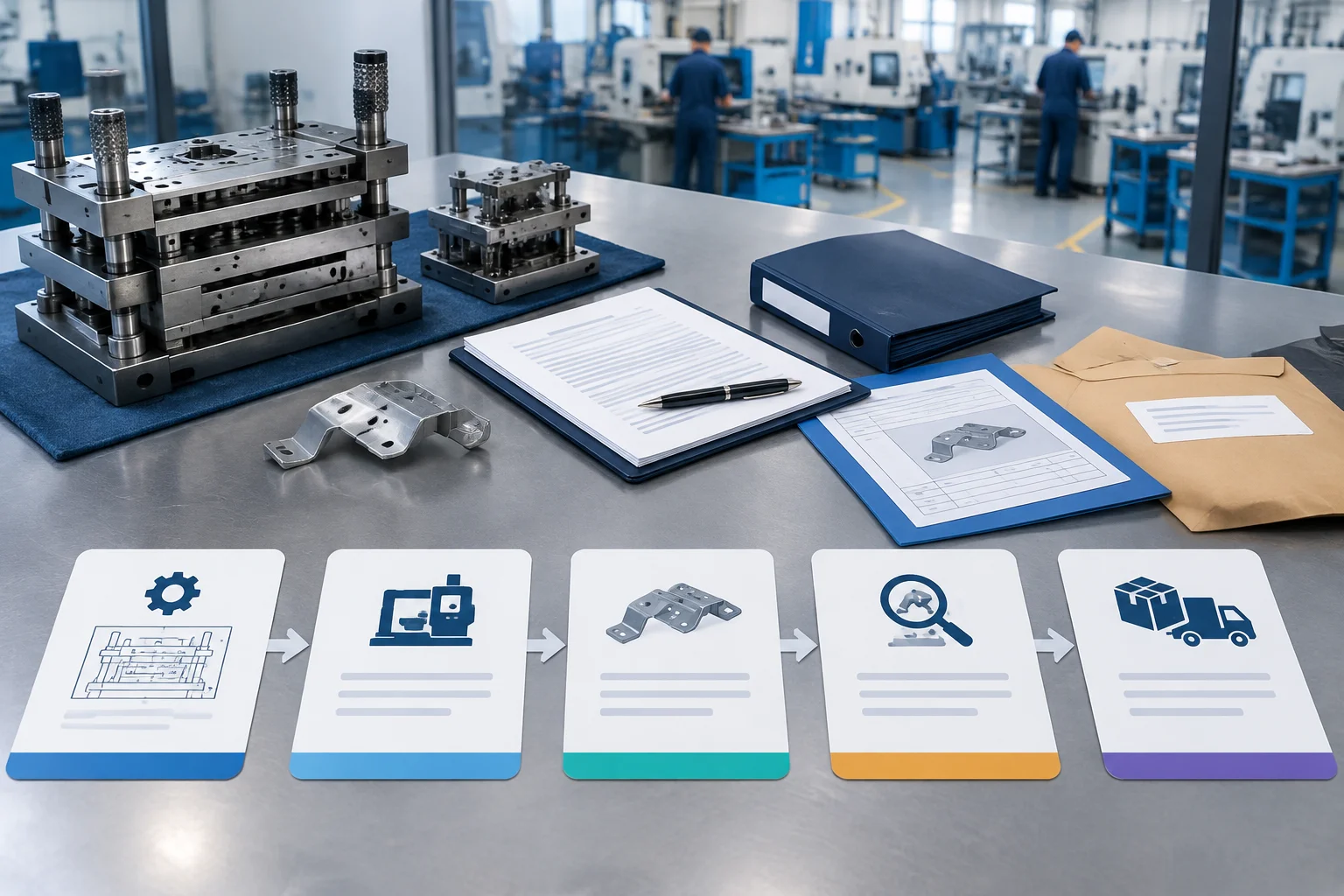
Illustrative editorial image only; it does not represent a specific contract, payment schedule, or legal outcome.
Put Payment Milestones and Tooling Ownership in Writing
✅ Payment triggers · Tooling evidence · Samples · Inspection · Shipping documents — defined
📩 tylor@xinjiuxinji.com
We respond to inquiries within 2 hours.
Send the controlled drawing revision, tooling needs, inspection plan, and preferred milestones — the reply maps the commercial terms to the technical scope.