First Article Inspection Explained for Metal Buyers
Direct answer: An FAI verifies that a production-representative part meets every characteristic on the current drawing revision. It uses measured evidence, not visual approval. The customer or project requirements decide the format, the sample size, and the release rule. Therefore, define those items in the purchase order before the first part is made.

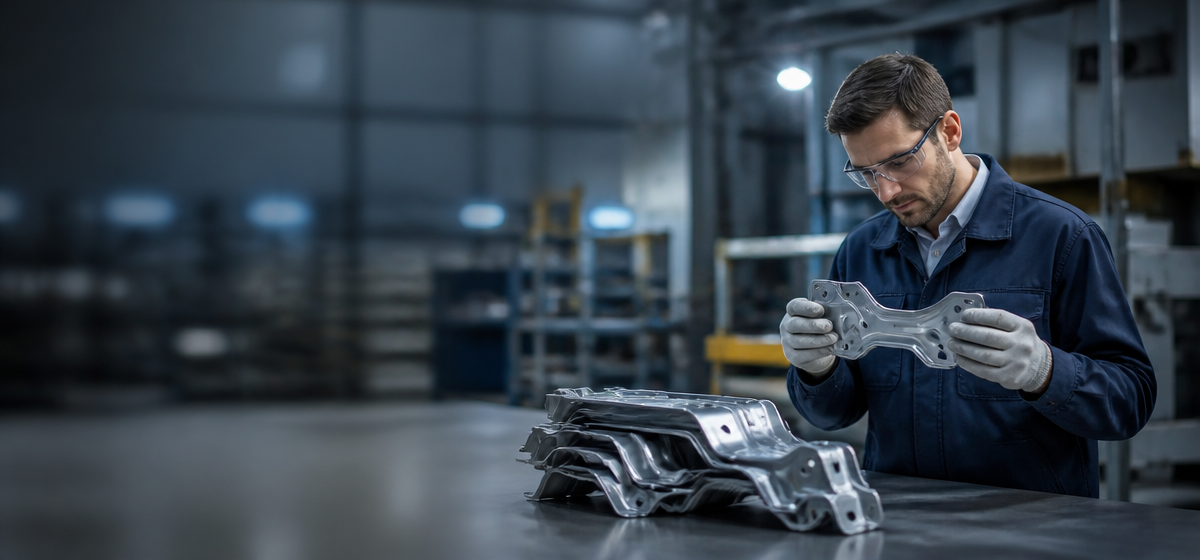
Illustrative editorial image only; it does not show a specific FAI report, measurement result, or customer package.
What Makes a First Article Different from a Sample
A sample shows that a design is possible. An FAI shows that the production process can make the part to the drawing. For this reason, an FAI should use the intended process, the intended material, and the intended inspection method. A hand-made prototype may show design intent, but it does not prove production capability.
When an FAI Is Usually Required
Most buyers request an FAI when a new part number starts production, when the drawing revision changes, or when the process route, tooling, or manufacturing site changes. Likewise, a long production break or a change in the material source can trigger a new FAI or a partial delta FAI. Record the reason for each decision so the file explains why an FAI was or was not performed.
What the FAI Report Should Show
A useful FAI report lets a reviewer trace each requirement to evidence. The table below lists the fields that most buyers should check.
| Field | What to record | Why it matters |
|---|---|---|
| Characteristic number | Balloon or callout on the drawing | Connects each result to one requirement |
| Nominal and limits | Target value with upper and lower limits | Defines what passes |
| Measured value | Actual result for the sample | Shows objective evidence |
| Method and instrument | Caliper, gauge, CMM, or optical comparator with its ID | Shows how the value was obtained |
| Drawing revision | Revision letter or date of the controlling drawing | Prevents measurement against an outdated print |
| Material and certificate | Grade, heat or lot, and certificate reference | Links the part to its material record |
| Result and disposition | Pass, fail, or approved deviation | Records the release decision |
Choosing the Measurement Method
Use simple calibrated tools for simple dimensions. However, a coordinate measuring machine suits complex geometry, datum relationships, and profile or position requirements. The FAI should state the CMM program revision and the datum alignment. Furthermore, a CMM report does not prove correctness if the model revision or alignment is wrong.
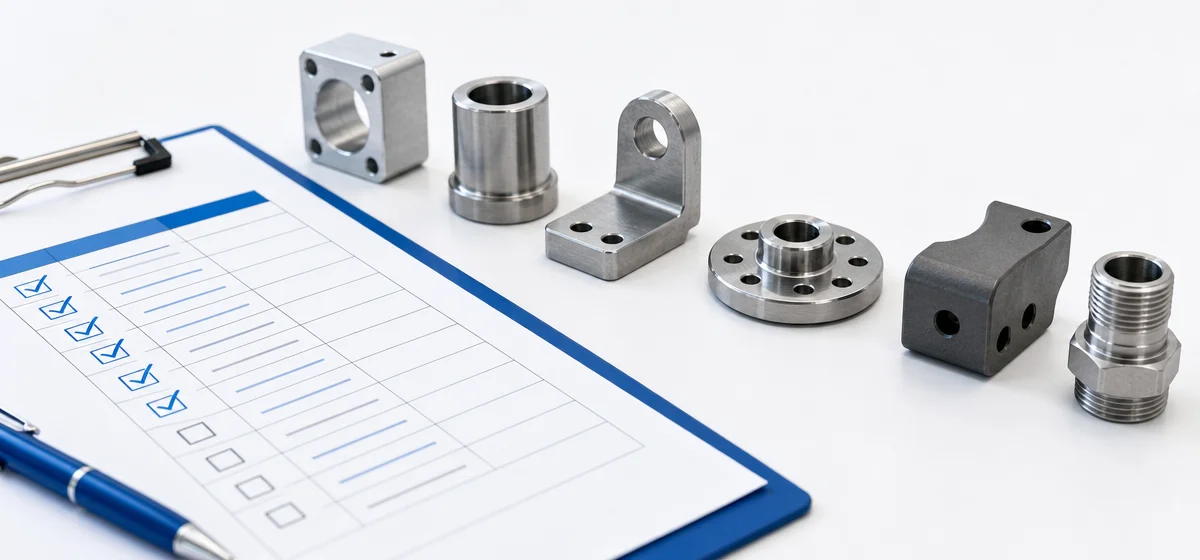
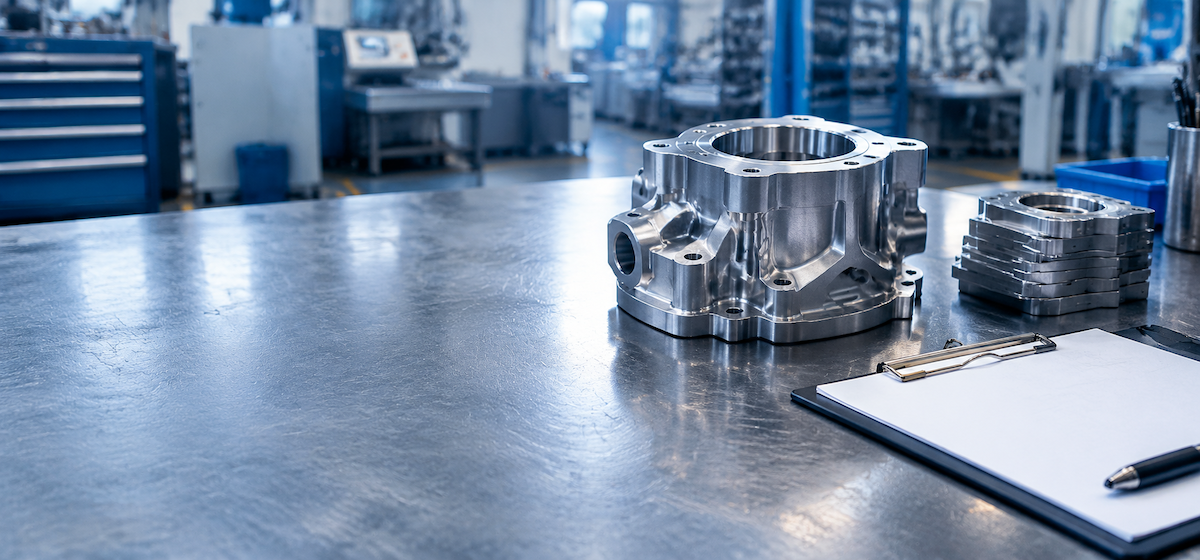
Illustrative editorial image only; it does not show a real inspection result or customer decision.
FAI and PPAP Are Related but Not Interchangeable
FAI answers a narrow question: does this first production article conform to the defined requirements? PPAP, used in automotive supply chains, is a broader approval framework. It can include the control plan, the process flow, measurement system analysis, capability data, and a submission warrant. An FAI can supply dimensional evidence for PPAP, but an FAI alone does not make a complete PPAP. Likewise, a PPAP package does not remove an aerospace or customer-specific FAI requirement.
Timing: Separate Measurement, Review, and Approval
Report delivery often depends on three stages, not one. First, the supplier measures the sample. Second, the quality team reviews the data against the drawing. Third, the customer approves the report or requests changes. Ask the supplier for a date for each stage, so that a delay can be traced to the stage that caused it.
FAQ
Is every metal part required to have an FAI?
No. The customer requirement, the drawing, the purchase order, and the risk assessment decide whether an FAI applies. Write the requirement in the purchase order.
Can a first article use a prototype machine?
Only when the customer accepts that route and the route represents the intended production process. Otherwise, the report may not prove production capability.
What is the difference between a full and a delta FAI?
A full FAI reviews every applicable characteristic. A delta FAI reviews only the characteristics affected by an approved change, and it keeps traceability to the previous approved report.
Does an FAI prove the whole lot is good?
No. An FAI verifies the first production article and the setup. Ongoing lot inspection and process control check the rest of the production run.
Define the FAI Before the First Part Is Made
✅ Drawing revision · Characteristic list · Measurement method · Release rule
📩 tylor@xinjiuxinji.com
We respond to inquiries within 2 hours.
Send the drawing revision and the customer quality clause — the reply maps the FAI scope to each characteristic.
How to Evaluate a China Metal Parts Manufacturer for an Automotive Program