What Makes Professional Laser Cutting Services Stand Out?
In many OEM projects, laser cutting services seem to be just a processing step:Upload drawings → Quote → Cut → Receive goods.But the real problem often lies not in this process itself, but in — Whether the supplier has done a “risk assessment” for you in the first step.
If not, problems will almost definitely occur later in this project, just with different timings.
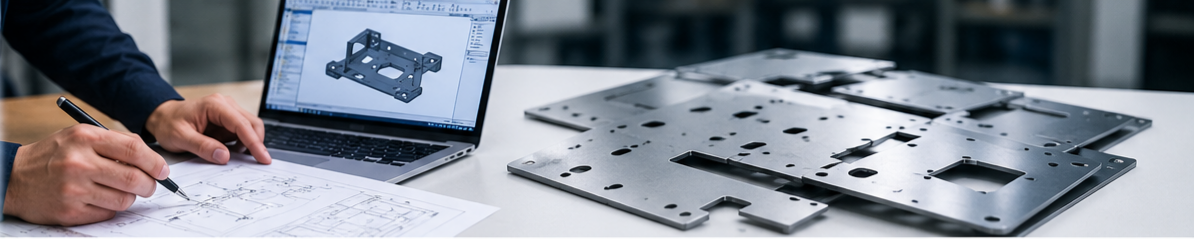
Does the Real Problem Start Before Laser Cutting Begins?
In actual projects, the most common failure is not the deviation in size, but:
• The individual parts are all qualified
• But they cannot be assembled
For example, in a device casing project, the first batch of parts was inspected and found to be fully qualified. Even the dimensions were more precise than those in the drawings. However, during the assembly in the customer’s factory, the screw holes did not align, the bending positions were off, and the overall alignment of multiple parts was incorrect. The result was not “reworking one part”, but the entire structure failed.
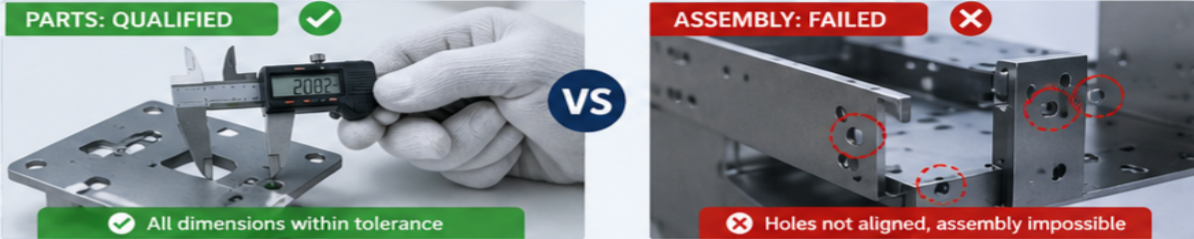
This type of problem has one common feature:
Before the cutting process, no one ever asked: “Can this design be reliably brought into mass production?”
But once it enters production, this issue is no longer a design problem; instead, it becomes a cost issue.
Why Do Most Suppliers Never Identify These Risks?
The logic of most laser cutting service providers is: you provide the drawing → I follow your instructions → I deliver the product. Under this model, they will not, nor are they responsible for answering questions such as “Will this hole position affect the bending?” Will this structure deform? Is this tolerance over-designed?
❗ Therefore most projects are never risk-checked before production. So the reality is: whether the drawings are correct or not is not something they care about. What they care about is whether it can be cut out.
This is why many projects “have no problems with the samples, but there are issues with the production volume”.
❌ Ordinary suppliers skip risk validation
You give the picture → I follow your instructions → I deliver the goods
- Do not assess the rationality of the drawings
- Do not identify the mass production risks
- Accept orders as long as the samples can be made
✔ Professional suppliers make it the first step
You provide the drawing → I will first assess → Then confirm whether it can be mass-produced.
- Evaluate the relationship between the hole position and the bending
- Identify the risk of structural deformation
- Propose optimization suggestions
Professional Laser Cutting Services Start with Engineering Review
In the truly professional laser cutting service process, the first step is not to make a quotation or to schedule production. Instead, it is first necessary to determine whether the drawing can be “stably manufactured”.
In actual projects, the engineering team will conduct DFM reviews before
- Will this pitch shift after bending?
- Does this structure have any rigidity issues?
- Will this design cause errors to be magnified in mass production?
Often, we even suggest to our clients that they make minor adjustments, such as moving the hole positions, adjusting the bending sequence, modifying the local structure, or reducing unnecessary precision requirements.
Precision Equipment and Engineering Capability Work Together
In professional manufacturing, the outcome of laser cutting is not determined by a single factor but by the combined capabilities of the equipment and engineering judgment.
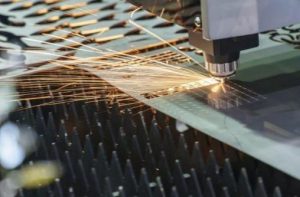
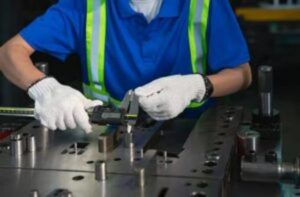
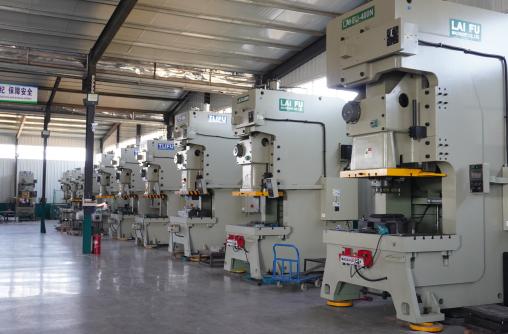
We use a 6kW fiber laser cutting machine to ensure basic processing capabilities, such as:
• Material cutting stability
• Consistency of edge quality
• Efficiency for processing medium-thick plates
• Repeatability of batch production accuracy
These are the basic conditions for all qualified laser cutting services.However, merely having the equipment is not enough to guarantee a project’s success.Because the same equipment may yield completely different results in different factories, the reason lies in:
• Was a feasibility assessment conducted for the manufacturing of the drawings?
>>>>>>>>>>>>>>>>>>>>>>>>>>>>>• Was the risk of the relationship between bending and hole positions identified?
>>>>>>>>>>>>>>>>>>>>• Were issues related to thermal deformation and structural stability addressed in advance?
>>>>>>>>>>>>>>>>>>>>• Was the cumulative error from subsequent welding or assembly taken into consideration?
What Is the Real Cost of Choosing the Wrong Supplier?
In the OEM project, what is truly costly is not the laser cutting itself, but rather:
• Re-drawing samples
• Modifying the drawings
• Re-working the batch parts
• Waiting on the production line
• Delayed delivery
Many projects do not fail because they “can’t be done”, but because:No one helped you contain the risks in the early stage.And this difference often determines whether the project is profitable.
When you are choosing laser cutting services, you are actually making a more significant decision: Are you choosing a factory that merely follows the design instructions or a manufacturing team that can help you avoid problems in the later stages?
Frequently Asked Questions
Does the Real Problem Start Before Laser Cutting Begins?
For example, in a device casing project, the first batch of parts was inspected and found to be fully qualified. Even the dimensions were more precise than those in the drawings. However, during the assembly in the customer’s factory, the screw holes did not align, the bending positions were off, and the overall alignment of multiple parts was incorrect. The result was not “reworking one part”, but the entire structure failed.
Why Do Most Suppliers Never Identify These Risks?
The logic of most laser cutting service providers is: you provide the drawing → I follow your instructions → I deliver the product. Under this model, they will not, nor are they responsible for answering questions such as “Will this hole position affect the bending?” Will this structure deform? Is this tolerance over-designed? ❗ Therefore most projects are never risk-checked before production. So the reality is: whether the drawings are correct or not is not something they care about. What they care about is whether it can be cut out.
What Is the Real Cost of Choosing the Wrong Supplier?
Many projects do not fail because they “can’t be done”, but because:No one helped you contain the risks in the early stage.And this difference often determines whether the project is profitable. When you are choosing laser cutting services, you are actually making a more significant decision: Are you choosing a factory that merely follows the design instructions or a manufacturing team that can help you avoid problems in the later stages?
Start with an Engineering Review, Not Just a Quote
✅ Production risk identification · DFM analysis · Process optimization
📩 tylor@xinjiuxinji.com — Engineering feedback within 24 hours
Why Your Metal Bending Parts Don’t Fit in Assembly