What Makes a Good Sheet Metal Manufacturer
In industrial manufacturing, the differences between sheet metal manufacturers often do not appear during prototyping. The real gap becomes visible after mass production begins. Some suppliers can deliver the samples, but once in stable production, they may encounter size drift, assembly deviations, or unstable deliveries. However, a truly outstanding sheet metal manufacturer can maintain consistent output results over a long period under complex production conditions.
The difference is not whether a supplier can manufacture a part, but whether they can identify and control manufacturing risks before production begins.
Manufacturing Problems Often Begin Before Production
In actual industrial projects, most manufacturing problems do not arise suddenly during production; rather, they are latent issues that have been present since design and process planning.
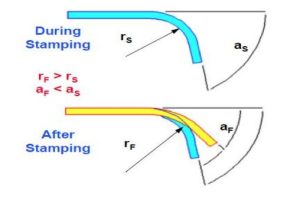
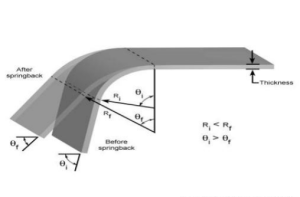
⚙️ Stamping without springback compensation
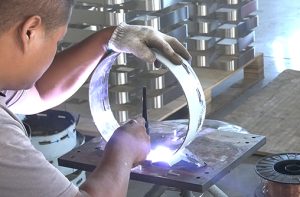
🔥 Welding thermal deformation accumulation
📏 Tolerance chain too long🧩 Assembly without deviation space
These issues are often not apparent in single-part prototyping but become increasingly amplified during mass production, ultimately affecting overall consistency and assembly performance.
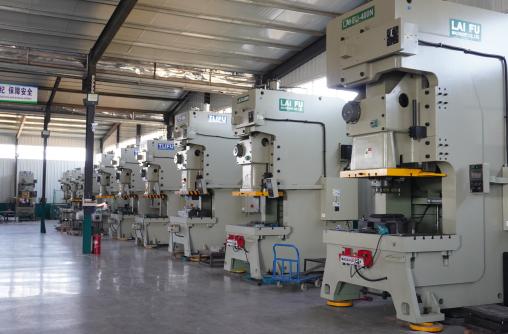
In many factories, differences in equipment configuration are not obvious, yet there are significant disparities in final product quality. The main reason lies in:Machines perform the manufacturing processes, but engineering capability determines whether the results remain stable.
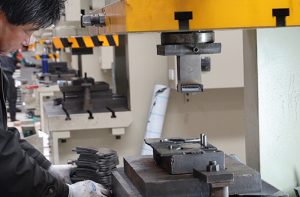
- During the stamping process, there is no compensation for material rebound → after batch production, the dimensions gradually deviate;
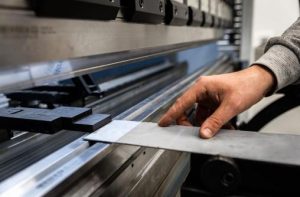
- In the bending forming process, there is a lack of process compensation control → in batches, the consistency of angles varies;
- The welding sequence or path is unreasonable → the gradual release of thermal stress causes structural deformation.
The common feature of these problems is that:These problems are difficult to detect during prototype production, but become continuously amplified during mass production.
The Core Capability of an Excellent Sheet Metal Manufacturer
An excellent sheet metal manufacturer does not solve problems during the production process; rather, it reduces uncertainties before production begins. During the project initiation stage, the following aspects need to be given priority assessment:
- Is the structure suitable for mass production? Are there any risks of springback in stamping and bending?
- Will the welding path cause cumulative deformation? Is there any error accumulation between multiple processes?
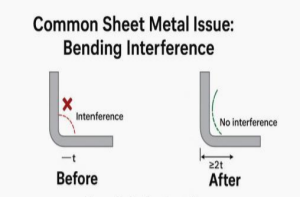
- Does the assembly structure have the risk of interference?
Through preliminary engineering analysis, originally uncontrollable design risks can be transformed into stable production processes.
Mass Production Is the Real Test of Manufacturing Capability
Prototype success does not guarantee manufacturing capability. The real challenge lies in the mass production stage.During the mass production process, common problems include:
- Tooling wear gradually causes dimensional drift during continuous production.
- Decreased consistency in multi-batch production
- Amplification of minor fluctuations in process parameters
- Reduced stability in long-term production
These problems usually do not manifest in single-piece production but gradually emerge in continuous production.Therefore, excellent manufacturers must be able to transform single-piece success into long-term, stable replication.
Sheet Metal Manufacturer with a Coordinated Process System
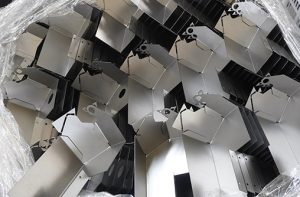
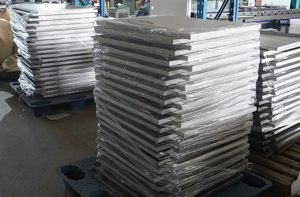
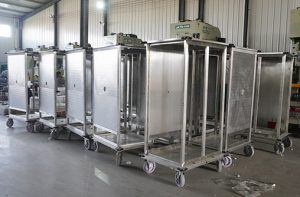
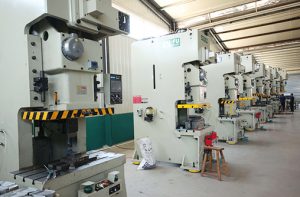
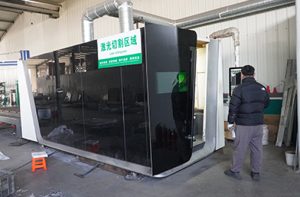
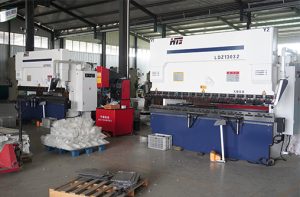
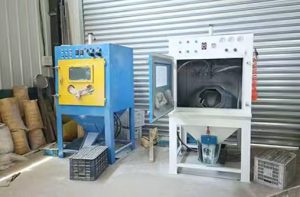
Sheet metal manufacturing is not a single process, but rather a multi-process collaborative system.In sheet metal processing and manufacturing, stamping is the primary mass-production process, which directly affects production efficiency, dimensional consistency, and mass-production stability. 👉 Learn more about our sheet metal fabrication services for a complete overview of our integrated manufacturing capabilities.
How Engineering Experience Reduces Manufacturing Risks
We have provided customized manufacturing services to over 100 countries and 3,000 enterprises worldwide, and have produced more than 70,000 different metal parts.
The value of long-term experience does not lie in the quantity itself, but in the formation of a systematic understanding of manufacturing patterns: which structures are more prone to rebound deviations? Which stamping structures are likely to cause size drift in batches? Which welding paths lead to cumulative deformation? These experiences eventually solidify intoengineering judgment capabilities. 。
- Creativity Analysis
- Free Design Optimization Suggestions
- Process Risk Assessment
- Batch Production Feasibility Judgment
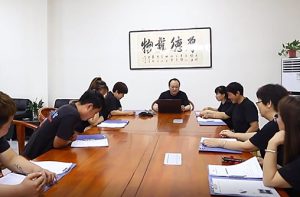
A team of 19 engineers with over 10 years of experience, reducing manufacturing uncertainties from the very beginning.

A Truly Outstanding Sheet Metal Manufacturer Offers Certainty
An ordinary factory provides processing outcomes, while an excellent sheet metal manufacturer offerspredictable, repeatable, and long-term stable manufacturing results.
Engineering Understanding
Deeply master the relationship between structure and process
Process system control capability
Unified coordination of multiple processes
Manufacturing Risk Prevention
Problems are addressed before they arise
Stable Mass Production Capability
Long-term output consistency
Ultimately, manufacturing quality is determined not by the number of machines in a factory, but by the capability of the manufacturing system behind them.
📄 Obtain engineering quotations + Free DFM assessment
If you are looking for a sheet metal manufacturer that can guarantee long-term stable production and has the capability for engineering optimization, we can offer comprehensive manufacturing support.
- Quick quotation within 8 hours
- Free design optimization suggestions
- Manufacturing Feasibility Analysis
- Production progress tracking · Stable delivery guarantee
How OEM Metal Fabrication Helps Turn Product Ideas into Manufacturable Products