How OEM Metal Fabrication Helps Turn Product Ideas into Manufacturable Products
In industrial product development, a common issue is that designs that work well in CAD often cannot remain stable in mass production. Many projects reach the stage of successful prototyping but struggle to maintain consistent batch production.This gap between design and manufacturing is where OEM Metal Fabrication plays a critical role.
Why Is Product Design Alone Not Enough?
Product design typically focuses on function, structure, and appearance. However, it often does not fully reflect real manufacturing behavior.In actual production, several variables affect consistency:
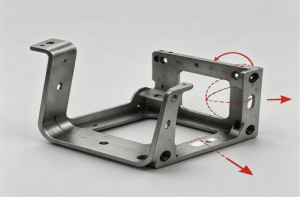
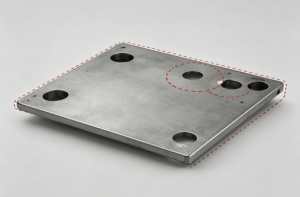
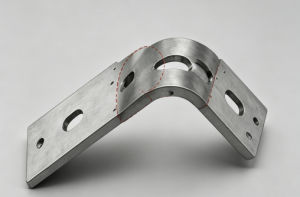
As a result, a design that appears perfect in simulation may still fail in batch production.
Engineering Assessment: The First Step of OEM Metal Fabrication
In a mature OEM Metal Fabrication system, production does not start with machining—it starts with engineering evaluation.Before manufacturing, drawings are analyzed from a production feasibility perspective:
|
▶ Is the structure suitable for stamping, bending, and welding processes?
▶ Are tolerances achievable in continuous batch production?
▶ Does the design contain unnecessary complexity?
▶ Will material properties increase deformation risk?
▶ Are there any assembly interferences or path conflicts between the parts?
|
|
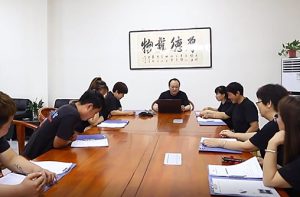
🔧 In actual implementation, a team of 19 engineers, combined with historical production data, conducts a batch risk assessment of the structure to prevent problems from entering the production stage.
How Does an Engineering-Driven Manufacturing System Work?
| OEM Metal Fabrication is not only production capacity—it is a controlled engineering system. To ensure batch stability, we use stamping springback compensation +bending process window control +welding deformation predictionto pre-determine the range of batch deviations.
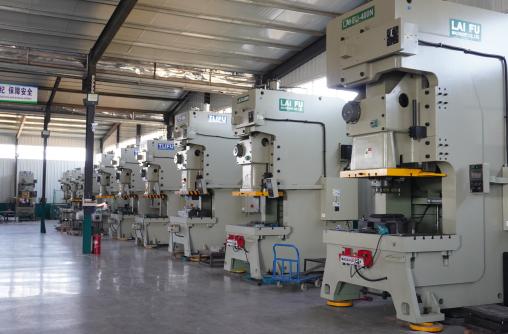
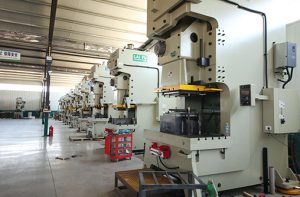
Relying on 38 sets of 80-400 ton stamping equipment, we can complete multi-stage trial production within the same mold system, thereby verifying batch consistency rather than relying solely on a single sample. |
|
Common Design Problems Found Before Production
Before the launch of the OEM project, the most common problems usually include:
If these issues are not corrected during the design stage, they will lead to increased rework, scrap rates, and even delivery delays when the product enters mass production. OEM engineering input is designed to eliminate these risks before production begins.
How Does OEM Metal Fabrication Reduce Development Risks?
The development risks primarily stem from three areas: size risk, process risk, and supply chain risk.We reduce uncertainties through systematic manufacturing capabilities:
At the same time, we have a stable production capacity of 5,000 pieces per day, enabling a smooth transition from pilot production to mass production without “capacity gaps”.
From Prototype to Production-Ready Manufacturing
⭐ The core value of OEM Metal Fabrication lies in “stage transition capability”. Generally, product development is divided into: prototype verification stage → small batch trial production stage → stable mass production stage. Many project failures stem from the inability to transition from trial production to mass production smoothly.
We achieve the transformation through the following methods:
With experience customizing over 70,000 types of parts for 100+ countries and 3,000+ enterprises worldwide, we can quickly determine which structures can be mass-produced and which require optimization and adjustment.
Frequently Asked Questions
Why Is Product Design Alone Not Enough?
Product design typically focuses on function, structure, and appearance. However, it often does not fully reflect real manufacturing behavior.In actual production, several variables affect consistency:
▶ Material springback during stamping
▶ Accumulated deviation in bending processes
▶ Thermal deformation during welding
▶ Assembly sequence affecting structural alignment
These factors do not usually appear in CAD models, but they directly determine whether a product can be consistently manufactured at scale.
How Does an Engineering-Driven Manufacturing System Work?
Relying on 38 sets of 80-400 ton stamping equipment, we can complete multi-stage trial production within the same mold system, thereby verifying batch consistency rather than relying solely on a single sample. Common Design Problems Found Before Production Before the launch of the OEM project, the most common problems usually include:
🔩 The hole position does not match the assembly structure ↓ Resulting in difficulties in batch assembly
📐 The bending radius design does not match the material properties ↓ Increasing the risk of rebound
🔥 The welding path causes uncontrollable deformation ↓ dimensional instability
🧩 Lack of assembly sequence logic between parts ↓ Structural interference
⚙️ Overly complex local structure
↓ Increased manufacturing costs and a delayed delivery schedule
How Does OEM Metal Fabrication Reduce Development Risks?
The development risks primarily stem from three areas: size risk, process risk, and supply chain risk.We reduce uncertainties through systematic manufacturing capabilities:
▶ ISO9001:2015 quality system controls the entire process
▶ Dual-group inspection by a coordinate measuring machine (CMM) ensures size consistency
▶ Laser marking and a batch traceability system guarantee traceability
▶ Automated spot welding and standardized welding processes reduce human error
📐 Contact the engineering team · Usability assessment.
Free design optimization · 8-hour quick quotation · Mass production risk assessment
Why Choose Us as Your Reliable Metal Fabrication Partner for Custom Parts