Metal Fabrication Lead Time: How Stamping Improves Delivery Stability
In metal fabrication, lead time is often a bigger challenge than manufacturing itself. Many projects move smoothly through prototyping, only to encounter delays and instability once batch production begins.
What Affects Metal Fabrication Lead Time?
In actual metal fabrication, unstable lead time usually stems from three hidden issues:
- There is a waiting time between processes.
- Each order requires rescheduling.
- Batch production lacks a uniform rhythm.
The common outcome of these issues is that metal fabrication lead time becomes unstable, because production is a “discrete operation” rather than a “continuous manufacturing system”.
How Stamping Improves Metal Fabrication Lead Time
|
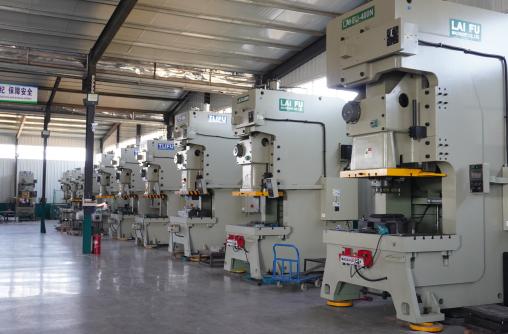
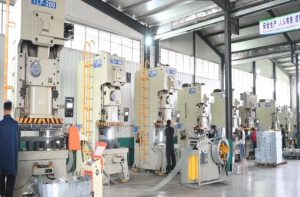
In our production system, stamping is not an ordinary processing step, but a key factor in controlling metal fabrication lead time. The factory configuration includes:
|
|
Take a typical electrical metal bracket (2.0mm SPCC) as an example. For a batch order of 10,000 pcs, production can often move from prototype approval to stable mass production within 10–20 days when a stamping system is used.
This is possible because once the tooling is qualified, stamping enables continuous output with a stable production rhythm, eliminating repeated setup and process interruptions.
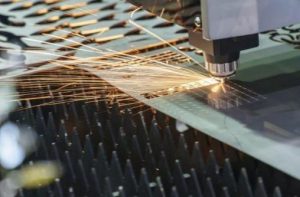
| Mode | Laser Cutting | Stamping |
|---|---|---|
| Production mode | Single-piece processing | Continuous batch production |
| Production stability | Low | High |
| Batch efficiency | Medium | High |
| Delivery stability | Unstable | Stable |
|
Continuous production is based on a stable stamping rhythm, which serves as the production benchmark for all downstream processes. This ensures consistent batch output and predictable delivery schedules.
|
How does stamping technology build a continuous production system?
|
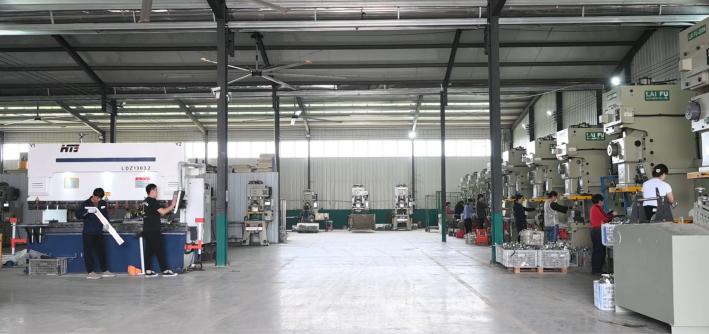
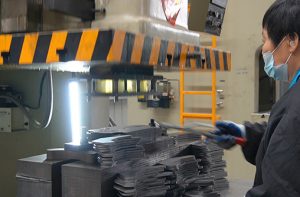
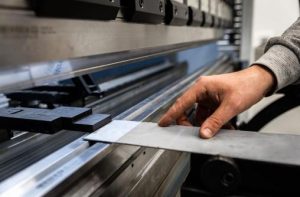
In sheet metal fabrication production, the true value of stamping is not “faster”, but rather: enabling the production process to operate in a stable and rhythmic system. In our factory system:
👉Learn more about our metal fabrication capabilities and production system.
The key to this structure is that all production activities are synchronized with the stamping cycle. Based on this system, the actual delivery cycle is determined by the complexity of the product and the batch structure: |
|
✔ Urgent order (sample + small batch):First delivery within 5-7 days (standard structural components)
✔ Standard batch production:Stable delivery within 10-20 days (forged and formed parts)
✔ Mass continuous production: Output in a continuous manner according to the rhythm (ensuring stable mold production)
This transforms metal fabrication lead time from an estimated schedule into a predictable and executable production plan.
Why are factories without a stamping system more likely to experience delays?
Many metal fabrication factories, even though they have complete equipment, still operate in a discrete production mode, resulting in repeated order scheduling and an inability to achieve continuous flow between processes. As a result, the delivery cycle is prone to fluctuations.
In factories equipped with a stamping production system, production no longer operates on a per-order basis, but runs at a stable rhythm:
- Batch production can achieve continuous output
- Multiple orders can be scheduled in parallel
- Production schedules can be predicted in advance
Therefore, the true value of stamping is not only higher efficiency, but also better control of metal fabrication lead time. Rather, it involves reconfiguring the entire production logic of metal fabrication, shifting from “project-based manufacturing” to “systematic continuous production with stable metal fabrication lead time”.
Start Your Metal Fabrication Project✅ We will tell you directly:
Contact us today for a free feasibility review & quote. |
📩 Reply in 3 working hours with free design optimization.
|
How to Evaluate a Custom Sheet Metal Fabrication Manufacturer