What Is Metal Deep Drawing? A Complete Manufacturing Guide
Metal deep drawing is a sheet metal forming process used to manufacture seamless, high-strength parts with deep cavities.
However, selecting deep drawing is not simply following the process specified on a drawing. Before tooling begins, engineers often reassess whether the part geometry, material, and production volume truly justify this manufacturing method.
This guide explains how metal deep drawing works, where it is used, and how engineers determine whether it is the right process for stable mass production.
What Is Metal Deep Drawing?
Metal deep drawing is a cold forming process. It uses a punch, die, and drawbar to induce plastic deformation, gradually forming a three-dimensional structure.
Unlike ordinary stamping, which mainly relies on shearing or local bending, deep drawing focuses on controlling the material flow. Throughout the forming process, the metal must undergo significant stretching while maintaining structural integrity. Therefore, material properties, mold design, clamping force, and lubrication conditions all directly affect the final quality.
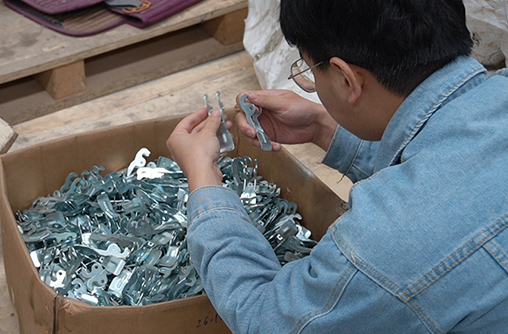
Compared with welded composite structures, deep drawing typically reduces weld seams, enhances overall strength, and improves dimensional consistency. Therefore, it is widely used in medium to large-scale production.
Where Is Metal Deep Drawing Used?
The purchasing department often asks:“Is my product really suitable for deep drawing?”
The answer usually does not depend on the industry, but on the structure of the part itself.
When conducting an assessment, the engineering team usually focuses on several characteristics:
- — Does it have a deep, continuous side wall?
- — Do you wish to reduce the welding or joining structure?
- — Do you require a high structural strength?
- — Do you need to maintain stable dimensional consistency over a long period?
- — Do you hope to reduce subsequent shaping or processing procedures?
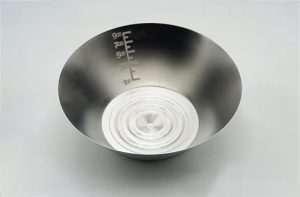
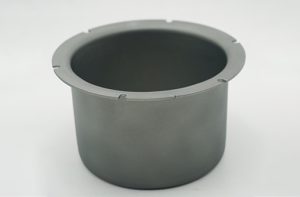
Therefore, whether it is the casing of industrial equipment, the electrical control box, the filter housing, the stainless steel container, or the liquid storage cup of a car, as long as they have a similar structure, metal deep drawing can be used as the main forming process.
Not all deep cavity parts necessarily require metal deep drawing.
When the number of parts is small, the structure is simple, or welding does not affect the product performance, using ordinary stamping combined with bending or welding can sometimes be a more economical solution. Therefore, the purpose of the engineering assessment is not to prove that deep drawing is superior, but to identify the manufacturing method best suited to the product structure and production batch size.
Why Isn’t the Process on the Drawing Always the Best Choice?
In many procurement projects, the design team has completed the product drawings and specified the manufacturing processes. The suppliers only need to quote based on the drawings.
For manufacturing engineers, the analysis work has just begun.
The drawings can define the product dimensions, but they cannot define the manufacturing process.
The engineering team usually rechecks several key parameters, including material thickness, deep-drawing ratio, fillet radius, overhang area, and the position of subsequent punching. Then it determines whether the processes shown on the drawings are suitable for mass production.
Therefore, experienced suppliers usually do not directly confirm the process based on the drawings. Instead, they re-evaluate the material thickness, deep-drawing ratio, fillet radius, structural depth, and subsequent assembly requirements.
👉 Many projects eventually adjust their production processes not because of errors in product design, but because, during the manufacturing evaluation process, it was discovered that the original plan for producing the prototype might not be suitable for long-term mass production.
For manufacturing engineering, what really needs to be verified is not “whether the parts can be produced”, but “whether they can be continuously produced at an acceptable cost”.
Case Study: Why the Manufacturing Process Changed Before Tooling
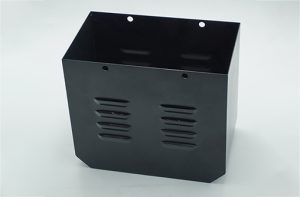
A European manufacturer of industrial automation equipment plans to develop a steel control box. The material will be 1.2 mm cold-rolled steel. The annual demand is expected to be approximately 60,000 units.
When the customer submitted the drawings, it was clearly stated that the ordinary stamping process would be adopted, and they requested that the supplier proceed directly to the quotation stage.
For high-volume parts, the engineering team does not quote from drawings alone. They first conduct a feasibility assessment.
The engineering team rechecks key parameters. These include material thickness, draw ratio, fillet radius, and punch position. This helps determine if the process suits mass production.
If only the sample is tested, this structure can usually complete normal stamping; however, once production enters continuous operation, variations in material batches and mold wear may cause fluctuations in corner thickness, further affecting the punching position and assembly accuracy. To maintain dimensional consistency, a shaping process is often added during the production process.
The engineering team then re-evaluated the metal deep drawing process. Since the material can flow continuously under the control of the clamping force, the force on the corners is more evenly distributed. Combined with subsequent trimming and punching to complete the final structure, the entire manufacturing process becomes more stable.
Ultimately, the client did not modify the product design but instead adjusted the manufacturing process before the mold development.
Why Engineering Judgment Matters More Than Equipment
Many suppliers have the equipment capabilities to process deep drawing parts. Still, the real difference lies not in the equipment itself, but in whether they can identify structural risks before mold opens.
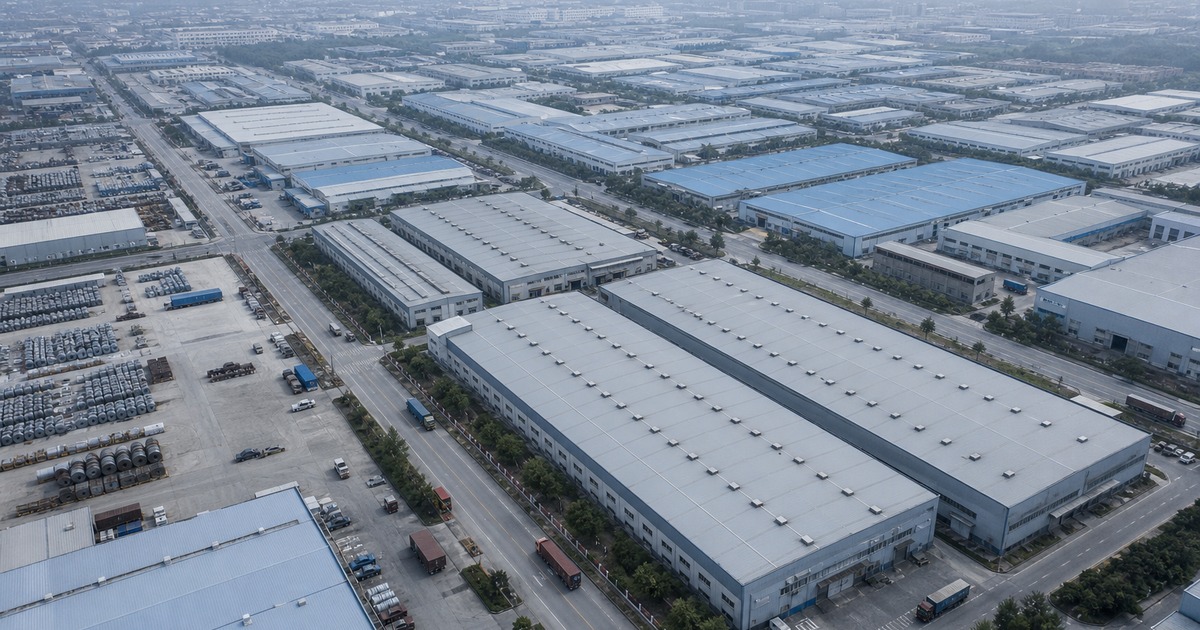
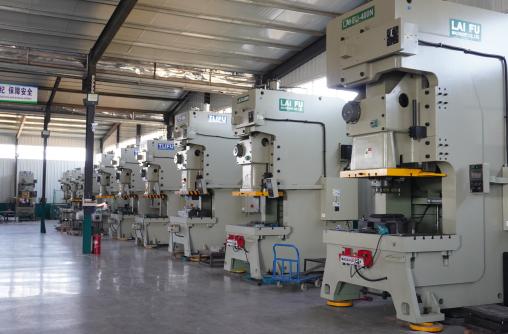
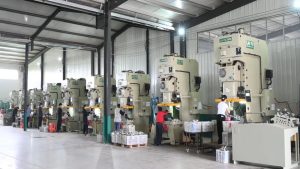
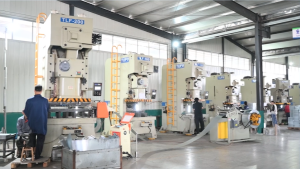
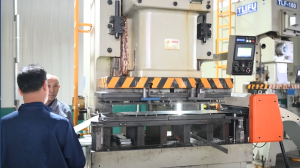
After completing these engineering evaluations, manufacturing capabilities became the foundation for implementing the process. To support process validation and mass production of parts with different specifications, we have equipped 38 stamping machines with tonnages ranging from 80T to 400T and a maximum single-point stamping capacity of 400T.
More importantly, these machines have been serving various production projects with different materials and structures for a long time. To date, we have custom-produced over 70,000 metal parts for more than 3,000 enterprises in over 100 countries and regions worldwide. What these projects have accumulated is not only manufacturing capabilities but also a process judgment based on real production experience, rather than relying solely on theoretical analysis.
Need Help Evaluating Your Metal Deep Drawing Project?
If your part has a deep continuous sidewall, you want to minimize welding and subsequent shaping, have high requirements for dimensional consistency, or plan for long-term mass production. Reconfirming the manufacturing process before developing the mold is usually less costly than making adjustments after the mold is already made.
In many cases, the final change was not in the product design itself but in choosing a more suitable manufacturing route for mass production before mold development began.
Not Sure Which Process Fits Your Part Best?
✅ Engineering evaluation · DFM analysis · Process recommendation
📩 tylor@xinjiuxinji.com — Reply in 3 working hours with free design optimization.
Upload your drawings — Our engineering team will help you find the right manufacturing process
What Makes Professional Laser Cutting Services Stand Out?