Why Precision Laser Cutting Parts Still Fail During Assembly
In OEM sheet metal manufacturing, precision laser cutting is generally considered one of the most stable processes.The drawing and dimensions are correct, and the inspection results are all within specification.
But in real production: ✔Parts are within tolerance ❌ The final assembly is still unstable
The issue is not the machining process itself, but whether the parts are properly used within the overall system.
👉 Before production, we can help you evaluate whether this structure is suitable for stable mass production.
Why Does Precision Laser Cutting Produce Different OEM Results?
In the OEM project, a very typical but often overlooked phenomenon is:
The same drawing, the same material, the same tolerance standard, result in completely different outcomes when handled by different suppliers.
• Some can be directly assembled
• Some repeatedly encounter alignment problems
• Some require manual adjustments to complete the assembly
At first glance, there seems to be no difference, but the results are completely different.
Whether “part processing” is regarded as the end goal, or whether “assembly results” is regarded as the target
👉This step determines whether the supply chain is stable.
Why Can Qualified Laser-Cut Parts Still Fail Assembly?
An electrical enclosure used in industrial automation has resulted in different outcomes among multiple suppliers:
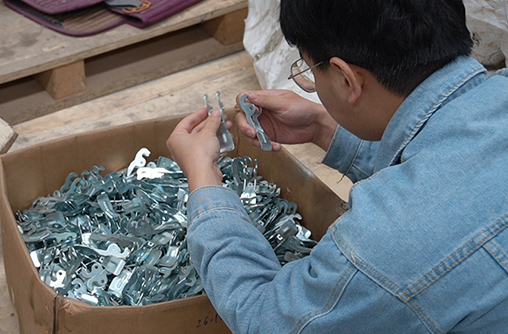
The first supplier: Laser cutting was fully qualified, and the test data was normal, but during assembly, there was a slight misalignment issue. The customer made multiple adjustments but still couldn’t stabilize the problem.
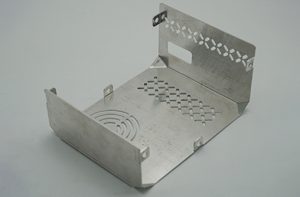
When the project entered our engineering evaluation stage, instead of reemphasizing “cutting accuracy”, we directly analyzed:
👉The actual assembly state of the parts after bending
We found no problem with a single part. Still, multiple parts exhibited “minor offsets superimposed” after forming, and the design reference system was not unified.
The fundamental issue is not the processing error; rather, it lies in the fact that the parts were not designed and manufactured within the same engineering logic.
What we have done is not “adjusting the dimensions” but rather rebuilding the bending compensation logic, unifying the part reference system, and designing the laser cutting and forming process in a linked manner.
Result: The assembly process resumed smoothly without manual adjustments and is now ready for stable mass production.
In most supply chains, this issue is usually limited to “assembly errors” or “dimension deviations”.
👉 This is also the true dividing line between different suppliers
Why Do Many Suppliers Miss Assembly Risks?
The logic of most suppliers in precision laser cutting is: process according to the drawing → conduct single-piece inspection → deliver the qualified product.
On the surface, there seems to be no problem, but there is a missing key capability:
• Do not know what changes will occur after bending
• Do not consider the coordination relationship between multiple parts
• Do not control the cumulative effect of tolerances in the system
This is not a processing issue; rather, it is due to the different levels of understanding of the “product system”.
How Do You Achieve Predictable Precision Laser Cutting Results?
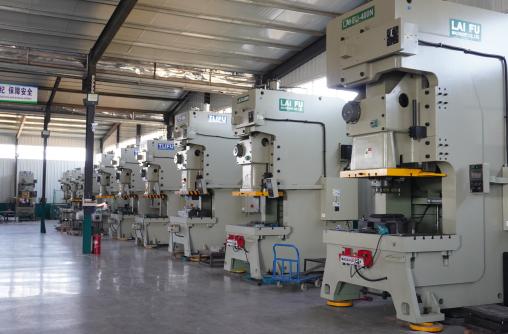
We control the results of precision laser cutting through a unified engineering system:
Before Production: DFM Review
Evaluate whether the design is suitable for bending, manufacturing, and repeatable assembly before production begins.
During Production: Integrated Process Engineering
Coordinate laser cutting and bending as an integrated manufacturing process, rather than optimizing each operation independently.
Mass Production: Process Parameter Control
Standardize and lock critical process parameters to ensure consistent quality and repeatable performance across production batches.
👉 What we control is not just how parts are manufactured, but also how they fit, are assembled, and perform in production.
Engineering Expertise Meets Precision Laser Cutting
The entire precision laser cutting system consists of:
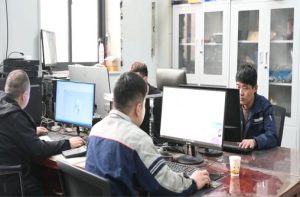
✔ 19 Senior Engineers (10+ Years of Experience)
- DFM review and manufacturability optimization
- Assembly risk assessment
- Manufacturing process planning and validation
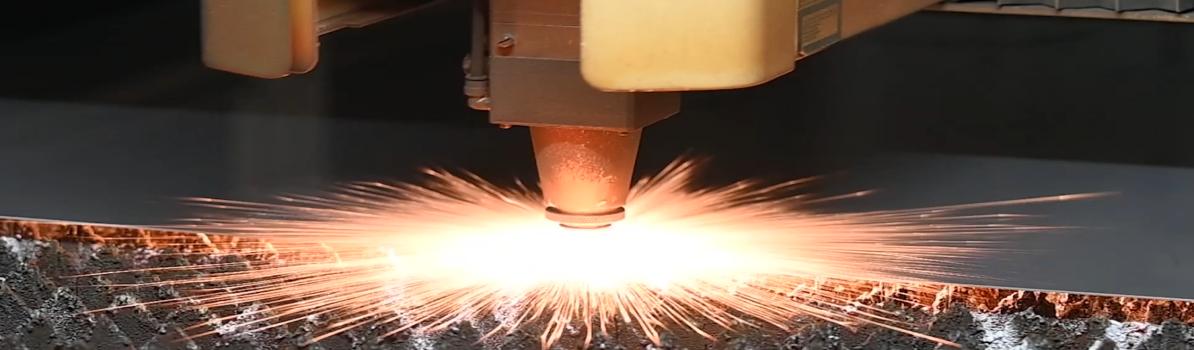
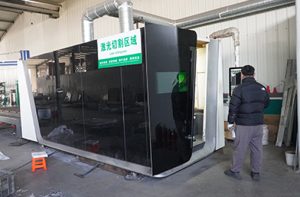
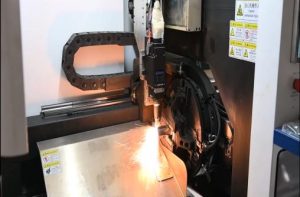
✔ 2 × 6kW Fiber Laser Cutting Machines
- Stable processing for medium- and thick-gauge materials
- Consistent quality across long production runs
- Reliable manufacturing of complex sheet metal components
Why Do OEM Customers Choose Us?
70,000+ Metal Parts Manufactured
Practical experience across thousands of production scenarios helps us identify manufacturing risks before production begins.
19 Senior Engineers (10+ Years Experience)
DFM review, tolerance analysis, and assembly risk assessment are completed before the first part is cut.
CMM Inspection for Critical Features
Key dimensions and assembly datums are verified to ensure consistent fit and repeatable production quality.
2 × 6kW Fiber Laser Cutting Systems
Stable processing capability supports consistent quality from prototype through long production runs.
Frequently Asked Questions
Why Does Precision Laser Cutting Produce Different OEM Results?
In the OEM project, a very typical but often overlooked phenomenon is: The same drawing, the same material, the same tolerance standard, result in completely different outcomes when handled by different suppliers. • Some can be directly assembled • Some repeatedly encounter alignment problems • Some require manual adjustments to complete the assembly At first glance, there seems to be no difference, but the results are completely different.
Why Can Qualified Laser-Cut Parts Still Fail Assembly?
An electrical enclosure used in industrial automation has resulted in different outcomes among multiple suppliers: The first supplier: Laser cutting was fully qualified, and the test data was normal, but during assembly, there was a slight misalignment issue. The customer made multiple adjustments but still couldn’t stabilize the problem. When the project entered our engineering evaluation stage, instead of reemphasizing “cutting accuracy”, we directly analyzed: 👉The actual assembly state of the parts after bending We found no problem with a single part. Still, multiple parts exhibited “minor offsets superimposed” after forming, and the design reference system was not unified.
Why Do Many Suppliers Miss Assembly Risks?
The logic of most suppliers in precision laser cutting is: process according to the drawing → conduct single-piece inspection → deliver the qualified product. On the surface, there seems to be no problem, but there is a missing key capability: • Do not know what changes will occur after bending • Do not consider the coordination relationship between multiple parts • Do not control the cumulative effect of tolerances in the system
How Do You Achieve Predictable Precision Laser Cutting Results?
We control the results of precision laser cutting through a unified engineering system: 01 Before Production: DFM Review Evaluate whether the design is suitable for bending, manufacturing, and repeatable assembly before production begins. 02 During Production: Integrated Process Engineering Coordinate laser cutting and bending as an integrated manufacturing process, rather than optimizing each operation independently. 03 Mass Production: Process Parameter Control
Why Do OEM Customers Choose Us?
70,000+ Metal Parts Manufactured Practical experience across thousands of production scenarios helps us identify manufacturing risks before production begins. 19 Senior Engineers (10+ Years Experience) DFM review, tolerance analysis, and assembly risk assessment are completed before the first part is cut. CMM Inspection for Critical Features Key dimensions and assembly datums are verified to ensure consistent fit and repeatable production quality.
Upload Your Drawings — Get a System-Level Engineering Review
✅ DFM analysis · Assembly risk assessment · Production stability
📩 tylor@xinjiuxinji.com — Reply in 3 working hours with free design optimization.
Many assembly issues should be caught before production starts — not after delivery. Upload your drawings for a system-level engineering review.
How to Prevent Sheet Metal Assembly Problems in OEM Production