304 vs 316 Stainless Steel: How to Choose the Right Material and Avoid Costly Mistakes
When manufacturing stainless steel parts, one of the most important engineering decisions is choosing between 304 vs 316 stainless steel. Although the two materials look similar, selecting the wrong grade can significantly impact product performance, service life, and total project cost.Many enterprises focus on material prices when making selections. Still, actual engineering experience shows that what truly determines a project’s success or failure is not the procurement cost but whether the material is suitable for the actual usage environment.
A wrong selection of materials may lead to:
- Product premature corrosion failure
- Batch quality issues
- Increased on-site maintenance and replacement costs
- Customer complaints and even claims
- Uncontrolled project life cycle costs
👉 Therefore, the choice between 304 vs 316 essentially boils down to an engineering risk-management issue rather than a comparison of material prices.
Why Material Selection Mistakes Are Expensive
In actual projects, many products function normally during the sample stage. Still, problems gradually emerge when they are put into the real environment, for example:
- Corrosion occurred at the seaside equipment
- Local corrosion occurred in the welding area
- Rust spots appeared after long-term outdoor exposure
- Uneven lifespan of batch products
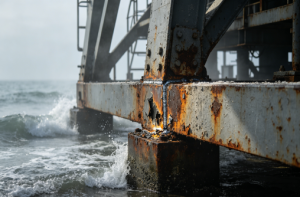
❗ The common feature of these problems is that they do not occur at the time of manufacture but gradually emerge after being used for several months or even several years.
Compared with the cost of the materials themselves, the costs of later maintenance, downtime, replacement, and claims are often higher.
👉 Therefore, the selection of materials must be based on the life cycle cost (LCC), rather than just the purchase price.
When Should I Choose 316 Instead of 304 Stainless Steel?
| Comparison Item | 304 Stainless Steel | 316 Stainless Steel |
|---|---|---|
| Corrosion Resistance | Good for general environments | Superior in marine and chemical environments |
| Salt Spray Resistance | Moderate | Excellent |
| Material Cost | Lower | Higher (contains Molybdenum) |
| Formability | Excellent for stamping and forming | Good, with higher work hardening tendency |
| Weldability | Stable and widely used | Good, but requires tighter process control |
| Typical Applications | General industrial components and structural parts | Marine, chemical, pharmaceutical, and high-corrosion applications |
How Do I Choose Between 304 and 316 for My Project?
✔ 1. Operating Environment
(Most Important)
👉 The more complex the Environment is, the less conservative the estimation of material grades should be.
✔ 2. Service life requirements
Short-term / Maintainable products → 304 is sufficient
Long-term outdoor / Maintenance-free structures → 316 is better
✔ 3. Failure Cost
Decorative parts → Appearance issues
Industrial structural components → Functional risks
Outdoor equipment → System risks
👉 When the maintenance cost exceeds the difference in material prices, 316 is often more cost-effective.
Real Engineering Case: 304 vs 316 Material Selection
Why Is Correct Material Selection Not Enough on Its Own?
Even if the correct materials are selected, if the manufacturing control is inadequate, it may still lead to failure, for example:
- Insufficient control of stamping deformation
- Excessive welding heat input
- Uneven surface treatment
- Insufficient batch consistency
Learn more about our Stainless Steel Fabrication Services for Custom Industrial Parts.
Engineering Support for Stainless Steel Parts Fabrication
During the manufacturing of stainless steel parts, we provide engineering support at the early project stage, including:
👉 Backed by experience from over 70,000+ custom metal parts projects, we help customers identify potential manufacturing and material-selection risks before mass production—rather than solving problems after delivery.
Conclusion
When selecting between 304 vs 316 stainless steel, there is no universally “better” material—only the material that best fits your application requirements.
304 Stainless Steel – A cost-effective choice for most general industrial applications, offering excellent manufacturability and production efficiency.
316 Stainless Steel – A preferred option for marine, chemical, and other corrosive environments where long-term durability and corrosion resistance are critical.
👉 A successful stainless steel parts project depends not only on selecting the right material, but also on matching the material to the operating environment and manufacturing requirements.
Frequently Asked Questions
When should I choose 316 instead of 304 stainless steel?
When the part will live in a corrosive environment. 304 offers good corrosion resistance in general environments with moderate salt spray resistance; 316 is superior in marine and chemical environments with excellent salt spray resistance. In practice the split follows the service condition: indoor equipment, dry areas, and general structural components are usually served by 304, while coastal environments, high-humidity outdoor areas, and long-term exposed structures call for 316.
Is 304 always the cheaper choice?
Cheaper at the quotation, not necessarily over the part’s life. 316 carries a higher material cost, which is why many projects start with 304 for cost reasons and because of its mature processing performance and stamping efficiency. But the material is only the first step: a part that corrodes in service costs far more than the price difference, through field failures, replacements, and damage to the product’s credibility. Total cost over service life is the honest comparison.
What happens when material is chosen on cost alone?
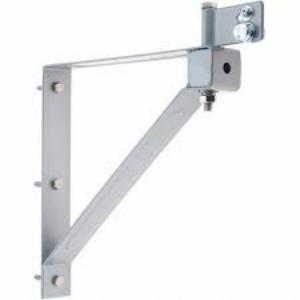
The failure appears later, and in the field. In one project a European industrial customer needed metal brackets for outdoor equipment in a coastal industrial environment, and initially chose 304 on cost grounds. The parts functioned normally at the sample stage, but problems gradually emerged once they were exposed to the real environment. Bench testing cannot reproduce years of salt exposure, which is why the operating environment has to be the first input into the choice.
Why is correct material selection not enough on its own?
Because manufacturing control decides whether the material performs as intended. Even with the right grade, unstable forming, inconsistent tooling, contaminated surfaces, or careless handling between operations can undo the choice: the material is the first step, and the manufacturing process determines the final reliability. That is why we treat material selection and process control as one engineering task, and confirm both before a batch is committed rather than assuming the grade will carry the result.
How can a supplier help with stainless steel material selection?
By putting engineering support at the beginning of the project, where the decision is still reversible. Useful support includes material selection guidance between 304 and 316, a check of whether the drawing’s geometry suits the chosen grade, and confirmation that the forming and finishing route will not compromise the corrosion resistance you selected it for. Material decisions are the hardest to reverse after production, so that guidance is worth most before tooling and the first batch.
Get Expert Guidance for Your Stainless Steel Selection
✅ Material selection guidance · DFM optimization · Batch consistency
📩 tylor@xinjiuxinji.com — Reply in 3 working hours — free design optimization & quotation.
Contact our engineering team for a free material selection review — Send your drawings now
Metal Fabrication for OEM Parts: From 72-Hour Free Samples to Stable Mass Production